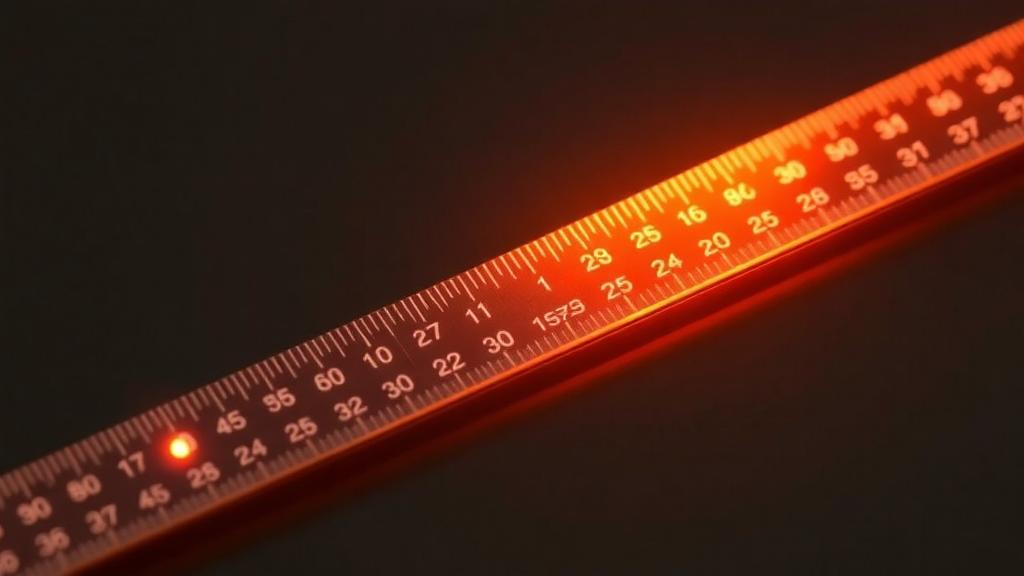
A laser technology that has underpinned the most precise timekeeping devices ever built may finally be on the verge of escaping the laboratory. Researchers at the University of Auckland, working with collaborators at the University of Maryland and the US National Institute of Standards and Technology, have reported in the journal Nature a new way of generating optical frequency combs on a chip-scale device, a result that could shrink instruments once confined to optics tables into components small and cheap enough for consumer and industrial use. The work, led by Professor Miro Erkintalo, head of the Department of Physics at the University of Auckland and a researcher at the Dodd-Walls Centre for Photonic and Quantum Technologies, demonstrates a miniaturized frequency comb performing the three core tasks that define the technology: generating precise optical frequencies, producing low-noise millimetre-wave signals, and carrying out integrated optical clock readout.
Optical frequency combs are often described as light rulers or rainbow rulers, and the metaphor is apt. Just as a school ruler carries evenly spaced black lines for measuring distance, a frequency comb produces millions of perfectly, evenly spaced colours of light. Because those colours are locked to a known spacing, the comb can be used to measure the frequency of light with extraordinary accuracy, and by extension to measure time, distance, and chemical signals. The original laboratory-scale comb was pioneered in the late 1990s by John Hall and Theodor Hänsch, work that earned them the 2005 Nobel Prize in Physics. Combs have since enabled the creation of optical atomic clocks, the most precise clocks in the world, and have found roles in experiments probing the foundations of physics itself.
The problem has always been size and expense. Conventional comb-generating systems occupy whole optical tables and demand careful alignment, which has kept the technology trapped in laboratories even as potential applications multiplied. Miniaturized versions, known as microcombs, have been under development for years, but their control and stabilization, which are essential for demanding applications, have often been complicated and difficult. The new research suggests a route around those obstacles by fundamentally redesigning how the comb is produced, flipping the architecture that both conventional systems and existing miniaturized versions rely upon.
The path to the breakthrough began in 2021, when Erkintalo, working with his students, began exploring a potential new way to generate chip-scale frequency combs. Through theoretical work, the team predicted that two laser beams launched into a chip-scale ring resonator could generate a new type of frequency comb. That prediction became reality in 2024, when the Auckland researchers teamed up with Grégory Moille and Kartik Srinivasan of the University of Maryland and NIST to demonstrate the idea in the laboratory. While that demonstration was a groundbreaking physics proof of concept, practical applications remained unrealized, and the team spent the following two years pushing the platform toward usefulness.
The crucial advance reported in Nature is that the new comb can be generated by two lasers placed an octave apart. The term octave, borrowed from music, refers to a doubling of frequency, so the two pump lasers sit at opposite ends of the spectrum with one frequency exactly twice the other. In a conventional laboratory system and in existing miniaturized architectures, light from a single laser cascades and stretches outward to cover a wide spectrum. The new design inverts that picture: it starts with two lasers far apart at opposite ends of the spectrum, and the system then automatically fills in all the light frequencies between those two boundaries. This self-aligned arrangement overcomes challenges that hampered the performance of existing architectures.
To showcase the platform, the researchers used the chip-based system to perform the three tasks most closely associated with frequency combs. The device generated precise optical frequencies, produced low-noise millimetre-wave signals of the kind needed in advanced communications and radar systems, and performed integrated optical clock readout, the process by which the ticking of an atomic clock is converted into a usable signal. Demonstrating all three on a single chip-scale platform is significant because it shows that the miniaturized comb is not merely a curiosity but a functional instrument capable of the workloads that laboratory combs currently carry.
The implications stretch across science and commerce. Portable optical atomic clocks built around chip-scale combs could help map underground variations in mineral deposits, a task that currently requires bulky and expensive equipment. They could also enable navigation systems that do not rely on GPS satellite signals, an increasingly important consideration for autonomous vehicles, aircraft, and military systems that must operate where satellite signals are jammed, blocked, or unavailable. Beyond timekeeping, the researchers point to synchronization in telecommunications networks and sensors capable of detecting extremely small changes in their environments, from minute shifts in distance to subtle chemical signatures.
Moille emphasized the practical significance of the new architecture for the field. Though researchers have been working on chip-integrated optical frequency combs for many years, he noted, their control and stabilization, which are essential for many applications, have often been complicated and difficult. With this new approach, he said, the team finally sees a viable path for their use in deployable atomic timekeeping, which is one of the most demanding and important applications of the technology. That assessment reflects a broader shift in the microcomb community, where the question has moved from whether combs can be miniaturized to whether miniaturized combs can be made stable and simple enough to deploy outside controlled laboratory conditions.
Erkintalo framed the achievement as the culmination of several years of work involving a fantastic international collaboration that brings together the world-leading knowledge and innovation of New Zealand researchers with equally world-leading colleagues in the United States. He also drew attention to the way the breakthrough emerged. The project began not as an engineering programme with a product in mind but as curiosity-driven theoretical work exploring what might happen when two laser beams met inside a chip-scale ring. The commercial implications, he observed, show how new technological applications can emerge from research that is originally driven by curiosity, a pattern that recurs throughout the history of photonics and quantum science.
The team, which has submitted a provisional patent application based on aspects of the work, writes in the Nature paper that reducing the size, weight, power, and cost of optical frequency combs can lead to mass production and move the technology from lab to consumer. If that trajectory holds, the light rulers that today measure the heartbeat of the world’s most precise clocks could one day sit inside navigation units, network equipment, and portable sensors, carrying laboratory-grade precision into everyday technologies. The research was published in Nature on 30 September 2026 under the title Self-aligned optical microcomb emerging between octave-separated lasers, and the authors reported no conflicts of interest.
Subject of Research: Miniaturized chip-scale optical frequency combs generated by octave-separated lasers for portable atomic clocks and precision measurement
Article Title: Technology used by optical atomic clocks may jump from lab to consumer
Article References: Technology used by optical atomic clocks may jump from lab to consumer. (n.d.). Original publication
Image Credits: AI Generated
DOI: Not provided
Keywords: optical frequency combs, microcombs, atomic clocks, photonics, chip-scale lasers, University of Auckland, NIST, Nature, GPS-free navigation, telecommunications, quantum technologies, precision measurement
News Source: Katie Riggs. (October 7, 2026). Chip-Sized Light Rulers Could Carry Atomic Clock Precision Out of the Lab. Scienmag.