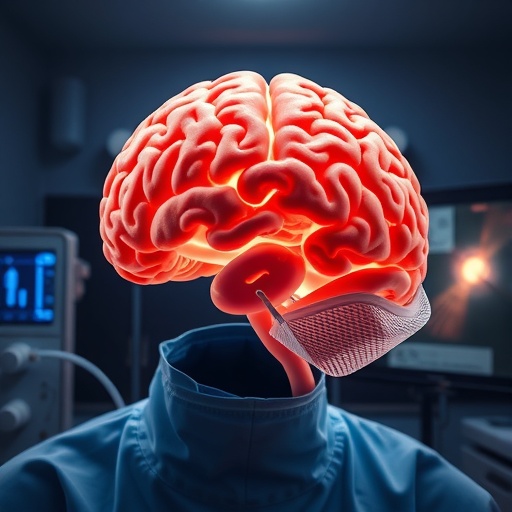
Brain tumor surgery often hinges on a high-stakes trade-off: maximizing resection while protecting neurological function. Lesions near the corpus callosum are among the hardest cases because this deep midline structure serves as the brain’s major communication highway between hemispheres and sits close to critical fiber tracts. For patients with IDH-mutant low-grade corpus callosum glioma (ccLGG), achieving safe, extensive tumor removal is particularly challenging, and conventional intraoperative planning based on preoperative MRI can become less reliable once the brain shifts during surgery.
A study published in the Chinese Neurosurgical Journal (Volume 12, May 1, 2026) evaluates whether a “multimodal” surgical strategy can reduce this uncertainty. The approach combines neuronavigation with intraoperative MRI (iMRI) and continuous neuromonitoring, aiming to verify residual tumor in real time while simultaneously tracking functional integrity of motor, sensory, and language-relevant pathways.
Researchers retrospectively reviewed patients treated between 2014 and 2022 at Chinese People’s Liberation Army General Hospital. Sixty-four individuals underwent multimodal-guided operations, while 34 received conventional neuronavigation-only surgery. Investigators compared extent of resection, new neurological deficits, quality-of-life measures, time to tumor progression, and overall survival.
The results favored the multimodal workflow. Complete tumor removal was reported far more often, nearly doubling the likelihood of achieving maximal safe resection compared with conventional surgery. Importantly, the strategy did not appear to increase disability, suggesting that additional imaging and functional surveillance may help surgeons pursue more aggressive targets without sacrificing safety.
Beyond resection quality, multimodal surgery translated into meaningful disease-control gains. Patients treated with the combined technologies experienced roughly three additional years of survival, and about 30 extra months before the tumor regrew or worsened. These outcomes strengthen the case that surgical precision can directly influence long-term oncologic trajectories.
The benefit increased further when postoperative chemotherapy was added, particularly with more cycles of temozolomide. Prognostic signals also emerged: smaller tumors, limited spread, lesions confined to the genu portion of the corpus callosum, and “butterfly” patterns without bilateral involvement were associated with improved outcomes.
Functional and molecular factors mattered as well. Higher KPS scores at three months suggested better recovery and resilience, while MGMT methylation, a marker linked to enhanced treatment responsiveness, correlated with improved survival. Together, these findings imply that multimodal resection and personalized adjuvant therapy may work synergistically.
The study’s core message is simple but powerful: when resources allow, integrating iMRI and neuromonitoring with neuronavigation can improve the accuracy and safety of surgery for complex gliomas involving essential brain structures. For rare ccLGG tumors, that precision may be a key driver of survival and longer tumor-free intervals, turning advanced operating-room imaging into a measurable clinical advantage.
Subject of Research: People
Article Title: Multimodal techniques for maximal safe resection of IDH‑mutant low‑grade glioma involving corpus callosum, a retrospective study and prognosis analysis
News Publication Date: 1-May-2026
Web References: https://link.springer.com/article/10.1186/s41016-026-00432-y , https://doi.org/10.1186/s41016-026-00432-y
References: Chinese Neurosurgical Journal (Volume 12), 2026. DOI: 10.1186/s41016-026-00432-y
Image Credits:
Keywords: corpus callosum glioma, IDH-mutant low-grade glioma, intraoperative MRI, neuromonitoring, neuronavigation, temozolomide, MGMT methylation, maximal safe resection
Tags: advanced intraoperative techniques for tumor resectionbrain tumor surgerycorpus callosum glioma treatmentIDH-mutant low-grade glioma managementintraoperative MRI in brain tumor resectionmultimodal surgical strategy for gliomaneurological function preservation during brain surgeryneuronavigation and neuromonitoring in neurosurgeryoptimizing brain tumor resection safetypatient survival in brain tumor surgeryreal-time tumor residual verificationsurgical outcomes in deep midline brain tumors