


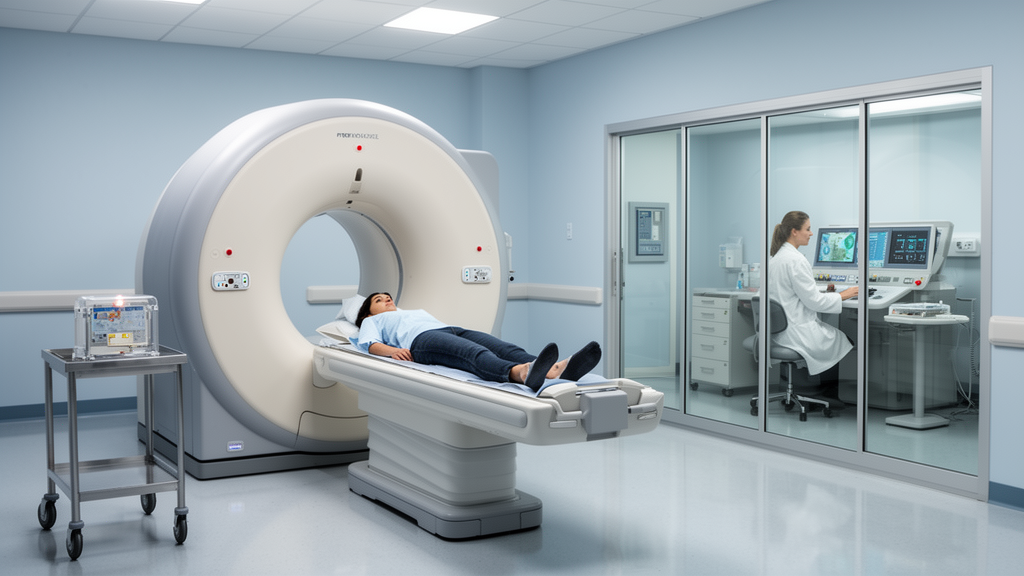
Chinese oncology authorities have issued national guidelines that standardize how positron emission tomography, or PET, is used across the entire course of cancer care. The document, published in the journal Holistic Integrative Oncology, is part of the Chinese Anti-Cancer Association’s guideline series and sets out uniform procedures for PET imaging in tumor management, from patient preparation to the final written report.
The guidelines trace the technical evolution of both PET/CT and PET/MR systems and explain the imaging principles behind them. They also define standardized procedures and clinical indications, aiming to ensure that scans performed in different hospitals produce consistent, comparable results. According to the document, this uniformity is intended to support holistic and integrative tumor management throughout China.
A central recommendation concerns tracers, the radioactive molecules that highlight disease on a PET scan. The guidelines designate 18F-FDG, a glucose analog that accumulates in metabolically active tissue, as the fundamental metabolic tracer for routine use. Beyond this workhorse agent, the document addresses the rational application of targeted probes designed to bind specific molecular features of tumors. These include 68Ga-PSMA for prostate-specific membrane antigen, 68Ga-FAPI for fibroblast activation protein, and tracers targeting somatostatin receptors and estrogen receptors.
The guidelines also formalize quantitative analysis of PET images. Physicians are directed to use standardized parameters including SUV, the standardized uptake value that reflects tracer concentration in tissue, along with MTV, the metabolic tumor volume, and TLG, the total lesion glycolysis. These measures allow tumor burden and metabolic activity to be expressed numerically rather than described only visually.
Operational consistency receives detailed attention. The document unifies how patients are prepared before scanning, how radiopharmaceuticals are injected, which scanning protocols are followed, and how reports are written. By aligning these steps across institutions, the guidelines seek to reduce variability that can affect image quality and interpretation.
Clinically, PET is indicated for several key purposes in patients with major cancers: staging before treatment, evaluating how a tumor responds to therapy, detecting recurrence after treatment, assessing prognosis, and delineating targets for radiotherapy planning. These indications position the technology as a tool that informs decisions at diagnosis, during treatment, and in follow-up.
The guidelines are explicit about the technology’s limits. False negatives can occur in tumors with low metabolic activity, which may take up little 18F-FDG and therefore appear dim or invisible on a standard scan. Tumor heterogeneity, in which different regions of the same malignancy behave differently, and the finite resolution of PET scanners further constrain what the images can show.
To improve accuracy, the document recommends multimodal imaging, the combined use of different tracers, and the adoption of advanced equipment. Pairing PET with computed tomography or magnetic resonance, or combining a metabolic tracer with a molecularly targeted one, can compensate for the weaknesses of any single approach.
The overall aim, the guidelines state, is to promote standardized and precise PET applications in the whole-course management of tumors in China, giving oncologists a shared technical foundation for using molecular imaging in cancer care.
Subject of Research: National guidelines standardizing the clinical application of PET imaging in tumor management in China
Article Title: CACA guidelines for holistic integrative management of PET imaging
Article References: Jing, W., Lijuan, Y., Shaoli, S., Rong, Z., Jingyi, C., Yihui, G., Yingying, H., Zhijun, C., Yali, C., Jianwei, Y., Dong, D., Dasheng, Q., Jingmian, Z., Guoyou, X., Hui, Y., Zhaoqi, Z., Zhuzhong, C., Xiaoliang, C., Xu, Z., … Xinming, Z. (2026). CACA guidelines for holistic integrative management of PET imaging. Holistic Integrative Oncology, 5(1), Article 86. https://doi.org/10.1007/s44178-026-00305-5
Image Credits: AI Generated
DOI: 10.1007/s44178-026-00305-5
Keywords: PET imaging, CACA guidelines, 18F-FDG, 68Ga-PSMA, 68Ga-FAPI, PET/CT, PET/MR, SUV, cancer staging, radiotherapy planning, China, tumor management
News Source: Nathaniel Bowman. (October 30, 2026). China issues national guidelines standardizing PET imaging in cancer care. Scienmag.



