• HOME
  • NEWS
  • EXPLORE
    • CAREER
      • Companies
      • Jobs
    • EVENTS
    • iGEM
      • News
      • Team
    • PHOTOS
    • VIDEO
    • WIKI
  • BLOG
  • COMMUNITY
    • FACEBOOK
    • INSTAGRAM
    • TWITTER
Friday, May 15, 2026
BIOENGINEER.ORG
No Result
View All Result
  • Login
  • HOME
  • NEWS
  • EXPLORE
    • CAREER
      • Companies
      • Jobs
        • Lecturer
        • PhD Studentship
        • Postdoc
        • Research Assistant
    • EVENTS
    • iGEM
      • News
      • Team
    • PHOTOS
    • VIDEO
    • WIKI
  • BLOG
  • COMMUNITY
    • FACEBOOK
    • INSTAGRAM
    • TWITTER
  • HOME
  • NEWS
  • EXPLORE
    • CAREER
      • Companies
      • Jobs
        • Lecturer
        • PhD Studentship
        • Postdoc
        • Research Assistant
    • EVENTS
    • iGEM
      • News
      • Team
    • PHOTOS
    • VIDEO
    • WIKI
  • BLOG
  • COMMUNITY
    • FACEBOOK
    • INSTAGRAM
    • TWITTER
No Result
View All Result
Bioengineer.org
No Result
View All Result
Home NEWS Science News Health

Chimpanzee friends fight together to battle rivals

Bioengineer by Bioengineer
January 22, 2021
in Health
Reading Time: 2 mins read
0
IMAGE
Share on FacebookShare on TwitterShare on LinkedinShare on RedditShare on Telegram

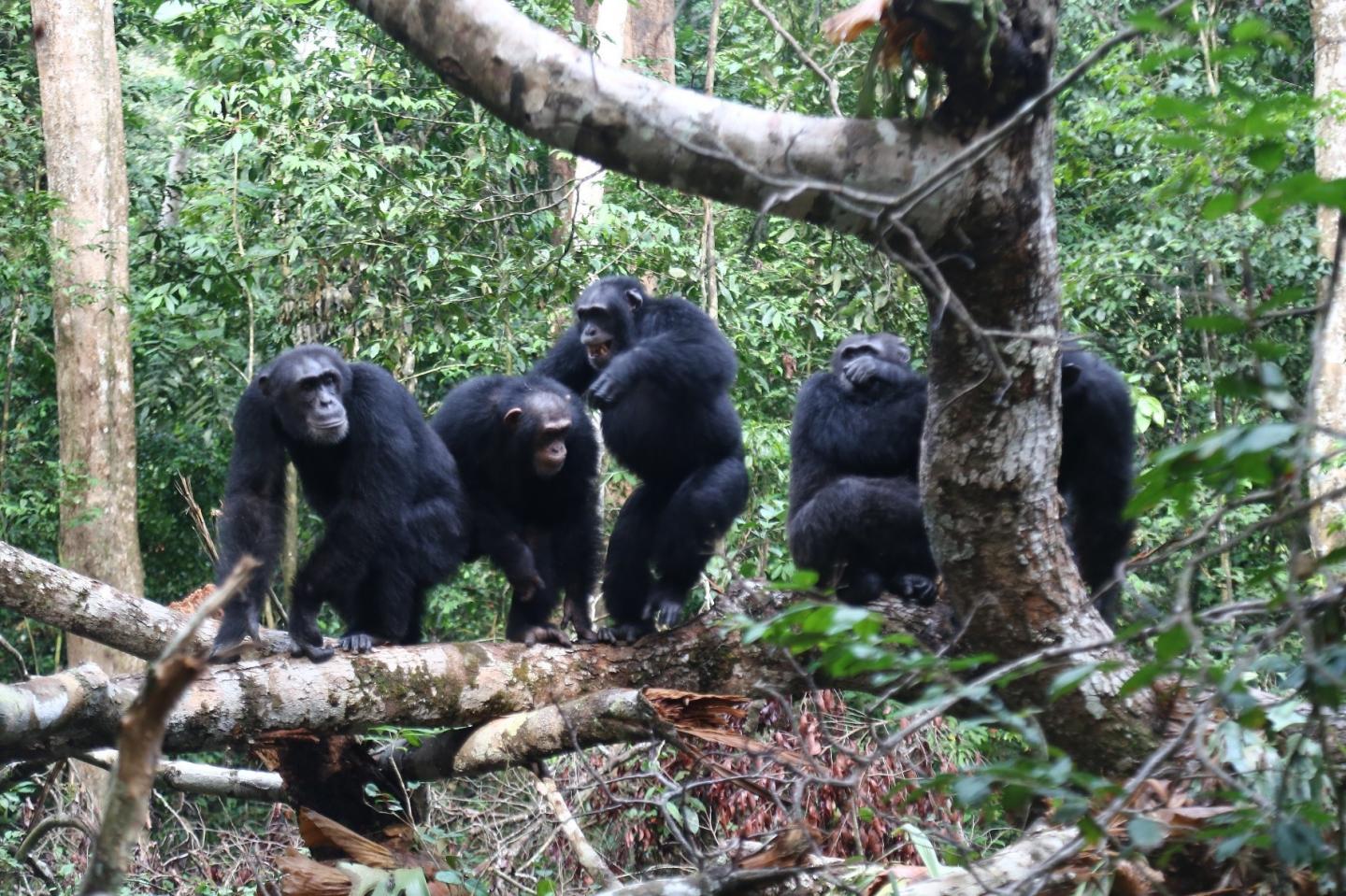
Strong social bonds increase the willingness to join others in battle
IMAGE

Credit: Liran Samuni, Taï Chimpanzee Project

Chimpanzees, one of the closest relatives of humans, cooperate on a group level – in combative disputes, they even cooperate with group members to whom they are not related. Those involved in fights with neighbouring groups put themselves at risk of serious injury or even death.

Within the context of the Tai Chimpanzee Project researchers observed three chimpanzee communities in Tai National Park in Cote d’Ivoire documenting social relationships, territory range and intergroup encounters amongst others. “We have been able to analyze almost 500 vocal and physical battles from the last 25 years with participation of at least one of the three habituated communities, some of which have caused severe injury or death”, says Liran Samuni, the first author of the study.

The study showed that males, as well as females participate in the battles and that three factors increased the likelihood of participation in the intergroup encounter when there were many individuals participating, when maternal kin joined and when non-kin social bond partners were present. “It seems chimpanzees not only consider the sheer number in their sub-group when moving into battle, but they consider the presence of a trusted group member, who will support them in case of an attack”, adds Catherine Crockford, senior author of the study. “These results suggest”, Liran Samuni continues, “that the link between strong, enduring social relationships and costly collective acts is not uniquely human, but is present in one of our closest living relatives, the chimpanzee.”

“This study is part of a series of several investigations linking in-group cooperation with out-group competition”, explains Roman Wittig, director of the Tai Chimpanzee Project and senior author of the studies. “We were able to show that out-group competition reduces chimpanzees’ reproduction and their territory size. On the other hand, out-group competition increases in-group cohesion and, likely facilitated by the neurohormone oxytocin, reduces the likelihood of defection in battle.”

Data from the Tai Chimpanzee Project, with four neighboruing communities observed on a daily basis, will be a key source for scientific investigations into the ultimate and proximate causes of group-level cooperation. “The Tai chimpanzees can teach us”, Roman Wittig points out, “what social tools enable human’s unique capacity for large-scale cooperation with non-kin”.

###

Original publication:

Liran Samuni, Catherine Crockford, Roman Wittig

Group-level cooperation in chimpanzees is shaped by strong social ties

Nature Communications, 22 January 2021

Contact:

Dr. Roman Wittig

Max Planck Institute for Evolutionary Anthropology, Leipzig

+49 341 3550-204

[email protected]

Dr. Catherine Crockford

Max Planck Institute for Evolutionary Anthropology, Leipzig

+49 341 3550-220

[email protected]

Media Contact
Sandra Jacob
[email protected]

Related Journal Article

http://dx.doi.org/10.1038/s41467-020-20709-9

Tags: BiologyDevelopmental/Reproductive BiologyEcology/EnvironmentEvolutionZoology/Veterinary Science
Share12Tweet8Share2ShareShareShare2

Related Posts

Digital Health Fear Patterns in Older Cancer Patients

May 15, 2026

A*STAR Scientists Unveil Novel Technique to Decipher RNA Structure’s Impact on Health and Disease

May 15, 2026

Comprehensive Study Finds No Clear Association Between Common Antidepressant Use During Pregnancy and Autism or ADHD in Children

May 15, 2026

Viagra Shows Promise as Potential Treatment to Halt Peyronie’s Disease

May 15, 2026
Please login to join discussion

POPULAR NEWS

  • Research Indicates Potential Connection Between Prenatal Medication Exposure and Elevated Autism Risk

    843 shares
    Share 337 Tweet 211
  • New Study Reveals Plants Can Detect the Sound of Rain

    729 shares
    Share 291 Tweet 182
  • Salmonella Haem Blocks Macrophages, Boosts Infection

    62 shares
    Share 25 Tweet 16
  • Breastmilk Balances E. coli and Beneficial Bacteria in Infant Gut Microbiomes

    58 shares
    Share 23 Tweet 15

About

We bring you the latest biotechnology news from best research centers and universities around the world. Check our website.

Follow us

Recent News

Digital Health Fear Patterns in Older Cancer Patients

A*STAR Scientists Unveil Novel Technique to Decipher RNA Structure’s Impact on Health and Disease

Smart Hydrogels Revolutionize Information Security with Photo-Patterning and Multi-Stimuli Responsive Structural Colors

Subscribe to Blog via Email

Enter your email address to subscribe to this blog and receive notifications of new posts by email.

Join 82 other subscribers
  • Contact Us

Bioengineer.org © Copyright 2023 All Rights Reserved.

Welcome Back!

Login to your account below

Forgotten Password?

Retrieve your password

Please enter your username or email address to reset your password.

Log In
No Result
View All Result
  • Homepages
    • Home Page 1
    • Home Page 2
  • News
  • National
  • Business
  • Health
  • Lifestyle
  • Science

Bioengineer.org © Copyright 2023 All Rights Reserved.