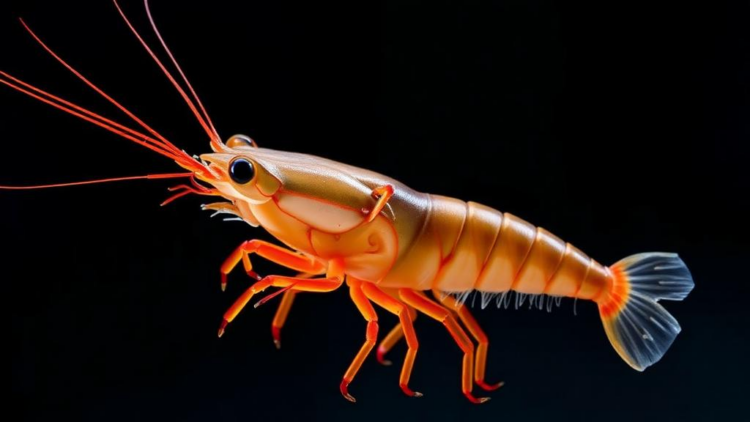
In a discovery that reads like something out of a biology textbook’s strangest chapter, researchers in China have documented a genuine chimera in the hybrid offspring of the red swamp crayfish (Procambarus clarkii). The animal, described in a case study published in the KeAi journal Reproduction and Breeding, arose in the first filial generation of a cross between a Black king crayfish and its wild-type counterpart. Rather than being a uniform blend of its parents’ genomes, the individual carries multiple distinct genotypes within a single body, making it a rare and valuable natural experiment in developmental biology.
Chimeras are organisms composed of cells with more than one genetic identity. Unlike hybrids, which inherit a mixed genome in every cell, chimeras originate from genetically different cell lineages that coexist in one individual. The phenomenon has been documented across the animal kingdom in recent decades, and in many cases it is readily recognizable through left-right asymmetries in body coloration. Cats with strikingly different facial fur coloring on each side of the face are perhaps the most familiar example, and crayfish displaying left-right differences in body coloration have also been reported as typical chimeric individuals. These visible asymmetries have long served as the primary clue that something unusual happened during early development.
The central scientific questions in this field are deceptively simple to state: how do chimeras arise, and what are the genetic and cellular mechanisms that underlie their formation? Answering them requires rare specimens in which the genetic composition of different tissues can be mapped in detail. That is precisely what makes the newly reported crayfish so significant. According to the research team, the animal offers a valuable resource for dissecting the molecular mechanisms governing both the formation of chimeras and the developmental maintenance of bodies containing two or more genetic components.
Corresponding author Xufeng Bai, a professor at Huazhong Agricultural University, described the surprising distribution of genetic material within the animal. The cells carrying the two distinct genetic components were irregularly distributed across the different organs of the chimera, he noted, meaning that any given tissue could contain a mixture of lineages in unpredictable proportions. To the team’s surprise, however, the two different colors and patterns appeared symmetrical between the left and right sides of the body. This mismatch between external appearance and internal genetics is one of the most intriguing aspects of the case, because it suggests that visible patterning and underlying cellular composition do not always correspond in a straightforward way.
Genetic analysis confirmed that complexity. Multiple genotypes coexisted within the same individual and were distributed irregularly across different tissues and organs. Crucially, this genetic distribution did not correspond completely with the striking bilateral symmetry observed in the carapace, the hardened shell that gives crayfish their characteristic appearance. In other words, the animal looked like a mirror image of two color forms, yet its internal tissues told a far messier story, with genetically distinct cell populations intermingled in ways that no external inspection could have predicted. The finding underscores how unreliable external morphology can be as a proxy for the true genetic architecture of a chimeric organism.
The researchers suggest that hybridisation between different varieties of the red swamp crayfish may have contributed to the formation of the chimera. This hypothesis is significant because it links the phenomenon to reproductive biology rather than to laboratory manipulation. If crosses between divergent varieties of the same species can occasionally produce chimeric offspring, then chimerism may be a more accessible natural phenomenon than previously assumed, at least in species with the right developmental characteristics. The red swamp crayfish, a commercially important aquaculture species native to the southern United States but now farmed extensively in China and elsewhere, provides a practical system in which such crosses can be studied systematically.
Beyond its immediate novelty, the case opens a window onto a fundamental biological puzzle: how can tissues and organs with different genetic compositions coexist and be maintained within a single organism? In principle, the vertebrate immune system is built to recognize and destroy cells that are genetically foreign, which is why organ transplants require powerful immunosuppressive drugs. Yet chimeras, including the crayfish documented here, tolerate genetically distinct cell lineages side by side, apparently without rejection. Understanding the mechanisms that permit this peaceful coexistence in a crustacean could illuminate general principles of tissue compatibility that operate far beyond the species in question.
The researchers themselves point to this broader relevance, suggesting that work on the crayfish chimera could contribute to understanding the biological mechanisms associated with tissue compatibility and immune rejection in organ transplantation. While a crayfish is obviously very different from a human patient, the basic problem is shared: how does one population of cells accept the presence of another population with a different genome? Natural chimeras solve this problem routinely during development, and each new documented case provides additional material for comparing the genetic and cellular conditions under which tolerance, rather than conflict, prevails.
The study also carries practical implications for aquaculture. Bai noted that it will be interesting to observe the sexual characteristics and economically important traits in the progeny of the chimera, since the animal’s reproductive cells could carry either or both of the genetic lineages found in its body. If the chimera produces offspring, the inheritance patterns of its traits could reveal which cell lineages contributed to the germline, a question that is central to understanding how chimeras pass on, or fail to pass on, their mixed genetic heritage. For a species of major commercial importance, traits such as growth rate, body coloration, and disease resistance are of direct economic interest, and a chimera offers an unusual route through which novel trait combinations might be explored.
Methodologically, the research was conducted as a case study, reflecting the rarity of the specimen rather than a large experimental population. Case studies of this kind play an important role in developmental genetics: they identify phenomena that later, more systematic work can investigate in depth. The authors report no known competing financial interests or personal relationships that could have influenced the work. As researchers continue to examine the specimen and, potentially, its descendants, the crayfish chimera stands as a vivid reminder that development is not always the tidy, single-genome process that textbooks imply. Sometimes, within one shell, two genetic histories share the same body, each contributing to the whole in ways scientists are only beginning to unravel.
Subject of Research: Chimerism and multi-genotype tissue distribution in hybrid red swamp crayfish (Procambarus clarkii)
Article Title: Scientists found a chimera mutant in the hybrid offspring of red swamp crayfish
Article References: Scientists found a chimera mutant in the hybrid offspring of red swamp crayfish. (n.d.). Original publication
Image Credits: AI Generated
DOI: Not provided
Keywords: chimera, red swamp crayfish, Procambarus clarkii, hybridisation, genetics, developmental biology, tissue compatibility, organ transplantation, aquaculture, genotypes, bilateral symmetry, Reproduction and Breeding
Cite Scienmag News
APA
MLA
Chicago
Juliet Wilcox. (October 1, 2026). Chimera Crayfish With Two Genomes Stuns Scientists Studying Hybrid Offspring. Scienmag. https://scienmag.com/chimera-crayfish-with-two-genomes-stuns-scientists-studying-hybrid-offspring/
Juliet Wilcox. “Chimera Crayfish With Two Genomes Stuns Scientists Studying Hybrid Offspring.” Scienmag, 1 October 2026, https://scienmag.com/chimera-crayfish-with-two-genomes-stuns-scientists-studying-hybrid-offspring/. Accessed 1 October 2026.
Juliet Wilcox. “Chimera Crayfish With Two Genomes Stuns Scientists Studying Hybrid Offspring.” Scienmag. October 1, 2026. https://scienmag.com/chimera-crayfish-with-two-genomes-stuns-scientists-studying-hybrid-offspring/
Copy citation
Download RIS
Tags: aquaculturebilateral symmetrybiological significance of chimeraschimeraChimera crayfish hybridizationcrustacean genetic studies in Chinadevelopmental biologydevelopmental biology of chimerasgenetic diversity in Procambarus clarkiigenetic variation in hybrid crustaceansgeneticsgenotypeshybrid offspring with multiple genotypeshybridisationimplications of chimerism in evolutionary biologymulti-genome organisms in crustaceansnatural chimerism in freshwater crayfishorgan transplantationProcambarus clarkiired swamp crayfishReproduction and Breedingreproductive biology of hybrid crayfishtissue compatibilityvisual identification of chimeric animals