• HOME
  • NEWS
  • EXPLORE
    • CAREER
      • Companies
      • Jobs
    • EVENTS
    • iGEM
      • News
      • Team
    • PHOTOS
    • VIDEO
    • WIKI
  • BLOG
  • COMMUNITY
    • FACEBOOK
    • INSTAGRAM
    • TWITTER
Thursday, June 25, 2026
BIOENGINEER.ORG
No Result
View All Result
  • Login
  • HOME
  • NEWS
  • EXPLORE
    • CAREER
      • Companies
      • Jobs
        • Lecturer
        • PhD Studentship
        • Postdoc
        • Research Assistant
    • EVENTS
    • iGEM
      • News
      • Team
    • PHOTOS
    • VIDEO
    • WIKI
  • BLOG
  • COMMUNITY
    • FACEBOOK
    • INSTAGRAM
    • TWITTER
  • HOME
  • NEWS
  • EXPLORE
    • CAREER
      • Companies
      • Jobs
        • Lecturer
        • PhD Studentship
        • Postdoc
        • Research Assistant
    • EVENTS
    • iGEM
      • News
      • Team
    • PHOTOS
    • VIDEO
    • WIKI
  • BLOG
  • COMMUNITY
    • FACEBOOK
    • INSTAGRAM
    • TWITTER
No Result
View All Result
Bioengineer.org
No Result
View All Result
Home NEWS Science News Health

Chemotherapeutic drugs and plasma proteins: Exploring new dimensions

Bioengineer by Bioengineer
December 20, 2018
in Health
Reading Time: 2 mins read
0
IMAGE
Share on FacebookShare on TwitterShare on LinkedinShare on RedditShare on Telegram

This article by Dr. Fahim Halim Khan et al. is published in Current Protein & Peptide Science, Volume 19, Issue 10, 2018
IMAGE

Credit: Bentham Science Publishers, Fahim Halim Khan


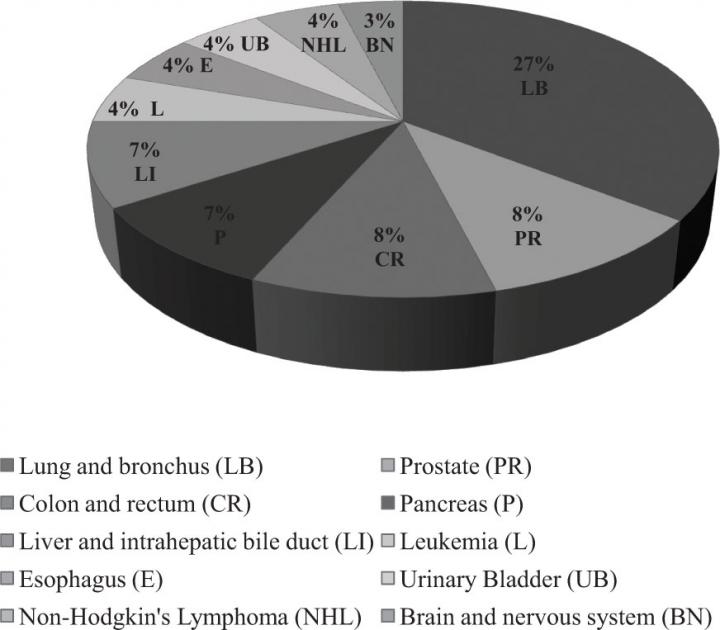
Chemotherapy is use of drugs to cure a disease but more specifically, it refers to drug therapy for cancer. Cancer chemotherapy can be done with a single drug or a combination of drugs and is usually systematic in nature, that is to say that a drug is administered through the blood circulation to eliminate cancer cells in many parts of the body. Within last few years, advancements in chemotherapy have given rise to successful patient outcomes and there is a large numbers of anti-cancer drugs which are present in the market.

Chemotherapeutic drugs are composed from different compounds. This review provides information about chemotherapeutic drugs that bind to plasma proteins. Cisplatin (a platinum based complex), 5-fluorouracil and ruthenium based drugs are a few examples. Cisplatin interacts covalently and alters the function of the key plasma protease inhibitor molecule -alpha-2-macroglobulin and induces the conformational changes in the protein molecule, thus inactivating it. 5-fluorouracil is metabolized at a large scale and it is associated with Human Serum Albumin. Ruthenium compounds bind with protein plasma serum-albumin and serum transferrin rendering them toxic to cancer cells. The review also details the use of these drugs based on cancer types and their side effects.

###

This article is Open Access. To obtain the article please visit http://www.eurekaselect.com/156034

Media Contact
Faizan ul Haq
[email protected]

Related Journal Article

http://dx.doi.org/10.2174/1389203718666171002115547

Tags: BiochemistryBiodiversityCell BiologyMedicine/HealthMolecular Physics
Share13Tweet8Share2ShareShareShare2

Related Posts

Tracking Lanthanide-Labeled Microplastics in Plants

June 25, 2026

Neural Design Enables Zero-Shot Drug-Binding Proteins

June 25, 2026

Genomic Insights into Human Skin Fungi Diversity

June 25, 2026

Chiral Laser Gyroscopes Surpass Lock-In Limit

June 25, 2026
Please login to join discussion

POPULAR NEWS

  • Saying Goodbye to PGY-6: Pediatric Fellowship Realities

    103 shares
    Share 41 Tweet 26
  • Multi-Hospital Study Reveals Long Covid Burden Is Twice as High as Current Estimates

    92 shares
    Share 36 Tweet 23
  • Detection of EDCs in Breast Milk and Infant Urine Up to Six Months Highlights Early Exposure Risks

    77 shares
    Share 31 Tweet 19
  • New Drug Candidate Developed at McMaster Shows Potential for Treating Brain Cancer

    58 shares
    Share 23 Tweet 15

About

We bring you the latest biotechnology news from best research centers and universities around the world. Check our website.

Follow us

Recent News

Tracking Lanthanide-Labeled Microplastics in Plants

POSTECH Researchers Slash Cost of Reconstituted Cell-Free Systems by 95%

AI and Physics Collaborate to Design Advanced Hydrogen Storage Materials

Subscribe to Blog via Email

Success! An email was just sent to confirm your subscription. Please find the email now and click 'Confirm' to start subscribing.

Join 82 other subscribers
  • Contact Us

Bioengineer.org © Copyright 2023 All Rights Reserved.

Welcome Back!

Login to your account below

Forgotten Password?

Retrieve your password

Please enter your username or email address to reset your password.

Log In
No Result
View All Result
  • Homepages
    • Home Page 1
    • Home Page 2
  • News
  • National
  • Business
  • Health
  • Lifestyle
  • Science

Bioengineer.org © Copyright 2023 All Rights Reserved.