• HOME
  • NEWS
  • EXPLORE
    • CAREER
      • Companies
      • Jobs
    • EVENTS
    • iGEM
      • News
      • Team
    • PHOTOS
    • VIDEO
    • WIKI
  • BLOG
  • COMMUNITY
    • FACEBOOK
    • INSTAGRAM
    • TWITTER
Wednesday, May 20, 2026
BIOENGINEER.ORG
No Result
View All Result
  • Login
  • HOME
  • NEWS
  • EXPLORE
    • CAREER
      • Companies
      • Jobs
        • Lecturer
        • PhD Studentship
        • Postdoc
        • Research Assistant
    • EVENTS
    • iGEM
      • News
      • Team
    • PHOTOS
    • VIDEO
    • WIKI
  • BLOG
  • COMMUNITY
    • FACEBOOK
    • INSTAGRAM
    • TWITTER
  • HOME
  • NEWS
  • EXPLORE
    • CAREER
      • Companies
      • Jobs
        • Lecturer
        • PhD Studentship
        • Postdoc
        • Research Assistant
    • EVENTS
    • iGEM
      • News
      • Team
    • PHOTOS
    • VIDEO
    • WIKI
  • BLOG
  • COMMUNITY
    • FACEBOOK
    • INSTAGRAM
    • TWITTER
No Result
View All Result
Bioengineer.org
No Result
View All Result
Home NEWS Science News Biology

Charred flowers and the fossil record

Bioengineer by Bioengineer
June 13, 2017
in Biology
Reading Time: 2 mins read
0
Share on FacebookShare on TwitterShare on LinkedinShare on RedditShare on Telegram
IMAGE

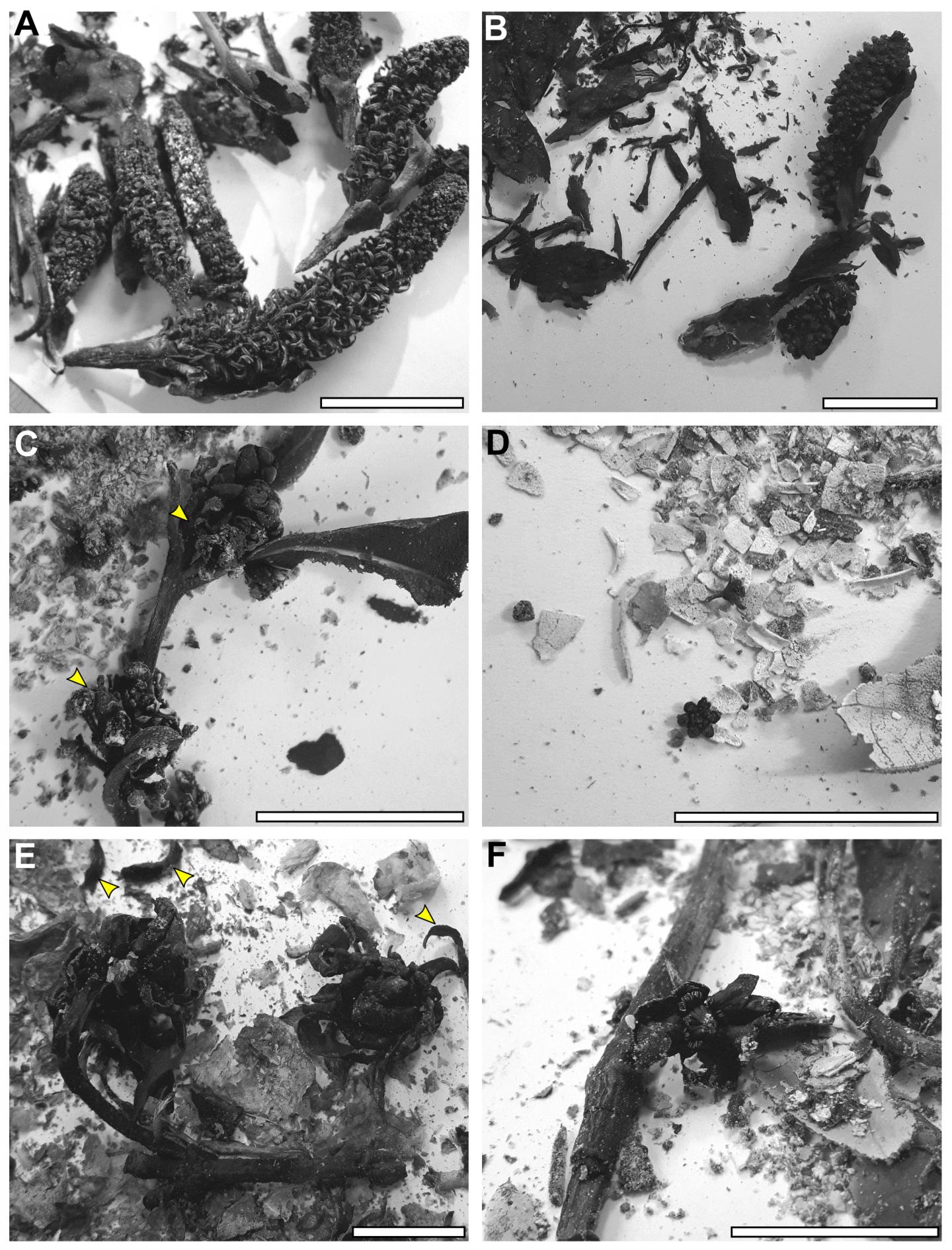
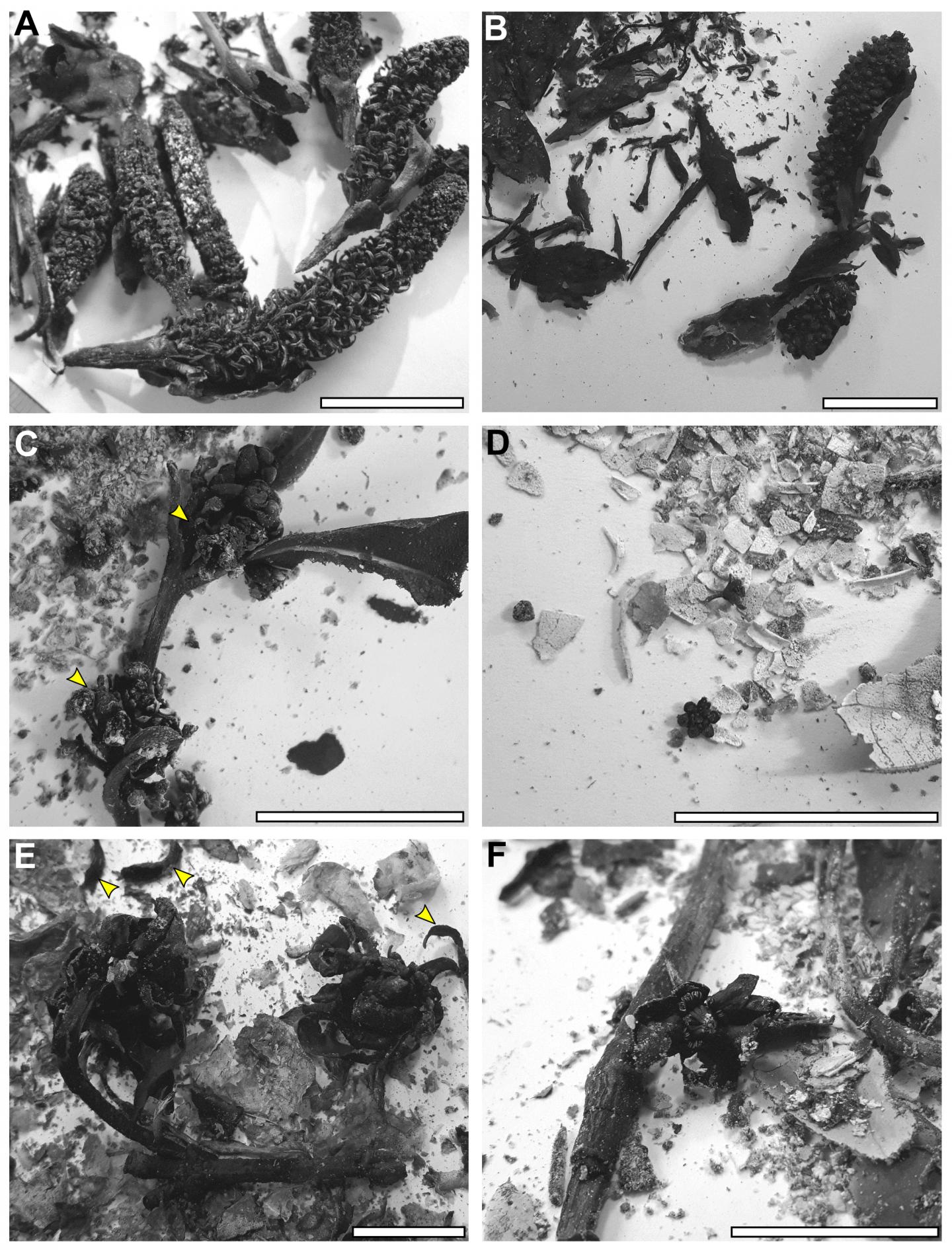
Credit: Geology, Victoria A. Hudspith and Claire M. Belcher

Boulder, Colo., USA: One of the main types of fossil used to understand the first flowering plants (angiosperms) are charred flowers. These charcoals were produced in ancient wildfires, and they provide some evidence for the types of plants that grew millions of years ago. However, when fires burn they not only produce charcoal, but they also destroy it.

This has led scientists to consider whether some types of flowers in Earth's past were more likely to be destroyed during fires, rather than preserved as fossil charcoals in rocks. In their study published this week in Geology, Victoria Hudspith and Claire Belcher show that different types of plants caused fires to burn differently (some hotter and some cooler) and that the different shapes and forms of certain flowers made them more likely to be entirely burned away by fire and turned to ash, whereas other types were more likely to remain as charcoal.

This is important because if scientists are trying to use charred flowers to understand the diversity of the earliest angiosperms then they also need to consider that some flowers may have been turned to ash in these ancient fires and not preserved as charcoal at all. In other words, paleontologists must now consider that the charcoal fossil record of flowers is unlikely to preserve all types of flower equally, and as a result, they may be missing information about the early evolutionary history of angiosperms.

###

FEATURED ARTICLE

Fire alone creates a bias in the production of charred flowers: Implications for the Cretaceous fossil record Victoria A. Hudspith and Claire M. Belcher, wildFIRE lab, Hatherly Laboratories, Department of Geography, University of Exeter, Exeter, EX4 4PS, Devon, UK. Contact: Victoria Anne Hudspith, [email protected]. Article link: http://geology.gsapubs.org/content/early/2017/06/09/G39093.1.abstract.

GEOLOGY articles are online http://geology.gsapubs.org/. Representatives of the media may obtain complimentary articles by contacting Kea Giles at the e-mail address above. Please discuss articles of interest with the authors before publishing stories on their work, and please make reference to GEOLOGY in articles published. Non-media requests for articles may be directed to GSA Sales and Service, [email protected].

http://www.geosociety.org/

Media Contact

Kea Giles
[email protected]
@geosociety

http://www.geosociety.org

Original Source

http://www.geosociety.org/GSA/News/Releases/GSA/News/pr/2017/17-31.aspx

############

Story Source: Materials provided by Scienmag

Share12Tweet8Share2ShareShareShare2

Related Posts

Unraveling the Multifaceted Role of H2AK119 Mono-Ubiquitination in Biology and Disease — Biology

Unraveling the Multifaceted Role of H2AK119 Mono-Ubiquitination in Biology and Disease

May 20, 2026
Powerful Genetic Mutation Surpasses Female Protective Mechanisms in Autism — Biology

Powerful Genetic Mutation Surpasses Female Protective Mechanisms in Autism

May 20, 2026

Shandong University Researchers Innovate Multi-Scale Feature Fusion and Weighted Ensemble Learning for Precise Promoter Identification Across Cell Lines

May 20, 2026

Ancient Complex Life Thrived Along Oxygen-Rich Seafloors for Hundreds of Millions of Years

May 20, 2026
Please login to join discussion

POPULAR NEWS

  • blank

    New Study Reveals Plants Can Detect the Sound of Rain

    732 shares
    Share 292 Tweet 183
  • Research Indicates Potential Connection Between Prenatal Medication Exposure and Elevated Autism Risk

    846 shares
    Share 338 Tweet 212
  • ESMO 2025: mRNA COVID Vaccines Enhance Efficacy of Cancer Immunotherapy

    294 shares
    Share 118 Tweet 74
  • Breastmilk Balances E. coli and Beneficial Bacteria in Infant Gut Microbiomes

    58 shares
    Share 23 Tweet 15

About

We bring you the latest biotechnology news from best research centers and universities around the world. Check our website.

Follow us

Recent News

Revealing Hidden Objects Using Consumer LiDAR

AI System Revolutionizes Scientific Research by Automating Code Generation

Unraveling the Multifaceted Role of H2AK119 Mono-Ubiquitination in Biology and Disease

Subscribe to Blog via Email

Enter your email address to subscribe to this blog and receive notifications of new posts by email.

Join 82 other subscribers
  • Contact Us

Bioengineer.org © Copyright 2023 All Rights Reserved.

Welcome Back!

Login to your account below

Forgotten Password?

Retrieve your password

Please enter your username or email address to reset your password.

Log In
No Result
View All Result
  • Homepages
    • Home Page 1
    • Home Page 2
  • News
  • National
  • Business
  • Health
  • Lifestyle
  • Science

Bioengineer.org © Copyright 2023 All Rights Reserved.