• HOME
  • NEWS
  • EXPLORE
    • CAREER
      • Companies
      • Jobs
    • EVENTS
    • iGEM
      • News
      • Team
    • PHOTOS
    • VIDEO
    • WIKI
  • BLOG
  • COMMUNITY
    • FACEBOOK
    • INSTAGRAM
    • TWITTER
Thursday, April 30, 2026
BIOENGINEER.ORG
No Result
View All Result
  • Login
  • HOME
  • NEWS
  • EXPLORE
    • CAREER
      • Companies
      • Jobs
        • Lecturer
        • PhD Studentship
        • Postdoc
        • Research Assistant
    • EVENTS
    • iGEM
      • News
      • Team
    • PHOTOS
    • VIDEO
    • WIKI
  • BLOG
  • COMMUNITY
    • FACEBOOK
    • INSTAGRAM
    • TWITTER
  • HOME
  • NEWS
  • EXPLORE
    • CAREER
      • Companies
      • Jobs
        • Lecturer
        • PhD Studentship
        • Postdoc
        • Research Assistant
    • EVENTS
    • iGEM
      • News
      • Team
    • PHOTOS
    • VIDEO
    • WIKI
  • BLOG
  • COMMUNITY
    • FACEBOOK
    • INSTAGRAM
    • TWITTER
No Result
View All Result
Bioengineer.org
No Result
View All Result
Home NEWS Science News Biology

Centriole instability might contribute to some cases of microcephaly

Bioengineer by Bioengineer
November 1, 2021
in Biology
Reading Time: 3 mins read
0
Expansion microscopy image of centrioles
Share on FacebookShare on TwitterShare on LinkedinShare on RedditShare on Telegram

Centrioles are cylindrical structures involved in the generation of microtubules—fibers inside of cells that form a network to provide structure and shape to cells and to mediate transport processes. In addition, centriole are required to build cilia, hair-like extensions on the cell surface that allow cells to receive and respond to signals from the outside.
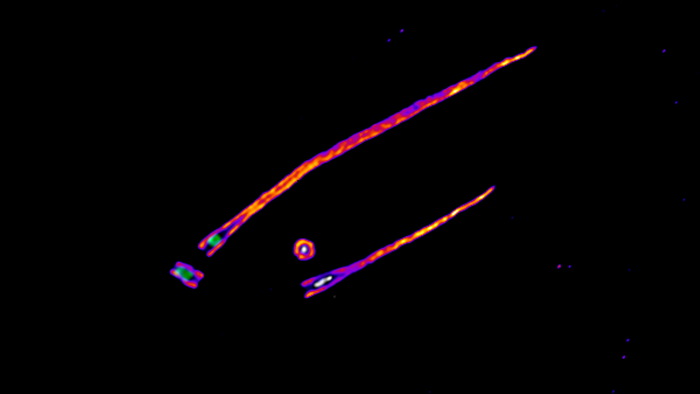
Expansion microscopy image of centrioles

Credit: IRB Barcelona

Centrioles are cylindrical structures involved in the generation of microtubules—fibers inside of cells that form a network to provide structure and shape to cells and to mediate transport processes. In addition, centriole are required to build cilia, hair-like extensions on the cell surface that allow cells to receive and respond to signals from the outside.

Researchers at IRB Barcelona’s Microtubule Organization lab, headed by Dr. Jens Lüders, have identified a new crucial role for γTuRC as a centriole stabilizer and have also identified a form of microcephaly in which this novel function of γTuRC might be perturbed. γTuRC was known to be centriole-related, acting as an initiator of microtubule formation, but this new stabilizer role was not known to date.

Given that microtubules are pivotal for cell function, it is not surprising that their malfunction is associated with a wide range of human diseases. “Our findings suggest that pathologies linked to defects in γTuRC or its localization, such as certain forms of adolescent scoliosis, ophthalmological disorders and male infertility, may involve not only defects in the generation of microtubules but also in centriole stability. We hope this new perspective will lead to a better understanding of these diseases,” Dr. Lüders explains.


Unveiling the γTuRC complex

γTuRC is a protein complex that was discovered over 25 years ago, and it has generated much interest due to its key role in microtubule formation. However, its complex structure, which the Lüders group was able to identify only last year in a collaboration with the Llorca group at the CNIO (Madrid, Spain), has made it hard to obtain a detailed description of its behaviour and functions.

“We had to combine functional assays with expansion microscopy and super-resolution microscopy in human cell cultures to locate γTuRC inside the centriole cylinders and see how it acts as a centriole stabilizer, independent of its role in generating microtubules” says Dr. Nina Schweizer, first author of the work and former postdoctoral researcher at IRB Barcelona.


This work has been performed in collaboration with Dr. Andreas Merdes’ lab at the Centre de Biologie Intégrative, CNRS-Université Toulouse III (Toulouse, France). Work in the Lüders lab has been funded by postdoctoral fellowships to Nina Schweizer (European Commission and EMBO), the Spanish Ministry of Science and Innovation, and the Generalitat de Catalunya.


Journal

Nature Communications

DOI

10.1038/s41467-021-26252-5

Method of Research

Experimental study

Subject of Research

Cells

Article Title

Sub-centrosomal mapping identifies augmin-γTuRC as part of a centriole-stabilizing scaffold

Article Publication Date

15-Oct-2021

Share15Tweet9Share3ShareShareShare2

Related Posts

Exploring the Heart of the Liver: A Scientific Journey — Biology

Exploring the Heart of the Liver: A Scientific Journey

April 30, 2026
Embryos Show Resilience to Cell Division Disruptions at Key Developmental Stages — Biology

Embryos Show Resilience to Cell Division Disruptions at Key Developmental Stages

April 30, 2026

University of Oldenburg Unveils Cutting-Edge Facility for Animal Navigation Research

April 30, 2026

Streptomyces Secrete Insect-Targeting Diphtheria-Like Toxin

April 30, 2026

POPULAR NEWS

  • Research Indicates Potential Connection Between Prenatal Medication Exposure and Elevated Autism Risk

    830 shares
    Share 332 Tweet 208
  • New Study Reveals Plants Can Detect the Sound of Rain

    710 shares
    Share 284 Tweet 177
  • Scientists Investigate Possible Connection Between COVID-19 and Increased Lung Cancer Risk

    67 shares
    Share 27 Tweet 17
  • Salmonella Haem Blocks Macrophages, Boosts Infection

    60 shares
    Share 24 Tweet 15

About

We bring you the latest biotechnology news from best research centers and universities around the world. Check our website.

Follow us

Recent News

Exploring the Heart of the Liver: A Scientific Journey

Hemp-Based Thermoplastic Presents Sustainable Alternative for Plastic Packaging

From AI Mammograms to Pocket CRISPR: Pioneering the Shift Toward Proactive Healthcare

Subscribe to Blog via Email

Enter your email address to subscribe to this blog and receive notifications of new posts by email.

Join 82 other subscribers
  • Contact Us

Bioengineer.org © Copyright 2023 All Rights Reserved.

Welcome Back!

Login to your account below

Forgotten Password?

Retrieve your password

Please enter your username or email address to reset your password.

Log In
No Result
View All Result
  • Homepages
    • Home Page 1
    • Home Page 2
  • News
  • National
  • Business
  • Health
  • Lifestyle
  • Science

Bioengineer.org © Copyright 2023 All Rights Reserved.