• HOME
  • NEWS
  • EXPLORE
    • CAREER
      • Companies
      • Jobs
    • EVENTS
    • iGEM
      • News
      • Team
    • PHOTOS
    • VIDEO
    • WIKI
  • BLOG
  • COMMUNITY
    • FACEBOOK
    • INSTAGRAM
    • TWITTER
Saturday, February 7, 2026
BIOENGINEER.ORG
No Result
View All Result
  • Login
  • HOME
  • NEWS
  • EXPLORE
    • CAREER
      • Companies
      • Jobs
        • Lecturer
        • PhD Studentship
        • Postdoc
        • Research Assistant
    • EVENTS
    • iGEM
      • News
      • Team
    • PHOTOS
    • VIDEO
    • WIKI
  • BLOG
  • COMMUNITY
    • FACEBOOK
    • INSTAGRAM
    • TWITTER
  • HOME
  • NEWS
  • EXPLORE
    • CAREER
      • Companies
      • Jobs
        • Lecturer
        • PhD Studentship
        • Postdoc
        • Research Assistant
    • EVENTS
    • iGEM
      • News
      • Team
    • PHOTOS
    • VIDEO
    • WIKI
  • BLOG
  • COMMUNITY
    • FACEBOOK
    • INSTAGRAM
    • TWITTER
No Result
View All Result
Bioengineer.org
No Result
View All Result
Home NEWS Science News Cancer

Cell study sheds light on damage caused by ageing

Bioengineer by Bioengineer
February 14, 2019
in Cancer
Reading Time: 2 mins read
0
Share on FacebookShare on TwitterShare on LinkedinShare on RedditShare on Telegram

Some of the damaging cell effects linked to ageing could be prevented by manipulating tiny parts of cells, a study shows.

Scientists have shed light on how the harm caused by senescence – a vital cell process that plays a key role in diseases of ageing – could be controlled or even stopped.

Researchers say the findings could have relevance for age-related diseases including cancers and diabetes, although they caution that further research is needed.

During senescence, cells stop dividing. This can be beneficial in assisting wound-healing and preventing excessive growth seen in cancers.

Some aspects of senescence are also harmful and can lead to tissue damage and the deterioration of cell health as seen in diseases of older age.

Scientists at the Medical Research Council’s Human Genetics Unit and the Cancer Research UK Edinburgh Centre at the University of Edinburgh focused on a chain of harmful processes triggered by senescence, known as the senescence-associated secretory phenotype (SASP).

The SASP is a cascade of chemical signals that can promote damage to cells through inflammation.

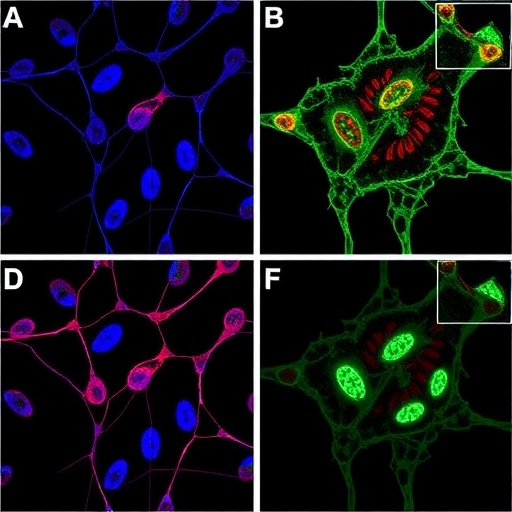
The researchers showed that manipulating a cell’s nuclear pores- gateways through which molecules enter the heart of the cell – prevented triggering of the SASP.

Findings also show that DNA had to be reorganised in space within in the cell’s nucleus in order for the SASP to be triggered.

Researchers say the study sheds light on the fundamental workings of the cell and could be instrumental in understanding cell ageing.

The study, published in Genes and Development, was funded by the Medical Research Council and by Cancer Research UK.

Professor Wendy Bickmore, Director of the Human Genetics Unit at the University of Edinburgh’s Medical Research Council Institute of Genetics and Molecular Medicine, who led the study, said: “These findings provide us with a much clearer understanding of how senescence causes cell damage. Whilst we are some way from being able to halt the damage caused by the ageing process, we hope that this advance will open up avenues to explore how we might slow some of the harm that stems from senescence. This could be of relevance to the many conditions that tend to affect us as we grow older.”

Dr Lindsay Wilson, Programme Manager for Genetics, Epigenetics and Genomics at the Medical Research Council, added: “This study is important because it provides valuable insights in how cells respond to damage and stress. Senescence is an essential self-defence mechanism but at times, can also be harmful. Professor Bickmore’s work suggests ways in which scientists of the future might target these harmful effects, for example in age-related diseases.”

###

Media Contact
Kate McAllister
[email protected]
0044-131-650-6357

Related Journal Article

https://www.ed.ac.uk/news/2019/study-sheds-light-on-damage-linked-to-ageing
http://dx.doi.org/10.1101/gad.321117.118

Tags: AgingBiologycancerCell BiologyMedicine/Health
Share12Tweet7Share2ShareShareShare1

Related Posts

Deep Learning Uncovers Tetrahydrocarbazoles as Potent Broad-Spectrum Antitumor Agents with Click-Activated Targeted Cancer Therapy Approach

February 7, 2026

Newly Discovered Limonoid DHL-11 from Munronia henryi Targets IMPDH2 to Combat Triple-Negative Breast Cancer

February 7, 2026

New Discovery Reveals Why Ovarian Cancer Spreads Rapidly in the Abdomen

February 6, 2026

New Study Finds Americans Favor In-Clinic Screening Over At-Home Tests for Cervical Cancer

February 6, 2026
Please login to join discussion

POPULAR NEWS

  • Robotic Ureteral Reconstruction: A Novel Approach

    Robotic Ureteral Reconstruction: A Novel Approach

    82 shares
    Share 33 Tweet 21
  • Digital Privacy: Health Data Control in Incarceration

    63 shares
    Share 25 Tweet 16
  • Study Reveals Lipid Accumulation in ME/CFS Cells

    57 shares
    Share 23 Tweet 14
  • Breakthrough in RNA Research Accelerates Medical Innovations Timeline

    53 shares
    Share 21 Tweet 13

About

We bring you the latest biotechnology news from best research centers and universities around the world. Check our website.

Follow us

Recent News

Digital Health Perspectives from Baltic Sea Experts

Florida Cane Toad: Complex Spread and Selective Evolution

Exploring Decision-Making in Dementia Caregivers’ Mobility

Subscribe to Blog via Email

Enter your email address to subscribe to this blog and receive notifications of new posts by email.

Join 73 other subscribers
  • Contact Us

Bioengineer.org © Copyright 2023 All Rights Reserved.

Welcome Back!

Login to your account below

Forgotten Password?

Retrieve your password

Please enter your username or email address to reset your password.

Log In
No Result
View All Result
  • Homepages
    • Home Page 1
    • Home Page 2
  • News
  • National
  • Business
  • Health
  • Lifestyle
  • Science

Bioengineer.org © Copyright 2023 All Rights Reserved.