Tissues contain many different cell types, and it remains challenging to understand how they interact and contribute to tissue function. Now, state-of-the-art bioinformatics has enabled an international research team to uncover the complexity and high degree of conservation of the bone marrow (BM) microenvironment that regulates blood stem cells.
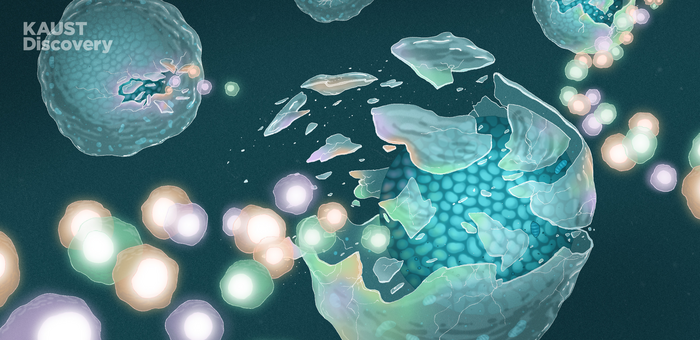
Credit: © 2022 KAUST; Joana C. Carvalho
Tissues contain many different cell types, and it remains challenging to understand how they interact and contribute to tissue function. Now, state-of-the-art bioinformatics has enabled an international research team to uncover the complexity and high degree of conservation of the bone marrow (BM) microenvironment that regulates blood stem cells.
Blood stem cells can self-renew — thereby retaining their stemness — as well as differentiate, giving rise to all cell types in the blood, including white blood cells, red blood cells and platelets. The BM microenvironment or “niche,” where blood stem cells reside, is essential for regulating blood stem cell self-renewal and differentiation. Yet, little is known about the cellular composition of the niche and the diverse functions of its constituents.
“We don’t yet understand the composition of the BM niche and how it integrates local and systemic inputs to regulate hematopoiesis,” says David Gomez-Cabrero, a bioinformatician and computational biologist at KAUST. Gomez-Cabrero has been developing new methods to combine single-cell sequencing datasets to improve understanding of cellular identity and function. Single-cell technologies enable researchers to accurately profile the genes, proteins and metabolites in individual cells.
Gomez-Cabrero, working with Spanish researchers at Clinica Universitaria de Navarra and the Center for Applied Medical Research, has carried out an integrative analysis of three distinct mouse BM niche datasets, focusing on two cell types that are involved in blood stem cell maintenance: endothelial and mesenchymal stromal cells.
The study describes how, by integrating single-cell gene expression data (single-cell RNA sequencing) for each of these cell types, the authors were able to unravel the heterogeneity of these niche cells, identifying multiple cellular subtypes and molecular states. Each subtype is defined by the expression of a particular set of genes, which provides clues about the cells’ function and stage of differentiation. In total, they characterized 14 endothelial subclusters and 11 mesenchymal subclusters. “We have uncovered a previously unrecognized level of heterogeneity and specialization of endothelial and mesenchymal cells in the bone marrow,” says Jesper Tegner, computational biologist and co-author.
When the results in mice were compared with those from human BM samples, some of the subcluster gene signatures and known niche factors regulating hematopoiesis were conserved. This suggests that the biological mechanisms defining the BM microenvironment are likely to be shared between species, explains Gomez-Cabrero.
To further understand the composition and regulation of cells in the BM microenvironment and their interactions, Gomez-Cabrero and researchers Borja Saez and Felipe Prosper will continue to integrate other data modalities, such as epigenetics, proteomics and imaging data, into their analyses. “Once all the cell types have been characterized, cell-cell interactions can be better defined,” he says.
Journal
iScience
DOI
10.1016/j.isci.2022.104225
Article Title
Deconvolution of the hematopoietic stem cell microenvironment reveals a high degree of specialization and conservation
Article Publication Date
20-May-2022