Cell-free DNA (cfDNA) released from injured, dying, or stressed cells is emerging as a promising non-invasive window into cardiovascular disease, according to a review published in Clinical Epigenetics on 3 October 2026. The review, led by Xiaoyu Gan and colleagues, argues that cfDNA-based liquid biopsy could support the diagnosis, monitoring, and risk assessment of cardiovascular diseases (CVDs), which remain the leading cause of mortality worldwide.
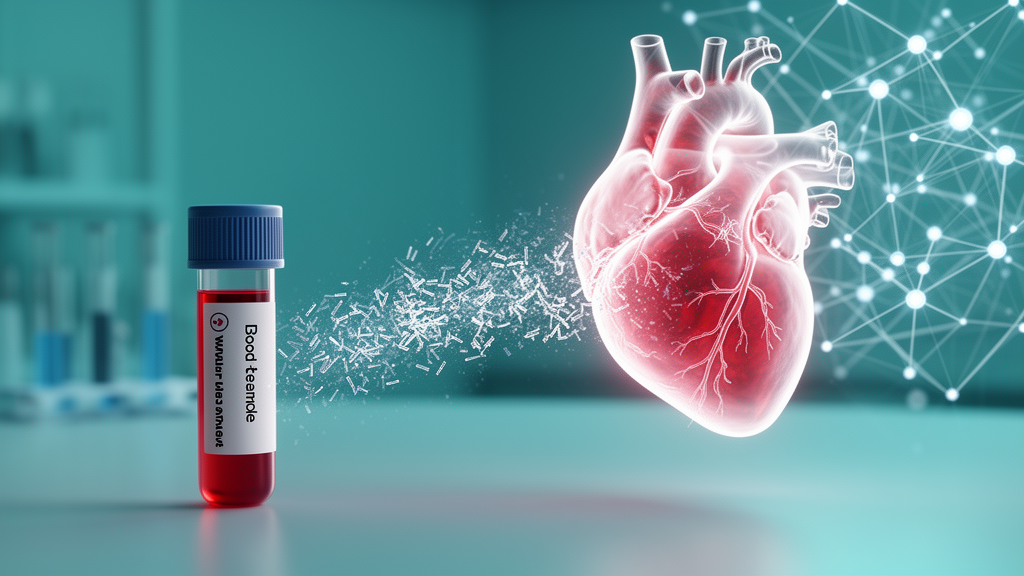
Obtaining diseased cardiovascular tissue directly is often invasive, costly, and clinically impractical, the authors note, which motivates approaches that can capture dynamic pathological information from a blood sample. Because cfDNA is shed into the circulation when cells are damaged, it carries multiple layers of biological information: changes in concentration, tissue-of-origin signatures, fragmentation patterns, nucleosome footprints, mitochondrial DNA signals, and epigenetic modifications.
Each of these signal types carries a distinct meaning, the review explains. cfDNA levels can reflect global cellular injury, tissue-of-origin signatures can identify where in the body the DNA came from, and mitochondrial and epigenetic features can indicate inflammatory or mitochondrial stress. Together, these layers aim to replace the need for direct tissue sampling in at least some clinical scenarios.
The review is careful to emphasise that the current cardiovascular evidence is unevenly distributed across disease areas. Donor-derived cfDNA has shown the strongest clinical relevance in heart transplant rejection surveillance, where it is the most mature application. For myocardial infarction, heart failure, and selected aortic diseases, cfDNA concentration, cardiomyocyte-specific methylation, and fragmentomic features show promise. By contrast, applications in hypertension, valvular disease, congenital heart disease, and cardiomyopathy remain exploratory.
Among the cfDNA features, methylation is singled out as especially informative because it provides stable tissue- and disease-associated signatures. Methylation marks can indicate which tissue released the DNA, making them attractive for pinpointing cardiac injury specifically. However, the authors caution that methylation datasets are typically high-dimensional, sparse, and affected by low fractions of disease-derived cfDNA in the circulation, which complicates their analysis.
Machine learning is proposed as a way to address these challenges. According to the review, computational models may help by selecting informative features from noisy, high-dimensional data, integrating methylation with fragmentomic and nucleosomal signals, and building models for diagnosis, prognosis, tissue-of-origin inference, and longitudinal monitoring of patients over time.
The review summarises the biological characteristics of cfDNA, evaluates its current applications across major cardiovascular diseases, and highlights how machine learning may improve cfDNA interpretation. It also discusses key barriers to clinical translation, which the authors identify as an outstanding obstacle between promising research findings and routine clinical use.
As a review article, the publication synthesises existing literature rather than reporting new experimental results, and its conclusions about clinical promise should be read as a research outlook rather than validated clinical performance. The article is published open access, and the version shared online is an accepted manuscript that remains subject to further edits before the final Version of Record replaces it.
Subject of Research: Applications of cell-free DNA liquid biopsy and machine learning in cardiovascular diseases
Article Title: Liquid biopsy, cfDNA, and machine learning: an integrative approach to cardiovascular diseases
Article References: Gan, X., Zong, J., Huang, P., Zhang, H., Yu, J., & Wu, J. (2026). Liquid biopsy, cfDNA, and machine learning: an integrative approach to cardiovascular diseases. Clinical Epigenetics. https://doi.org/10.1186/s13148-026-02244-4
Image Credits: AI Generated
DOI: 10.1186/s13148-026-02244-4
Keywords: cell-free DNA, liquid biopsy, machine learning, cardiovascular disease, DNA methylation, heart transplant rejection, myocardial infarction, heart failure, fragmentomics, nucleosome footprints, mitochondrial DNA, biomarkers
News Source: Ophelia Keating. (October 28, 2026). Cell-free DNA liquid biopsy meets machine learning in cardiovascular disease review. Scienmag.