• HOME
  • NEWS
  • EXPLORE
    • CAREER
      • Companies
      • Jobs
    • EVENTS
    • iGEM
      • News
      • Team
    • PHOTOS
    • VIDEO
    • WIKI
  • BLOG
  • COMMUNITY
    • FACEBOOK
    • INSTAGRAM
    • TWITTER
Saturday, June 27, 2026
BIOENGINEER.ORG
No Result
View All Result
  • Login
  • HOME
  • NEWS
  • EXPLORE
    • CAREER
      • Companies
      • Jobs
        • Lecturer
        • PhD Studentship
        • Postdoc
        • Research Assistant
    • EVENTS
    • iGEM
      • News
      • Team
    • PHOTOS
    • VIDEO
    • WIKI
  • BLOG
  • COMMUNITY
    • FACEBOOK
    • INSTAGRAM
    • TWITTER
  • HOME
  • NEWS
  • EXPLORE
    • CAREER
      • Companies
      • Jobs
        • Lecturer
        • PhD Studentship
        • Postdoc
        • Research Assistant
    • EVENTS
    • iGEM
      • News
      • Team
    • PHOTOS
    • VIDEO
    • WIKI
  • BLOG
  • COMMUNITY
    • FACEBOOK
    • INSTAGRAM
    • TWITTER
No Result
View All Result
Bioengineer.org
No Result
View All Result
Home NEWS Science News Health

CCNY scientists provide new insights into cholera microbe and chances of pandemic strain

Bioengineer by Bioengineer
December 18, 2020
in Health
Reading Time: 2 mins read
0
IMAGE
Share on FacebookShare on TwitterShare on LinkedinShare on RedditShare on Telegram

IMAGE

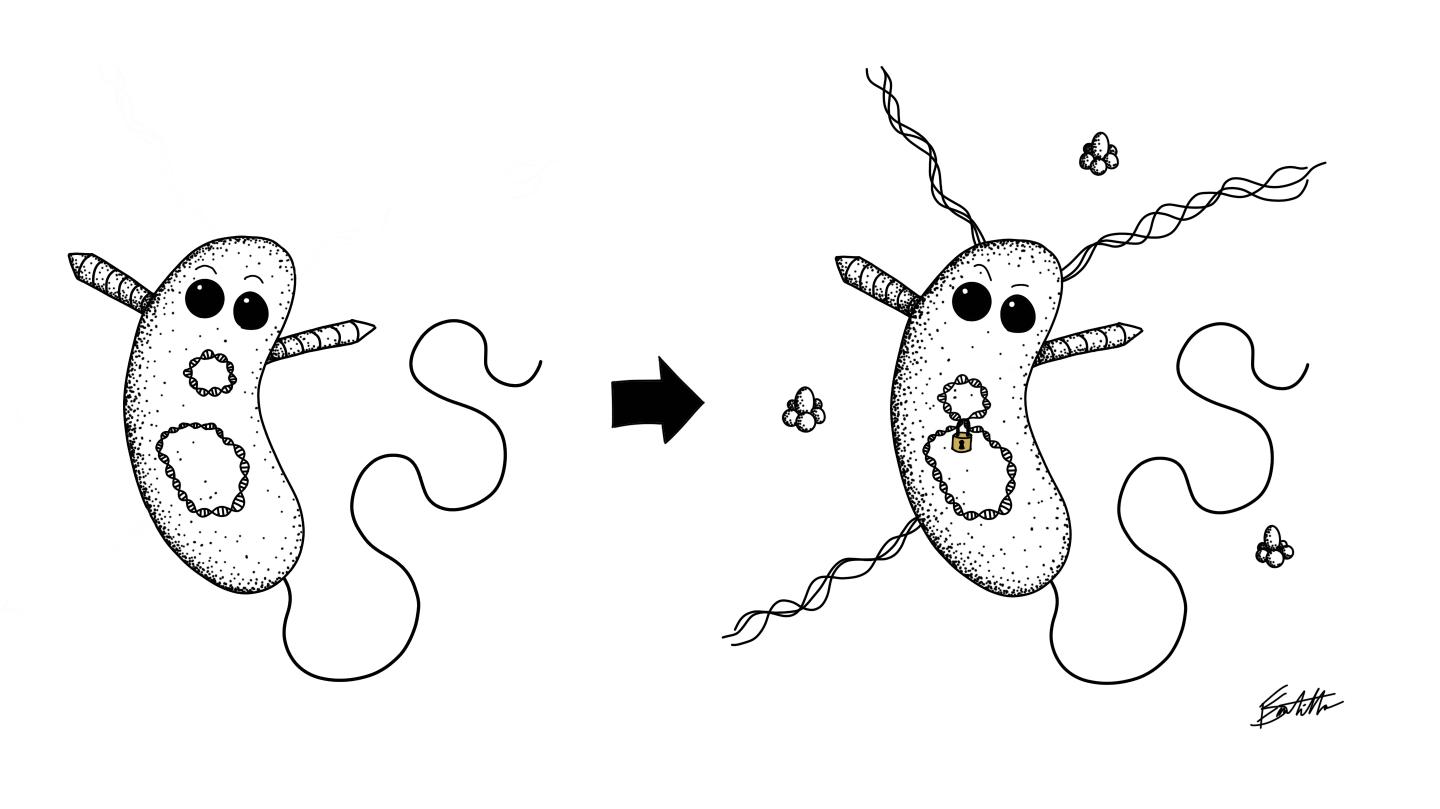
Credit: Image credit: Francis J. Santoriello

Researchers at The City College of New York have uncovered a novel way in which Vibrio cholerae, the aquatic microbe that causes cholera, may increase its competitive fitness, and the likelihood of creating pandemic strains of the bacteria.

The finding was revealed by examining the type VI secretion system, or T6SS for short, a secretion system used by Vibrio cholerae to inject toxic proteins into neighboring bacterial cells, killing them and increasing its survival advantage. The researchers studied a gene cluster within the T6SS called auxiliary cluster 3 (Aux3). The gene cluster exists in two states: one, which is highly mobile, is found in environmental strains of V. cholerae–these do not cause disease–and a second, which is a less mobile form of the gene cluster. This second, less mobile form of the gene cluster is “locked” in the pandemic V. cholerae genome and potentially helped create the pandemic strains.

“We wanted to look at how a harmless environmental strain of Vibrio cholerae acquires the unique traits needed to become the pandemic strain of the bacteria,” said Francis J. Santoriello, from City College’s Department of Biology. “With this in mind, we located an island in the chromosome of the bacteria that only exists in the pandemic strain. Unexpectedly, we found a much larger form of the DNA island in a couple strains in the environment that seems to be jumping from one strain to another.”

Stefan Pukatzki, lead author of the CCNY study, added, “Even though we may not have a cure for cholera, this research contributes to our understanding of how these pathogens evolve and become pandemic.”

###

The study, “Pandemic Vibrio cholerae shuts down site-specific recombination to retain an interbacterial defense mechanism” appears in the December issue of Nature Communications, providing new insights into this devastating and deadly illness, which is particularly endemic in the developing world.

Both Santoriello and Pukatzki have affiliation with the University of Colorado Denver’s Department of Immunology and Microbiology.

Media Contact
Jay Mwamba
[email protected]

Original Source

https://www.ccny.cuny.edu/news/city-college-scientists-provide-new-insights-cholera-microbe-and-chances-pandemic-strain

Tags: BacteriologyBiologyBiomedical/Environmental/Chemical EngineeringCell BiologyDisease in the Developing WorldHealth CareMicrobiologyMolecular BiologyParasitologyVirology
Share12Tweet8Share2ShareShareShare2

Related Posts

Tracking Lanthanide-Labeled Microplastics in Plants

June 25, 2026

Neural Design Enables Zero-Shot Drug-Binding Proteins

June 25, 2026

Genomic Insights into Human Skin Fungi Diversity

June 25, 2026

Chiral Laser Gyroscopes Surpass Lock-In Limit

June 25, 2026
Please login to join discussion

POPULAR NEWS

  • Saying Goodbye to PGY-6: Pediatric Fellowship Realities

    103 shares
    Share 41 Tweet 26
  • Multi-Hospital Study Reveals Long Covid Burden Is Twice as High as Current Estimates

    92 shares
    Share 36 Tweet 23
  • Detection of EDCs in Breast Milk and Infant Urine Up to Six Months Highlights Early Exposure Risks

    77 shares
    Share 31 Tweet 19
  • New Drug Candidate Developed at McMaster Shows Potential for Treating Brain Cancer

    58 shares
    Share 23 Tweet 15

About

We bring you the latest biotechnology news from best research centers and universities around the world. Check our website.

Follow us

Recent News

Tracking Lanthanide-Labeled Microplastics in Plants

POSTECH Researchers Slash Cost of Reconstituted Cell-Free Systems by 95%

AI and Physics Collaborate to Design Advanced Hydrogen Storage Materials

Subscribe to Blog via Email

Success! An email was just sent to confirm your subscription. Please find the email now and click 'Confirm' to start subscribing.

Join 82 other subscribers
  • Contact Us

Bioengineer.org © Copyright 2023 All Rights Reserved.

Welcome Back!

Login to your account below

Forgotten Password?

Retrieve your password

Please enter your username or email address to reset your password.

Log In
No Result
View All Result
  • Homepages
    • Home Page 1
    • Home Page 2
  • News
  • National
  • Business
  • Health
  • Lifestyle
  • Science

Bioengineer.org © Copyright 2023 All Rights Reserved.