• HOME
  • NEWS
  • EXPLORE
    • CAREER
      • Companies
      • Jobs
    • EVENTS
    • iGEM
      • News
      • Team
    • PHOTOS
    • VIDEO
    • WIKI
  • BLOG
  • COMMUNITY
    • FACEBOOK
    • INSTAGRAM
    • TWITTER
Sunday, May 17, 2026
BIOENGINEER.ORG
No Result
View All Result
  • Login
  • HOME
  • NEWS
  • EXPLORE
    • CAREER
      • Companies
      • Jobs
        • Lecturer
        • PhD Studentship
        • Postdoc
        • Research Assistant
    • EVENTS
    • iGEM
      • News
      • Team
    • PHOTOS
    • VIDEO
    • WIKI
  • BLOG
  • COMMUNITY
    • FACEBOOK
    • INSTAGRAM
    • TWITTER
  • HOME
  • NEWS
  • EXPLORE
    • CAREER
      • Companies
      • Jobs
        • Lecturer
        • PhD Studentship
        • Postdoc
        • Research Assistant
    • EVENTS
    • iGEM
      • News
      • Team
    • PHOTOS
    • VIDEO
    • WIKI
  • BLOG
  • COMMUNITY
    • FACEBOOK
    • INSTAGRAM
    • TWITTER
No Result
View All Result
Bioengineer.org
No Result
View All Result
Home NEWS Science News Biology

Cashew shell compound appears to mend damaged nerves

Bioengineer by Bioengineer
August 17, 2020
in Biology
Reading Time: 2 mins read
0
IMAGE
Share on FacebookShare on TwitterShare on LinkedinShare on RedditShare on Telegram

IMAGE

Credit: Vanderbilt University Medical Center

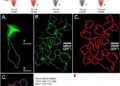
In laboratory experiments, a chemical compound found in the shell of the cashew nut promotes the repair of myelin, a team from Vanderbilt University Medical Center reports today in the Proceedings of the National Academy of Sciences.

Myelin is a protective sheath surrounding nerves. Damage to this covering — demyelination — is a hallmark of multiple sclerosis and related diseases of the central nervous system.

“We see this as an exciting finding, suggesting a new avenue in the search for therapies to correct the ravages of MS and other demyelinating diseases,” said the paper’s senior author, Subramaniam Sriram, MBBS, William C. Weaver III Professor of Neurology and chief of the Division of Neuroimmunology.

Previous work led by Sriram showed that a protein called interleukin 33, or IL-33, induced myelin formation. IL-33 is, among other things, an immune response regulator, and multiple sclerosis is an autoimmune disorder.

The cashew shell compound is called anacardic acid. Sriram and team grew interested in it because it’s known to inhibit an enzyme involved in gene expression called histone acetyltransferase, or HAT, and the team had discovered that whatever inhibits HAT induces production of IL-33.

The report includes a range of new findings that point to potential therapeutic use of anacardic acid for demyelinating diseases:

  • In vitro, the addition of the compound to rat cells most responsible for myelination — oligodendrocyte precursor cells, or OPCs — spurred induction of IL-33 and rapidly increased the expression of myelin genes and proteins, including dose-dependent increases in myelin basic protein;
  • In two animal models of demyelination, treatment with the compound increased the relative presence of IL-33-expressing OPCs and led to reduced paralysis;
  • In an animal model of demyelination treated with the compound, dissection and electron microscopy showed dose-dependent increases in myelination.

“These are striking results that clearly urge further study of anarcardic acid for demyelinating diseases,” Sriram said.

###

Joining Sriram for the study were Asa Ljunggren-Rose, Chandramohan Natarajan, Pranathi Matta, Akansha Pandey and Isha Upender.

Media Contact
Craig Boerner
[email protected]

Related Journal Article

http://dx.doi.org/10.1073/pnas.2006566117

Tags: Medicine/HealthneurobiologyNutrition/Nutrients
Share12Tweet8Share2ShareShareShare2

Related Posts

Uncovering C. elegans Immunity via Genetic Screens — Biology

Uncovering C. elegans Immunity via Genetic Screens

May 16, 2026
Single mother must adapt swiftly — the survival of her colony depends on it — Biology

Single mother must adapt swiftly — the survival of her colony depends on it

May 15, 2026

Why Are Nearly Everyone Right-Handed? It Might Be Linked to How We Learned to Walk

May 15, 2026

Excessive Neuronal Activity Initiates Severe Autoimmune Brain Disorder

May 15, 2026
Please login to join discussion

POPULAR NEWS

  • Research Indicates Potential Connection Between Prenatal Medication Exposure and Elevated Autism Risk

    844 shares
    Share 338 Tweet 211
  • New Study Reveals Plants Can Detect the Sound of Rain

    730 shares
    Share 291 Tweet 182
  • Salmonella Haem Blocks Macrophages, Boosts Infection

    62 shares
    Share 25 Tweet 16
  • Breastmilk Balances E. coli and Beneficial Bacteria in Infant Gut Microbiomes

    58 shares
    Share 23 Tweet 15

About

We bring you the latest biotechnology news from best research centers and universities around the world. Check our website.

Follow us

Recent News

Age Discrimination Affects Healthcare Use in India

Lavandula-Zn(II) Hybrid Shields Steel from Corrosion

Targeted Radiotherapy Extends Control of Early-Stage Breast Cancer Spread

Subscribe to Blog via Email

Enter your email address to subscribe to this blog and receive notifications of new posts by email.

Join 82 other subscribers
  • Contact Us

Bioengineer.org © Copyright 2023 All Rights Reserved.

Welcome Back!

Login to your account below

Forgotten Password?

Retrieve your password

Please enter your username or email address to reset your password.

Log In
No Result
View All Result
  • Homepages
    • Home Page 1
    • Home Page 2
  • News
  • National
  • Business
  • Health
  • Lifestyle
  • Science

Bioengineer.org © Copyright 2023 All Rights Reserved.