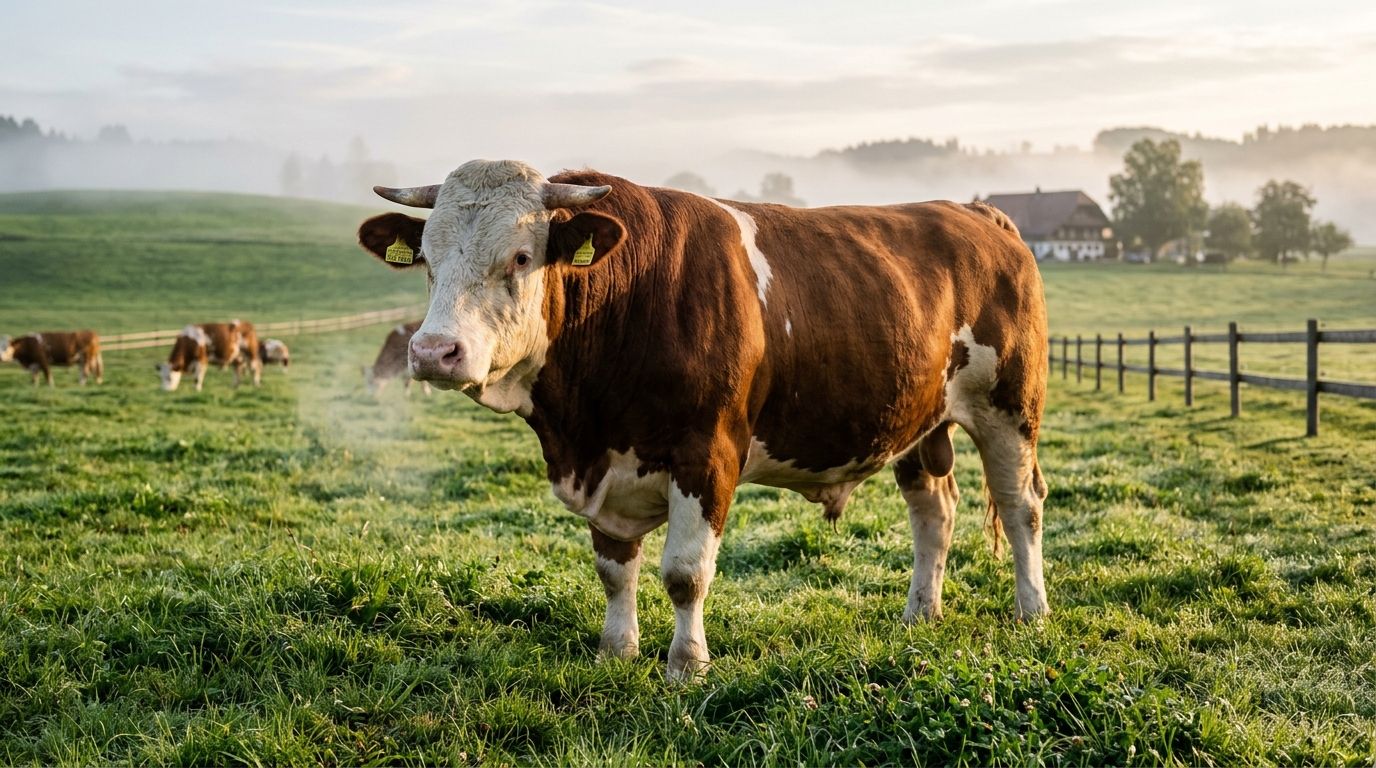
In an original research investigation published in Frontiers in Veterinary Science, animal reproduction specialists from Tarim University examined how systematic variations in dilution ratios influence the physiological viability, cellular architecture, and biochemical antioxidant capacity of Simmental bull semen held in chilled liquid storage at zero degrees Celsius. Artificial insemination represents an established cornerstone of commercial livestock production, playing a vital role in propagating superior animal genetics, elevating herd reproductive efficiency, and preventing transmissible venereal pathology across agricultural operations. While cryopreserved semen stored in liquid nitrogen remains widely used across global breeding programs, fresh and liquid-chilled semen consistently yields superior post-insemination outcomes by avoiding the mechanical stress and membrane trauma caused by ice crystal phase transitions during freezing and thawing. Liquid storage at zero degrees Celsius effectively circumvents intracellular ice crystallization while substantially suppressing bacterial and microbial proliferation that would otherwise degrade sperm viability. Nevertheless, sustaining prolonged cellular survival outside the natural biological reproductive tract requires maintaining a delicate physiological equilibrium. This study demonstrates that adjusting the volumetric proportion between collected ejaculates and protective diluents exerts an overriding regulatory effect on sperm longevity, establishing that an intermediate dilution ratio of one to five markedly surpasses both under-diluted and over-diluted preparations across extended refrigeration timelines.
The biological rationale underpinning semen extension centers on the necessity of providing sufficient nutrient substrates, balancing extracellular osmolarity, attenuating metabolic burden, and diluting toxic metabolic end-products that accumulate over time. In vitro sperm survival is heavily governed by the extracellular microenvironment, where the dilution ratio serves not merely as a quantitative volume modifier but as an essential modulator of cellular energy production and redox homeostasis. In concentrated suspensions characterized by narrow dilution ratios, excessive cellular packing density rapidly exhausts available exogenous nutrients while driving localized accumulation of lactic acid and metabolic byproducts, inevitably accelerating cellular senescence and death. Conversely, subjecting sperm cells to excessive dilution volumes induces severe dilution shock. Because mammalian spermatozoa shed the vast majority of their cytoplasmic volume during terminal spermiogenesis, mature cells possess exceptionally limited intracellular antioxidant defense systems and remain critically reliant on protective enzymes, peptides, and non-enzymatic scavengers supplied by seminal plasma and exogenous extenders. When high dilution gradients over-dilute seminal plasma, they deplete vital endogenous scavengers and reduce the bioavailability of critical mineral cofactors, exposing vulnerable polyunsaturated fatty acids within the sperm plasma membrane to catastrophic reactive oxygen species attacks and mitochondrial failure.
To rigorously identify the optimal balance between nutrient availability and protective seminal plasma preservation, the research team designed a controlled laboratory trial using ejaculates collected from five mature, healthy Simmental breeding bulls aged three to four years displaying robust libido at a breeding farm in Xinhe within Xinjiang Province. The experimental procedures, conducted between May and August 2022, adhered strictly to protocols approved by the Institutional Animal Care and Use Committee of Tarim University. Semen collection utilized standard artificial vagina techniques, followed by immediate laboratory evaluation at thirty-seven to thirty-eight degrees Celsius to verify baseline suitability. Only high-grade ejaculates demonstrating normal cellular morphology, an initial progressive motility exceeding eighty percent, and a sperm density greater than one billion cells per milliliter were accepted, with each bull serving as an independent biological replicate. Ejaculates were gently homogenized and partitioned into five designated experimental groups: Group I diluted at a ratio of one to one, Group II at one to three, Group III at one to five, Group IV at one to seven, and Group V at one to nine. Dilutions were carried out using a specialized patented extender developed specifically for bovine semen refrigeration at zero degrees Celsius under Chinese patent authorization ZL2007100181613.
Following initial processing, diluted samples in fifty-milliliter centrifuge tubes underwent controlled thermal stabilization within a thirty-seven-degree water beaker placed inside a four-degree equilibration cabinet for two to three hours before ice cubes were introduced into the water bath to bring the environment down to zero degrees Celsius for long-term refrigeration. Structural and functional parameters including computer-assisted sperm analysis motility, acrosome integrity, and plasma membrane integrity were tracked systematically at designated intervals across zero, twenty-four, seventy-two, one hundred and twenty, one hundred and sixty-eight, and two hundred and sixteen hours of storage. To evaluate biochemical antioxidant mechanics and cellular energy status between seventy-two and one hundred and sixty-eight hours, the researchers executed an essential standardized density normalization protocol. Before performing biochemical assays, every semen sample was analyzed with a specialized bovine density counter and precisely adjusted to a uniform concentration of ten million sperm per milliliter using extenders in a thirty-seven-degree water bath via a gentle two-step mixing technique. Standardizing cell concentration ensured that downstream quantifications accurately captured intrinsic intracellular activity rather than artifacts caused by disparate cellular numbers across dilution groups.
Normalized cellular samples were subsequently centrifuged at eight hundred times gravity for ten minutes at four degrees Celsius to separate seminal plasma and extender supernatant. The remaining sperm pellets were washed twice using zero-point-nine percent normal saline, resuspended, and disrupted by ultrasonic lysis in an ice bath. Spectrophotometric and enzymatic assays were performed on the cleared sperm lysates using commercial diagnostic kits to quantify intracellular adenosine triphosphate content, total antioxidant capacity, malondialdehyde concentrations as an index of lipid peroxidation, and the specific activities of superoxide dismutase, glutathione peroxidase, and catalase. For repeated-measures parameters evaluated across the two-hundred-and-sixteen-hour storage duration, data distributions were confirmed using Shapiro-Wilk tests for normality and Levene tests for variance homogeneity before running two-way repeated-measures analysis of variance in SPSS version 26.0, treating dilution ratio as the between-subject factor and storage duration as the within-subject factor with post hoc Duncan multiple range comparisons. Single-time-point biochemical indices were analyzed through one-way analysis of variance.
The evaluation of sperm kinetic motility revealed striking divergence across experimental groups over time. Statistical analysis verified highly significant main effects for both the dilution ratio factor, yielding an F value of 613.70 with P less than 0.01, and storage duration, yielding an F value of 14210.04 with P less than 0.01, accompanied by a highly significant two-way interaction between dilution ratio and preservation time with an F value of 198.07 and P less than 0.01. While baseline motility at zero hours remained comparable across all groups within a narrow band of eighty-four-point-fifty-eight to eighty-five-point-fifty-eight percent, marked differentiation emerged as storage progressed beyond twenty-four hours. At seventy-two hours, Group III diluted at one to five retained seventy-five-point-ninety percent motility, significantly outperforming Group II at sixty-one-point-zero-six percent, Group IV at sixty-one-point-forty-three percent, Group V at fifty-five-point-zero-seven percent, and Group I at fifty-three-point-sixty-six percent. By one hundred and sixty-eight hours, Group III maintained fifty-point-forty-two percent motility, whereas Group I plummeted to twelve-point-eighty-four percent and Group V declined to twenty-nine-point-fifty-eight percent. At the terminal two-hundred-and-sixteen-hour milestone, sperm in the one-to-one suspension suffered complete biological mortality with zero percent motility, while Group III preserved a remarkable forty-three-point-fifty percent motility, significantly surpassing Group IV at twenty-nine-point-eighty-five percent, Group II at twenty-five-point-eighteen percent, and Group V at nine-point-seventy-eight percent.
Evaluations of cellular architectural integrity mirrored the functional motility profiles, demonstrating identical superiority for the intermediate one-to-five formulation. For acrosome integrity, repeated-measures analysis demonstrated significant main effects for dilution ratio with an F value of 204.85, storage duration with an F value of 2322.34, and their interaction with an F value of 139.94, all at P less than 0.01. Following hematoxylin staining and microscopic examination at one-thousand-times magnification, acrosome integrity in Group III remained at seventy-seven-point-twelve percent at one hundred and sixty-eight hours and sixty-seven-point-ninety-three percent at two hundred and sixteen hours, significantly higher than all competing cohorts. Group I collapsed from sixty-point-forty-three percent at one hundred and sixty-eight hours to zero percent at two hundred and sixteen hours, while Groups II, IV, and V finished at fifty-four-point-seventy-six, fifty-four-point-eighty-five, and forty-nine-point-thirty-four percent, respectively. Assessment of plasma membrane integrity via the hypo-osmotic swelling assay using fructose-sodium citrate solutions yielded consistent results, showing significant dilution and duration effects alongside an interaction F value of 135.32 at P less than 0.01. At two hundred and sixteen hours, Group III exhibited fifty-five-point-thirty-two percent membrane integrity, significantly outclassing Group IV at forty-point-thirty-nine percent, Group II at thirty-eight-point-seventy-nine percent, Group V at thirty-seven-point-sixty-nine percent, and the non-viable Group I.
The quantitative biochemical evaluations of sperm lysates provided direct mechanistic explanations for the phenotypic resilience observed in the one-to-five dilution cohort. Under low-temperature refrigerated storage, cellular metabolism slows considerably but does not halt completely, as spermatozoa continue to rely predominantly on glycolysis to generate metabolic energy. This continuous glycolytic flux generates substantial basal quantities of reactive oxygen species that must be neutralized by endogenous enzymatic pathways to prevent toxic oxidative stress. In the one-to-five dilution group, intracellular adenosine triphosphate content was significantly higher than in all other groups at both seventy-two hours and one hundred and sixty-eight hours of storage, indicating robust, uninterrupted mitochondrial and glycolytic metabolic support. Concurrently, total antioxidant capacity in Group III sperm lysates remained significantly superior to all cohorts at one hundred and sixty-eight hours, whereas Groups II and IV displayed intermediate levels and Groups I and V exhibited the lowest antioxidant capacity. This preserved capacity was directly reflected in lipid peroxidation assays, where malondialdehyde concentrations in Group III remained significantly lower between seventy-two and one hundred and sixty-eight hours than those measured in the under-diluted Group I and over-diluted Group V cohorts.
Direct assessments of primary enzymatic scavengers illuminated the intracellular defensive machinery protecting sperm membranes from peroxidative breakdown. Superoxide dismutase acts as the primary enzymatic defense against oxidative attack by dismutating toxic superoxide anions into hydrogen peroxide, which is subsequently converted into water and molecular oxygen through the coordinated catalytic actions of catalase and glutathione peroxidase. Throughout the testing window from seventy-two to one hundred and sixty-eight hours of refrigerated storage, sperm superoxide dismutase activity in Group III remained significantly higher than that observed across all other dilution groups, while Group IV maintained intermediate activity above Groups I, II, and V. Similarly, glutathione peroxidase activity across the same window was significantly elevated in Group III relative to all other treatments, with Groups II and IV sustaining higher activity than Group I. Catalase activity followed a matching trajectory, peaking significantly in Group III at both seventy-two and one hundred and sixty-eight hours. Conversely, excessive dilution at one to nine severely compromised these enzymatic defenses, culminating in the lowest antioxidant indices and accelerated deterioration of membrane stability, directly corroborating previous bovine findings that over-extension triggers intracellular oxidative stress and mitochondrial compromise.
These experimental results collectively underscore that formulating chilled semen extenders requires maintaining a precise physiological window that simultaneously mitigates cellular packing stress and prevents the pathological dilution of natural seminal protective systems. Diluting Simmental bull semen at a ratio of one to five achieves this dual physiological balance by alleviating nutrient competition and toxic metabolite accumulation while preserving adequate concentrations of endogenous seminal plasma antioxidants and permitting optimal functional engagement with exogenous extender nutrients and energy substrates. The study notes that its findings are specifically grounded in liquid storage at zero degrees Celsius using this specialized extender formulation across five healthy breeding bulls, and highlights that dynamic preservation success remains fundamentally dependent on storage duration. By elucidating the quantitative interplay between volumetric dilution, enzymatic antioxidant defense, and membrane structural integrity, this research delivers critical empirical parameters for refining zero-degree liquid preservation protocols, offering valuable practical strategies to extend the usable shelf life of bovine semen for commercial artificial insemination programs.
Subject of Research: Optimization of dilution ratios for low-temperature refrigerated storage of Simmental bull semen
Article Title: Effect of dilution ratio on 0 °C refrigerated storage of simmental bull semen
Article References: Huang, F., He, X.-X., Hu, K., Chen, H., Deng, X.-W., Qu, H.-M., Li, X.-P., Wang, X.-Y., Niu, P., Fang, D., & Gao, Q.-H. (2026). Effect of dilution ratio on 0 °C refrigerated storage of simmental bull semen. Frontiers in Veterinary Science, 13, 1940375. https://doi.org/10.3389/fvets.2026.1940375
Image Credits: AI Generated
DOI: 10.3389/fvets.2026.1940375
Keywords: Simmental bulls, bovine semen preservation, cryopreservation, refrigerated storage, dilution ratio, sperm motility, acrosome integrity, plasma membrane integrity, superoxide dismutase, catalase, glutathione peroxidase, malondialdehyde, total antioxidant capacity, adenosine triphosphate, oxidative stress, artificial insemination, veterinary science
News Source: Drew Townsend. (November 17, 2026). Simmental Bull Semen Preservation at Zero Degrees Celsius Optimised by One-to-Five Dilution. Scienmag.