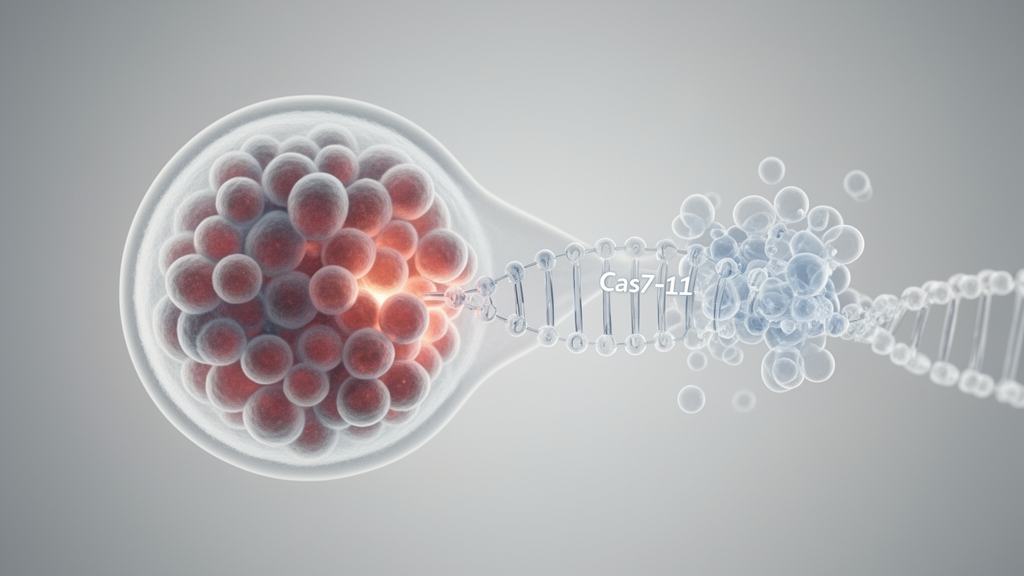
Researchers have demonstrated that the CRISPR effector protein Cas7-11 can effectively target and reduce specific RNA molecules in both zebrafish embryos and human embryonic stem cells. Published in Cell & Bioscience, the study provides evidence that this recently characterized tool offers a precise alternative to DNA-based gene-editing approaches for functional studies in embryonic development and stem cell biology. The work addresses a gap in the application of Cas7-11, which had previously been tested in zebrafish embryos only as ribonucleoprotein complexes, by exploring its use in mRNA and single guide RNA formulations.
The CRISPR/Cas7-11 system is described as an RNA targeting tool that exhibits low toxicity, minimal off-target effects, and reduced collateral RNA cleavage.
In the zebrafish embryo experiments, the team injected Cas7-11 and single guide RNA to target specific transcripts. The results showed evident reductions in the target RNA levels, which were accompanied by clear phenotypic outcomes in the developing embryos. Specifically, exogenous EGFP mRNA levels were reduced to 31.90% of their original levels. Endogenous targets also showed significant knockdown, with the tbxta gene reduced to 19.89% and the tyrosinase gene reduced to 33.18%. These molecular changes translated into observable physical traits, including a no-tail phenotype and reduced pigmentation, confirming the functional impact of the RNA knockdown.
To verify the specificity of the Cas7-11 system, the researchers performed RNA sequencing on the treated zebrafish embryos. This analysis confirmed that the system had minimal off-target effects, meaning it primarily acted on the intended targets without significantly disrupting other parts of the transcriptome. Furthermore, the study demonstrated that the observed phenotypic changes were directly linked to the targeted gene knockdown. When the team overexpressed the target mRNA, the no-tail phenotype was partially rescued, providing causal evidence that the reduction in transcript levels was responsible for the developmental defect.
The study also extended the evaluation to mammalian cell lines, specifically human embryonic stem cells and HEK293T cells. In these cells, Cas7-11 decreased the levels of exogenous Gaussia luciferase mRNA. The efficiency varied between cell types, with levels reduced to 23.52% in human embryonic cells and to 63.75% in HEK293T cells. Correspondingly, the luciferase activity was reduced, mirroring the decrease in mRNA levels. Importantly, the system did not exhibit collateral cleavage activity in these mammalian cells, reinforcing its precision and safety profile for use in human cell models.
In human embryonic stem cells, the researchers targeted genes associated with pluripotency, specifically OCT4 and SOX2. The knockdown of these key factors resulted in decreased mRNA levels and induced differentiation of the stem cells. This finding highlights the utility of Cas7-11 for studying the molecular mechanisms that maintain stem cell identity. By reducing the expression of pluripotency factors, the tool allowed the researchers to observe the downstream effects on cell fate, demonstrating its applicability in stem cell biology research.
The study concludes that Cas7-11 serves as a precise and efficient RNA knockdown tool for functional studies. Its ability to work in both embryonic models and stem cell lines provides a versatile alternative to existing DNA-based gene-editing approaches.
While the study provides strong evidence for the efficacy of Cas7-11 in the tested models, the scope is limited to the specific cell lines and embryo stages examined. Nevertheless, the successful application of the system in both zebrafish and human cells underscores its potential as a general-purpose tool for RNA targeting. The research contributes to the growing field of programmable RNA interference, offering a new option for scientists seeking to manipulate gene expression without altering the underlying DNA sequence.
Subject of Research: Evaluation of Cas7-11 CRISPR effector for RNA knockdown in zebrafish and human cells
Article Title: Programmable RNA targeting with clustered regularly interspaced short palindromic repeats (CRISPR) effector Cas7-11 in zebrafish embryos and mammalian cells
Article References: Yan, H., Hassan, I. U., Yan, K., Cheung, M. Y., Deng, J., Wuyang, D. D., Jiang, K., Zhou, L., Yuan, L., Cai, D., Qi, X., Lei, Y., Wei, P., & Zhao, H. (2026). Programmable RNA targeting with clustered regularly interspaced short palindromic repeats (CRISPR) effector Cas7-11 in zebrafish embryos and mammalian cells. Cell & Bioscience. https://doi.org/10.1186/s13578-026-01632-w
Image Credits: AI Generated
DOI: 10.1186/s13578-026-01632-w
Keywords: CRISPR, Cas7-11, RNA targeting, Zebrafish, Human embryonic stem cells, Gene knockdown, Molecular biology, Cell & Bioscience, Programmable, targeting, clustered, regularly
News Source: Drew Townsend. (November 10, 2026). Cas7-11 Enables Precise RNA Knockdown in Zebrafish and Stem Cells. Scienmag.