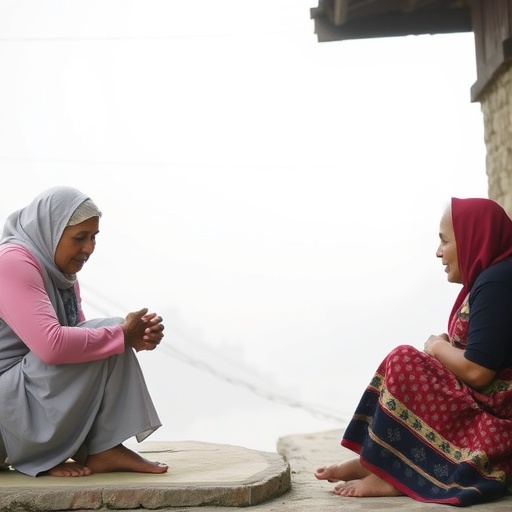
In the evolving landscape of global demographics, the increasing aging population poses profound challenges for healthcare systems and families alike. Recent research conducted in Kathmandu, Nepal, has brought critical insights into the caregiving burden experienced by family members caring for older adults living with disabilities. This groundbreaking study delineates the multifaceted factors contributing to the stress, emotional exhaustion, and physical demands faced by these caregivers, offering a window into a healthcare conundrum that resonates worldwide.
The heart of the issue lies in the intricate interplay between aging and disability. As populations age, the prevalence of chronic diseases, mobility impairments, and cognitive decline surges, resulting in a significant proportion of older adults requiring assistance with daily living activities. Family caregivers, often untrained and unsupported, bear the brunt of this responsibility, which disproportionately affects their well-being. The Kathmandu-based research highlights how social, economic, and cultural contexts intricately weave together to influence caregiving experiences.
One pioneering aspect of this study is its focus on Kathmandu, a rapidly urbanizing yet socially traditional society where familial obligation remains a core value. In such settings, older adult care predominantly falls within the family unit, contrasting sharply with Western models that emphasize institutional care solutions. The researchers employed rigorous quantitative methodologies complemented by qualitative analyses to capture the nuanced realities of caregiving burdens in these families. This dual approach illuminates not only the measurable stress markers but also the lived experiences that statistical data alone cannot fully convey.
The caregiving burden manifests across several domains: physical health deterioration, mental health challenges such as depression and anxiety, social isolation, and financial strain. The Nepalese study confirms that caregivers frequently suffer from fatigue, sleep disturbances, and chronic pain, attributable to the physically demanding nature of their tasks. These physical detriments are compounded by emotional fatigue, stemming from witnessing their loved ones’ decline and managing behavioral changes associated with disabilities. This layering of physical and emotional stress creates a near-perpetual cycle of caregiver burnout.
Economic factors play a substantial role in exacerbating the caregiving burden. Many caregivers in Kathmandu juggle formal or informal employment alongside their caregiving duties, resulting in reduced work hours, lost income, and career stagnation. The research highlights how inadequate social security nets and limited access to affordable healthcare services further amplify financial stressors. Such conditions force caregivers into difficult trade-offs that affect both their livelihoods and the quality of care they can provide.
Another crucial finding centers on the importance of social support systems. The study reveals that caregivers with robust family networks, community ties, or access to formal support services report significantly lower burden levels. However, in the Kathmandu context, urban migration, changing family structures, and socio-economic pressures have dispersed traditional support systems, leaving many caregivers isolated. This fragmentation intensifies the sense of responsibility and diminishes opportunities for respite, underscoring the urgent need for culturally appropriate interventions.
Culturally ingrained values and perceptions about aging and disability also interplay powerfully with caregiving experiences. In Nepalese society, caregiving is often framed as a moral and familial duty, infused with notions of respect for elders and karmic responsibility. While this cultural framework provides motivation and meaning, it can also create internal conflicts when caregivers struggle with feelings of guilt or inadequacy. The study’s insights challenge simplistic assumptions, emphasizing how cultural context shapes both the expression of burden and potential coping mechanisms.
Importantly, the research explores the psychological mechanisms caregivers deploy to manage their burdens. Strategies such as seeking social engagement, spiritual practices, and pragmatic problem-solving emerged as significant buffers against burnout. These findings suggest avenues for intervention that leverage existing cultural strengths and resourcefulness. Integrating mental health support and counseling tailored to caregivers’ specific cultural backgrounds could significantly improve outcomes.
Healthcare infrastructure limitations in Nepal further compound the caregiving challenge. The scarcity of specialized geriatric care, rehabilitation services, and trained healthcare personnel places additional pressure on family caregivers. The study calls attention to gaps in policy and resource allocation, highlighting the need for systemic reforms. Strengthening community-based health programs and integrating caregiver training into primary healthcare could represent game-changing steps toward alleviating this burden.
This study also pioneers in quantifying the caregiving burden with validated scales adapted to the Nepalese context, enhancing the reliability and comparability of findings. By meticulously correlating factors such as caregiver age, education level, income, and relationship to the care recipient with burden scores, the research delineates high-risk caregiver profiles. This stratification is essential for designing targeted support interventions, ensuring resources are directed where they are most needed.
Despite the localized focus, the implications of this research reverberate globally. As societies worldwide grapple with aging populations, the Nepalese experience underscores universal caregiving challenges while spotlighting culturally specific dynamics. Policymakers, healthcare providers, and social scientists can draw lessons on the importance of contextualized solutions that respect cultural values while addressing practical caregiving demands.
Moreover, this research arrives at a pivotal moment when digital health technologies and telemedicine offer new possibilities for caregiving support. The Kathmandu study encourages exploration into how these innovations can be adapted to diverse socio-economic and cultural landscapes, enhancing caregiver education, health monitoring, and psychosocial support remotely. Such integration could revolutionize caregiving models, making them more accessible, flexible, and sustainable.
In conclusion, the research conducted by Ghimire, Tang, and Shrestha is a clarion call to global health communities to recognize and address the invisible yet profound struggles of family caregivers of older adults with disabilities. By unpacking the complex constellation of physical, emotional, financial, social, and cultural factors contributing to caregiver burden, this study paves the way for holistic, dignity-affirming care models. As populations age and healthcare paradigms shift, supporting caregivers emerges as both an ethical imperative and a strategic priority to safeguard the health of our aging societies.
The Nepalese study ultimately challenges us to rethink caregiving not merely as an individual or familial challenge but as a multisectoral issue demanding coordinated policy, community engagement, and innovation. It reveals that behind every dependent older adult lies a caregiver whose health and well-being are foundational to the quality of care and life for millions worldwide. Addressing their needs with urgency and empathy is essential to crafting fair and effective future healthcare systems.
Subject of Research: Family caregiving burden associated with older adults with disability in Kathmandu, Nepal.
Article Title: Factors associated with caregiving burden of family caregivers of older adults with disability, Kathmandu, Nepal
Article References:
Ghimire, R.D.A., Tang, S. & Shrestha, A. Factors associated with caregiving burden of family caregivers of older adults with disability, Kathmandu, Nepal. BMC Geriatr (2026). https://doi.org/10.1186/s12877-026-07506-7
Image Credits: AI Generated
DOI: 10.1186/s12877-026-07506-7
Keywords: Caregiving burden, family caregivers, older adults, disability, Kathmandu, Nepal, aging population, mental health, socioeconomic factors, cultural influences, geriatric care, public health
Tags: aging population healthcare impactcaregiving burden in Nepalcaregiving emotional exhaustioncultural influences on elder caredisabled elder care challengeselder care in Kathmanduelder disability and caregivingfamily caregiver stress factorsphysical demands of caregivingsocioeconomic factors in caregivingtraditional family care modelsurbanization effects on family care