• HOME
  • NEWS
  • EXPLORE
    • CAREER
      • Companies
      • Jobs
    • EVENTS
    • iGEM
      • News
      • Team
    • PHOTOS
    • VIDEO
    • WIKI
  • BLOG
  • COMMUNITY
    • FACEBOOK
    • INSTAGRAM
    • TWITTER
Friday, June 26, 2026
BIOENGINEER.ORG
No Result
View All Result
  • Login
  • HOME
  • NEWS
  • EXPLORE
    • CAREER
      • Companies
      • Jobs
        • Lecturer
        • PhD Studentship
        • Postdoc
        • Research Assistant
    • EVENTS
    • iGEM
      • News
      • Team
    • PHOTOS
    • VIDEO
    • WIKI
  • BLOG
  • COMMUNITY
    • FACEBOOK
    • INSTAGRAM
    • TWITTER
  • HOME
  • NEWS
  • EXPLORE
    • CAREER
      • Companies
      • Jobs
        • Lecturer
        • PhD Studentship
        • Postdoc
        • Research Assistant
    • EVENTS
    • iGEM
      • News
      • Team
    • PHOTOS
    • VIDEO
    • WIKI
  • BLOG
  • COMMUNITY
    • FACEBOOK
    • INSTAGRAM
    • TWITTER
No Result
View All Result
Bioengineer.org
No Result
View All Result
Home NEWS Science News Chemistry

Can’t sleep or think clearly? Maybe the culprit is bacteria

Bioengineer by Bioengineer
January 31, 2020
in Chemistry
Reading Time: 2 mins read
0
IMAGE
Share on FacebookShare on TwitterShare on LinkedinShare on RedditShare on Telegram

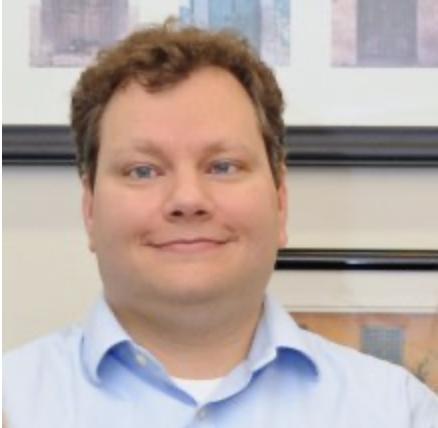
Washington State, UMass Amherst researchers receive Keck Grant to study effects of bacteria on brain
IMAGE

Credit: UMass Amherst


With a $1 million grant from the W. M. Keck Foundation, neuroscience researchers at Washington State University and the University of Massachusetts Amherst will explore whether variations in brain levels of bacterial fragments can account for life’s sleep/wake and 24-hour cycles, known as circadian rhythms.

“The bacteria residing inside of you outnumber your own cells 10 to one and affect sleep, cognition, mood, brain temperature, appetite and many additional brain functions. Yet we lack an understanding of how they do it,” says James Krueger, Regents Professor of Integrative Physiology and Neuroscience at the WSU College of Veterinary Medicine.

The sleep research is led by Krueger, and the circadian rhythm portion of the project is led by co-investigator Ilia Karatsoreos, who recently joined UMass Amherst from WSU as an associate professor of psychological and brain sciences.

At Karatsoreos’ Lab, researchers will use models of simulated jet lag, a way to disrupt our circadian (daily) rhythms. As anyone who has flown cross-country has likely experienced firsthand, disrupting these rhythms is associated with changes in sleep, cognition and even body temperature.

“When jetlagged, many of the normal bodily functions are out of synchrony with each other. This is a consequence of altering circadian rhythms,” Karatsoreos says. “By looking for changes of bacterial products in the brain, we anticipate we will discover new approaches to treat jet lag, and possibly the desynchrony of physiological functions that occurs with old age.”

The new grant builds on nearly 40 years of cutting-edge sleep research. In the early 1980s, Krueger isolated a sleep-promoting molecule from brains of sleep-deprived rabbits and from human urine. Its chemical structure was a muramyl peptide – a building block component of bacterial cell walls.

At the time of the discovery, it was difficult to measure small amounts of muramyl peptides. Now, improved measurement technologies and the Keck Foundation funding will enable researchers to determine the brain’s muramyl peptide levels and whether they correlate with sleep-wake cycles or circadian rhythms.

Further, researchers will determine if sleep loss results in increased levels of muramyl peptides in the brain, a predicted result based on the 1980s investigations.

Another goal of the Keck-funded work will be to determine how brain muramyl peptides elicit sleep. “Our minds are an outcome of a bacteria/human symbiosis,” Krueger said. “Expanding this concept by determination of how such disparate species talk to each other will transform our views of cognition, psychiatric disorders, consciousness including sleep, and our understanding of what it means to be human.”

The late W. M. Keck, founder of the Superior Oil Company, established The W. M. Keck Foundation in 1954. The Foundation’s grant making is focused primarily on pioneering efforts in the areas of medical research, science and engineering, and undergraduate education.

###

Media Contact
Patty Shillington
[email protected]
305-606-9909

Tags: AgingBacteriologyBiologyMedicine/HealthMicrobiologyMolecular BiologyneurobiologyNeurochemistrySleep/Sleep DisordersStress/Anxiety
Share14Tweet9Share2ShareShareShare2

Related Posts

AI and Physics Collaborate to Design Advanced Hydrogen Storage Materials

June 25, 2026

International Team Including Dresden Scientists Develops Novel Designer Proteins for Advanced Study of Living Tissue

June 25, 2026

New Study Uncovers Key Factors Driving Water Chemistry in Nanoscale Environments

June 25, 2026

Plasma Technology Extends Catalyst Lifespan in Hydrogen Production

June 24, 2026
Please login to join discussion

POPULAR NEWS

  • Saying Goodbye to PGY-6: Pediatric Fellowship Realities

    103 shares
    Share 41 Tweet 26
  • Multi-Hospital Study Reveals Long Covid Burden Is Twice as High as Current Estimates

    92 shares
    Share 36 Tweet 23
  • Detection of EDCs in Breast Milk and Infant Urine Up to Six Months Highlights Early Exposure Risks

    77 shares
    Share 31 Tweet 19
  • New Drug Candidate Developed at McMaster Shows Potential for Treating Brain Cancer

    58 shares
    Share 23 Tweet 15

About

We bring you the latest biotechnology news from best research centers and universities around the world. Check our website.

Follow us

Recent News

Tracking Lanthanide-Labeled Microplastics in Plants

POSTECH Researchers Slash Cost of Reconstituted Cell-Free Systems by 95%

AI and Physics Collaborate to Design Advanced Hydrogen Storage Materials

Subscribe to Blog via Email

Success! An email was just sent to confirm your subscription. Please find the email now and click 'Confirm' to start subscribing.

Join 82 other subscribers
  • Contact Us

Bioengineer.org © Copyright 2023 All Rights Reserved.

Welcome Back!

Login to your account below

Forgotten Password?

Retrieve your password

Please enter your username or email address to reset your password.

Log In
No Result
View All Result
  • Homepages
    • Home Page 1
    • Home Page 2
  • News
  • National
  • Business
  • Health
  • Lifestyle
  • Science

Bioengineer.org © Copyright 2023 All Rights Reserved.