Adolescent and young adult women who were diagnosed with cancer and received chemotherapy treatment prior to pregnancy did not have a higher risk of stillbirth, according to research led by Caitlin C. Murphy, PhD, MPH, with UTHealth Houston.
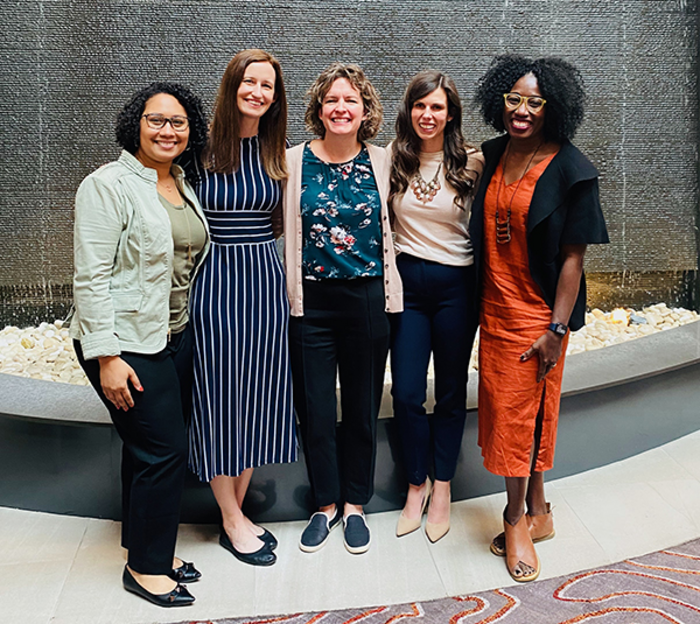
Credit: UTHealth Houston
Adolescent and young adult women who were diagnosed with cancer and received chemotherapy treatment prior to pregnancy did not have a higher risk of stillbirth, according to research led by Caitlin C. Murphy, PhD, MPH, with UTHealth Houston.
The study was published recently in the online version of the Journal of the National Cancer Institute.
“There are very few studies of birth outcomes among adolescent and young adult women with cancer who later get pregnant,” said Murphy, associate professor of health promotion and behavioral sciences at UTHealth School of Public Health in Houston. “This study revealed that cancer and chemotherapy do not appear to increase the risk of stillbirth, providing critically important information for women who are worried about their ability to deliver a healthy child after cancer.”
For one of the co-authors of the paper, Andrea C. Betts, PhD, MPH, the findings were personal.
“When I was pregnant with my first child, there was very little information about how my past treatment for cancer could affect my child,” said Betts, a researcher with the school’s Dallas campus. “All my OB could tell me was, ‘It’s plausible there are increased risks.’ It’s so rewarding to begin to close this gap in the evidence, and provide some good news to the many young women seeking to have children after cancer.”
Some chemotherapy and radiation treatments have gonadotoxic effects, meaning they can damage eggs. Previous studies have suggested that the health of the offspring might be affected. To test that theory, the study linked population-based data from the Texas Cancer Registry to live birth and fetal death certificates. They included 11,696 deliveries to 8,402 women ages 15 to 39 years who were diagnosed with cancer from 1995 to 2015 and compared them to the rate of stillbirth in the general population. The rate of stillbirth in both groups was similar, less than 1%.
“It’s the best kind of null result,” Murphy said.
Along with Betts, co-authors from UTHealth School of Public Health included Marlyn A. Allicock, PhD, MPH, of the Dallas campus; L. Aubree Shay, PhD, MSW, of the San Antonio campus; and Sharice M. Preston, PhD, of the Houston campus.
All are part of a team of investigators in the Adolescent and Young Adult (AYA) Scholarship, Training, and Research (STAR) Lab that formed at UTHealth School of Public Health in 2020. Their expertise includes behavioral sciences, intervention development, epidemiology, program evaluation, and health disparities.
Other co-authors were Barbara A. Cohn, PhD, of the Public Health Institute in Berkeley, California; Philip J. Lupo, PhD, MPH, of Baylor College of Medicine; and Sandi L. Pruitt, PhD, MPH, of UT Southwestern Medical Center.
DOI
10.1093/jnci/djac168
Method of Research
Data/statistical analysis
Subject of Research
People
Article Title
Stillbirth after adolescent and young adult cancer: a population-based study
Article Publication Date
27-Aug-2022
COI Statement
Dr. Murphy reports consulting for Freenome; Dr. Betts reports consulting for Substack. All other authors have no conflicts of interest to disclose