


Brain-computer interfaces have a structural impact on brain substance after one hour of training
Credit: Elias Domsch
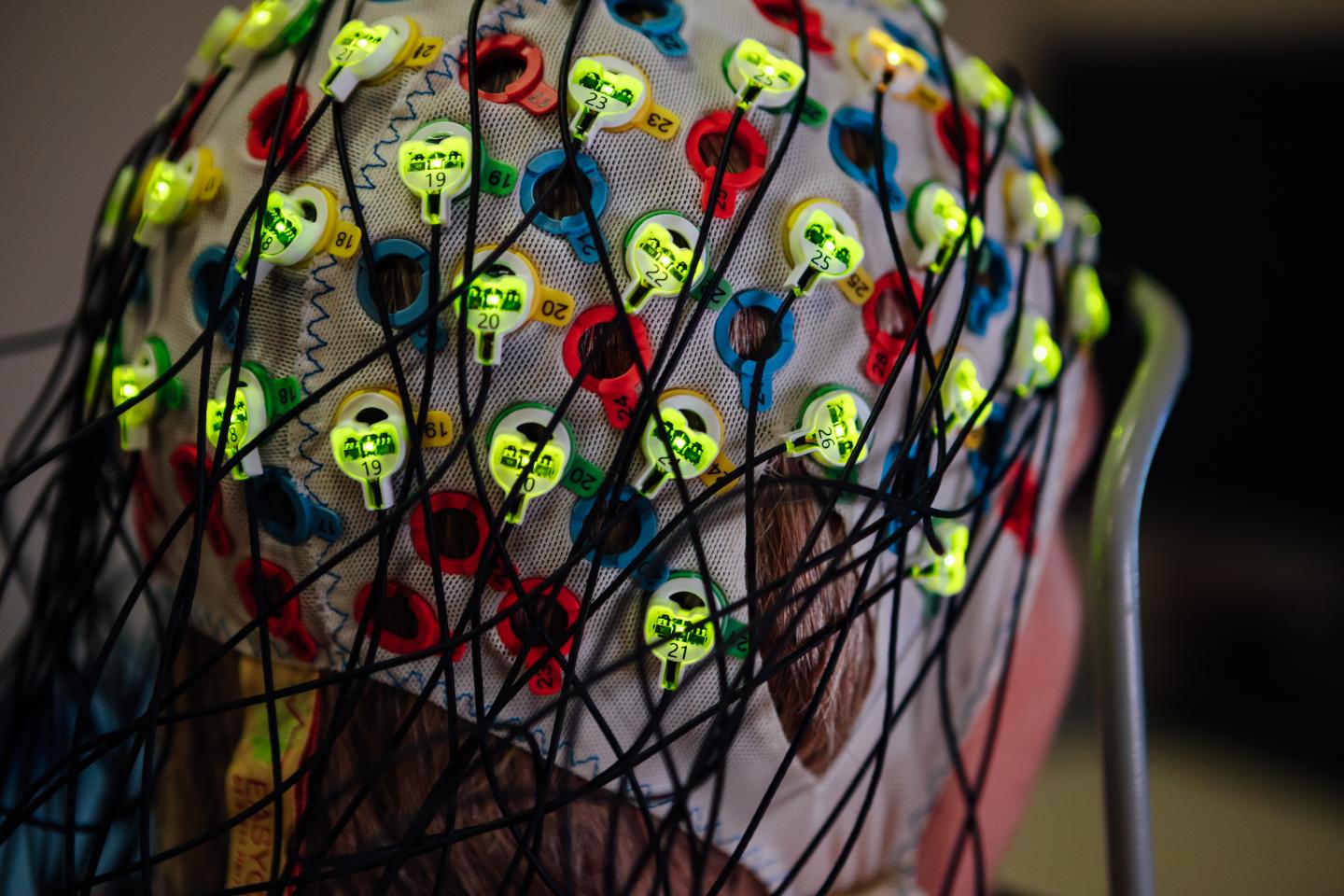
The interdisciplinary study examined the influence of two different types of BCI on the brains of test subjects with no prior experience of this technology. The first subgroup was given the task of imagining that they were moving their arms or feet, in other words a task requiring the use of the brain’s motor system. The task given to the second group addressed the brain’s visual center by requiring them to recognize and select letters on a screen. Experience shows that test subjects achieve good results in visual tasks right from the outset and that further training does not improve these results, whereas addressing the brain’s motor system is much more complex and requires practice. In order to document potential changes, test subjects’ brains were examined before and after each BCI experiment using a special visualizing process – MRT (magnetic resonance tomography).
“We know that intensive physical training affects the plasticity of the brain,” says Dr. Till Nierhaus of the Max Planck Institute for Human Cognitive and Brain Sciences. Plasticity refers to the brain’s ability to alter depending on how it is used. Scientists distinguish here between functional plasticity, where changes only occur in the intensity of the signals between the individual synapses, and structural plasticity. Structural plasticity refers to a change in nerve cells or even the forming of new nerve cells. “We asked ourselves if these impacts on the brain’s plasticity would also occur in purely mental BCI experimental tasks, in other words if test subjects only think of a task without actually performing it,” says Dr. Carmen Vidaurre, researcher at the Public University of Navarre.
The results did indeed show measurable changes in precisely those regions of the brain specifically required to conduct the tasks. In other words, changes in the visual areas of the brain in test subjects given the visual task and changes in the motor area in test subjects who practiced imagining moving a part of their body. It is particularly worth noting that changes occurred within very short periods of time (one hour) using BCI, rather than weeks as is the case in physical training. “It is still not clear if these changes would also occur if test subjects were not provided with feedback via the BCI system that their brain signals could be successfully read,” Dr. Nierhaus points out. However the results do in general demonstrate that the effects of training with a brain-computer interface could have therapeutic benefits by stimulating specific regions of the brain.
“The spatial specificity of the impacts achieved with BCI could be used to target those areas of the brain affected by strokes,” explains Professor Arno Villringer, director of the neurology department at the MPI for Human Cognition and Brain Sciences. “Machine learning processes serve to decode or translate BCI activities into control signals,” adds Professor Klaus-Robert Müller, professor of machine learning. “This is the only way to convert individual BCI activities into control signals without lengthy training periods. This customized reading of the BCI will be decisive in determining whether the technology can be used in rehabilitation systems in the future.”
###
Media Contact
Verena Mueller
[email protected]
49-341-994-02672
Original Source
https:/
Related Journal Article
http://dx.



