• HOME
  • NEWS
  • EXPLORE
    • CAREER
      • Companies
      • Jobs
    • EVENTS
    • iGEM
      • News
      • Team
    • PHOTOS
    • VIDEO
    • WIKI
  • BLOG
  • COMMUNITY
    • FACEBOOK
    • INSTAGRAM
    • TWITTER
Tuesday, July 7, 2026
BIOENGINEER.ORG
No Result
View All Result
  • Login
  • HOME
  • NEWS
  • EXPLORE
    • CAREER
      • Companies
      • Jobs
        • Lecturer
        • PhD Studentship
        • Postdoc
        • Research Assistant
    • EVENTS
    • iGEM
      • News
      • Team
    • PHOTOS
    • VIDEO
    • WIKI
  • BLOG
  • COMMUNITY
    • FACEBOOK
    • INSTAGRAM
    • TWITTER
  • HOME
  • NEWS
  • EXPLORE
    • CAREER
      • Companies
      • Jobs
        • Lecturer
        • PhD Studentship
        • Postdoc
        • Research Assistant
    • EVENTS
    • iGEM
      • News
      • Team
    • PHOTOS
    • VIDEO
    • WIKI
  • BLOG
  • COMMUNITY
    • FACEBOOK
    • INSTAGRAM
    • TWITTER
No Result
View All Result
Bioengineer.org
No Result
View All Result
Home NEWS Science News

Can high-power microwaves reduce the launch cost of space-bound rockets?

Bioengineer by Bioengineer
April 20, 2020
in Science News
Reading Time: 2 mins read
0
IMAGE
Share on FacebookShare on TwitterShare on LinkedinShare on RedditShare on Telegram

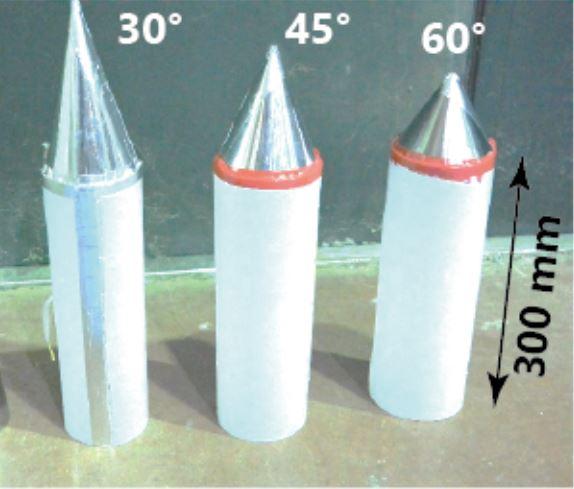
Researchers from the University of Tsukuba are helping to resolve critical efficiency challenges for using microwaves to launch rockets, and reduce the cost of launching rockets
IMAGE

Credit: University of Tsukuba

Tsukuba, Japan – Governments throughout the world use rockets to launch satellites and people into orbit. This currently requires a lot of high-energy fuel, which is 95% of total rocket mass. Because the launch cost of a rocket can reach 10 billion yen, launching a 1-gram payload is said to be the same as buying 1 gram of gold. Minimizing the total cost of launching rockets would maximize the scientific payloads and increase the feasibility of space exploration.

In a study published in the Journal of Spacecraft and Rockets, researchers from the University of Tsukuba have helped solve important wireless power transmission and other efficiency issues that must be overcome to use high-powered microwaves to supplement–or nearly replace–chemical fuel for rocket launches. Their study will help researchers in this line of work properly focus their efforts.

Researchers commonly believe that a rocket requires a megawatt of beam-powered propulsion–that’s approximately the power output of 10 automobiles–per kilogram of payload to reach a minimal orbit. Whether microwave transmission is sufficiently efficient for real-world applications is an open question.

Microwave beams have been transmitted by using a ground antenna that is the same size as a rocket antenna. “However, practical applications will require a large ground-based transmitter and a small receiver on the rocket, and thus variable-focus transmission,” explains Assistant Professor Kohei Shimamura, lead author of the study. “We wanted to not only demonstrate this approach, but also quantify its efficiency.”

In their comprehensive study, the researchers calculated the efficiencies, at short distances, of a ground-based microwave generator (51%), wireless power supply that sends the microwaves to the rocket propulsion system (14%), receiving antenna on the rocket (34%), and propulsion device that uses the microwave energy to heat the rocket propellant (6%). “Researchers can now put numbers on how efficient variable-focus transmission is at present,” says Associate Professor Tsuyoshi Kariya, the other main author of the study.

Future research will need to study and improve efficiencies at long distances. In the words of Associate Professor Shimamura: “This is a difficult challenge, but an important next step in advancing microwave technology to practical use in rocket launches.”

Rockets are essential technology, but their launching cost is a major disadvantage for scientific missions. With future research, high-power microwaves may one day be a low-cost method of rocket propulsion.

###

Media Contact
Naoko Yamashina
[email protected]

Related Journal Article

http://dx.doi.org/10.2514/1.A34726

Tags: Research/DevelopmentTechnology/Engineering/Computer Science
Share12Tweet8Share2ShareShareShare2

Related Posts

Flame retardant BDE-209 targets molecularly linked to ulcerative colitis

July 6, 2026
Ultra-high frequency particle impacts mimic rockbursts to shatter hard rock

Ultra-high frequency particle impacts mimic rockbursts to shatter hard rock

July 6, 2026

Kidney transplant outcomes in older adults studied by German researchers

July 6, 2026

Embodied cognition yields interpretable trajectory predictions for autonomous systems.

July 6, 2026
Please login to join discussion

POPULAR NEWS

  • Detection of EDCs in Breast Milk and Infant Urine Up to Six Months Highlights Early Exposure Risks

    77 shares
    Share 31 Tweet 19
  • New Drug Candidate Developed at McMaster Shows Potential for Treating Brain Cancer

    58 shares
    Share 23 Tweet 15
  • Saying Goodbye to PGY-6: Pediatric Fellowship Realities

    103 shares
    Share 41 Tweet 26
  • KTU Researchers Explore Ultrasound’s Role in Enhancing Blood Flow Beyond Diagnostics

    53 shares
    Share 21 Tweet 13

About

We bring you the latest biotechnology news from best research centers and universities around the world. Check our website.

Follow us

Recent News

Flame retardant BDE-209 targets molecularly linked to ulcerative colitis

Ultra-high frequency particle impacts mimic rockbursts to shatter hard rock

Kidney transplant outcomes in older adults studied by German researchers

Subscribe to Blog via Email

Success! An email was just sent to confirm your subscription. Please find the email now and click 'Confirm' to start subscribing.

Join 83 other subscribers
  • Contact Us

Bioengineer.org © Copyright 2023 All Rights Reserved.

Welcome Back!

Login to your account below

Forgotten Password?

Retrieve your password

Please enter your username or email address to reset your password.

Log In
No Result
View All Result
  • Homepages
    • Home Page 1
    • Home Page 2
  • News
  • National
  • Business
  • Health
  • Lifestyle
  • Science

Bioengineer.org © Copyright 2023 All Rights Reserved.