• HOME
  • NEWS
  • EXPLORE
    • CAREER
      • Companies
      • Jobs
    • EVENTS
    • iGEM
      • News
      • Team
    • PHOTOS
    • VIDEO
    • WIKI
  • BLOG
  • COMMUNITY
    • FACEBOOK
    • INSTAGRAM
    • TWITTER
Thursday, May 21, 2026
BIOENGINEER.ORG
No Result
View All Result
  • Login
  • HOME
  • NEWS
  • EXPLORE
    • CAREER
      • Companies
      • Jobs
        • Lecturer
        • PhD Studentship
        • Postdoc
        • Research Assistant
    • EVENTS
    • iGEM
      • News
      • Team
    • PHOTOS
    • VIDEO
    • WIKI
  • BLOG
  • COMMUNITY
    • FACEBOOK
    • INSTAGRAM
    • TWITTER
  • HOME
  • NEWS
  • EXPLORE
    • CAREER
      • Companies
      • Jobs
        • Lecturer
        • PhD Studentship
        • Postdoc
        • Research Assistant
    • EVENTS
    • iGEM
      • News
      • Team
    • PHOTOS
    • VIDEO
    • WIKI
  • BLOG
  • COMMUNITY
    • FACEBOOK
    • INSTAGRAM
    • TWITTER
No Result
View All Result
Bioengineer.org
No Result
View All Result
Home NEWS Science News Biology

Can chickpea genes save mustard seeds from blight disease?

Bioengineer by Bioengineer
January 29, 2020
in Biology
Reading Time: 2 mins read
0
IMAGE
Share on FacebookShare on TwitterShare on LinkedinShare on RedditShare on Telegram

IMAGE

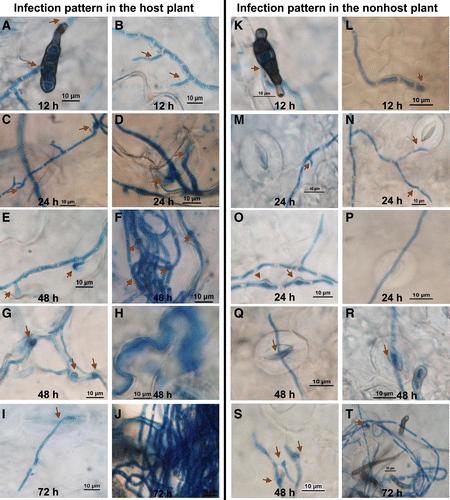
Credit: Urooj Fatima, Priyadarshini Bhorali, and Muthappa Senthil-Kumar


During visits to fields in Assam, Rajasthan and Uttar Pradesh, India, plant biologists Muthappa Senthil-Kumar and Urooj Fatima found mustard plants infested with Alternaria blight disease. They also noticed that an adjacent field of chickpeas were completely uninfected.

Alternaria blight caused by fungal pathogen devastates Brassica crops such as cabbage, cauliflower, broccoli, and mustard seed. Highly infectious, this fungus can infect the host plant at all stages of growth. Currently Alternaria blight is managed by chemical fungicides, but recently efforts have been made to utilize breeding and modern biotechnological approaches to develop blight-resistant crop varieties.

Non-host resistance (NHR) is the most durable resistance against fungal pathogens. While Alternaria typically penetrates the epidermis or the stomata of a host plant, this is unable to deploy this attack on plants protected by NHR. To protect Brassica crops from this fungus, scientists are studying the mechanisms of NHR in order to develop improved crop varieties.

In a study published in MPMI, plant biologists in India detailed their research comparing the response of a host plant (mustard) and a non-host plant (chickpea) to the fungus on a morpho-pathological level. They found that the chickpea actively suppressed the fungal development, penetration, and colonization even after hours of infection.

They also studied chickpea transcripts to pinpoint several genes involved in the plant’s pathogen defense.

“These genes are interesting candidates for additional study to determine their precise involvement in NHR,” said Senthil-Kumar, who conducts research through the National Institute of Plant Genome Research. “These genes could then be transferred to mustard plants to develop blight-resistance crops.”

For more information about this study, read “Morpho-Pathological and Global Transcriptomic Analysis Reveals the Robust Nonhost Resistance Responses in Chickpea Interaction with Alternaria brassicae” published in the December issue of Molecular Plant-Microbe Interactions (MPMI).

###

Media Contact
Ashley Bergman Carlin
[email protected]
651-994-3832

Related Journal Article

http://dx.doi.org/10.1094/MPMI-05-19-0117-R

Tags: Agricultural Production/EconomicsAgricultureCell BiologyFood/Food ScienceMicrobiologyMolecular BiologyPlant Sciences
Share12Tweet8Share2ShareShareShare2

Related Posts

Early Delivery Improves Outcomes for Mothers and Babies in Hypertensive Pregnancies — Biology

Early Delivery Improves Outcomes for Mothers and Babies in Hypertensive Pregnancies

May 21, 2026
How Atlantic Herring Rewired Their Reproductive Strategy to Thrive in Changing Oceans — Biology

How Atlantic Herring Rewired Their Reproductive Strategy to Thrive in Changing Oceans

May 20, 2026

Study Finds Young Fraser River Chinook Salmon Swimming in Chemical Mixture

May 20, 2026

Thousands of UK Beekeepers Contribute Honey to Advance Environmental Science

May 20, 2026
Please login to join discussion

POPULAR NEWS

  • blank

    New Study Reveals Plants Can Detect the Sound of Rain

    733 shares
    Share 292 Tweet 183
  • ESMO 2025: mRNA COVID Vaccines Enhance Efficacy of Cancer Immunotherapy

    304 shares
    Share 122 Tweet 76
  • Research Indicates Potential Connection Between Prenatal Medication Exposure and Elevated Autism Risk

    846 shares
    Share 338 Tweet 212
  • Breastmilk Balances E. coli and Beneficial Bacteria in Infant Gut Microbiomes

    58 shares
    Share 23 Tweet 15

About

We bring you the latest biotechnology news from best research centers and universities around the world. Check our website.

Follow us

Recent News

Innovative Reusable Brick Walls Revolutionize Construction Industry

Nonlinear Atomic Tunneling Enhanced by Bright Squeezed Vacuum

Label-Free Super-Resolution Imaging of Live Cells

Subscribe to Blog via Email

Enter your email address to subscribe to this blog and receive notifications of new posts by email.

Join 82 other subscribers
  • Contact Us

Bioengineer.org © Copyright 2023 All Rights Reserved.

Welcome Back!

Login to your account below

Forgotten Password?

Retrieve your password

Please enter your username or email address to reset your password.

Log In
No Result
View All Result
  • Homepages
    • Home Page 1
    • Home Page 2
  • News
  • National
  • Business
  • Health
  • Lifestyle
  • Science

Bioengineer.org © Copyright 2023 All Rights Reserved.