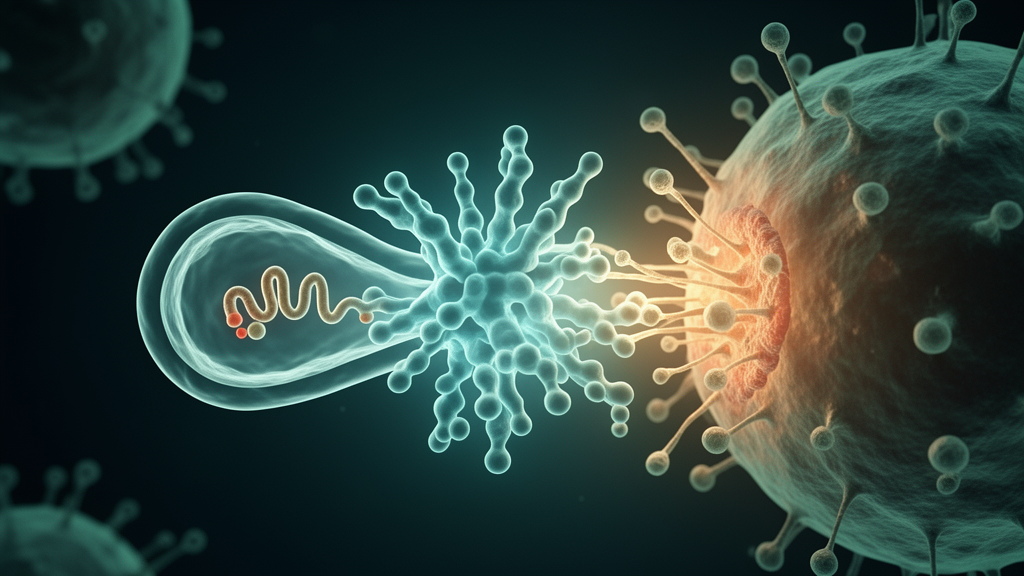
Calreticulin, a highly conserved calcium-binding chaperone best known for its work inside the endoplasmic reticulum, is emerging as one of cancer biology’s most contradictory molecules. A new review published in Cellular Oncology by Miguel A. Fernández-Rojas, Ana Filsser and Fela Mendlovic argues that the protein’s role in tumors cannot be reduced to a single label: depending on where it sits, which form is present and which tumor is being studied, calreticulin can either drive malignant progression or help the immune system destroy cancer cells.
Inside cells, the review notes, calreticulin is frequently overexpressed in several malignancies, and this intracellular abundance is often associated with tumor progression.
The picture changes dramatically when the same protein appears on the cell surface. Surface-exposed calreticulin acts as a damage-associated molecular pattern, a molecular flag that promotes immunogenic cell death and enhances antitumor immune responses.
Adding to the complexity, soluble and mutant forms of calreticulin can contribute to immune evasion and tumor progression. The review emphasizes that these different molecular species, full-length protein, fragments and mutants, occupy distinct functional niches, and that lumping them together obscures their opposing effects on tumor immunity.
To ground these mechanistic claims in population-level data, the authors turned to transcriptomic and proteomic cancer databases. Their analyses support a context-dependent role for calreticulin, revealing tumor-specific differences in expression and in prognostic associations. Rather than a universal biomarker, calreticulin’s clinical relevance appears to vary from one cancer type to another.
One of the review’s most striking threads concerns parasites. Calreticulin homologs from Trypanosoma cruzi and Taenia solium exhibit potent antitumor effects in experimental models, in some cases exceeding those of the human protein. The authors attribute this to structural and functional divergence across species, suggesting that evolution has produced parasite versions of the chaperone with properties that mammalian calreticulin lacks.
Fragments of calreticulin add a further layer of therapeutic interest. Vasostatin, a well-known calreticulin-derived fragment, exhibits strong antiangiogenic and antitumoral properties, starving tumors of their blood supply while directly inhibiting their growth. Yet not all fragments are benign: the review notes that other calreticulin-derived fragments may induce immunosuppressive signaling pathways that promote tumor growth, underscoring that even subregions of a single protein can push tumor biology in opposite directions.
The authors weigh the potential advantages of parasite-derived calreticulin and its fragments against real limitations, including immunogenicity, structural differences, production challenges and safety concerns.
The review is a synthesis of existing literature rather than a report of new experiments, and its conclusions about parasite-derived and fragment-based approaches rest on preclinical evidence. Even so, the authors argue that understanding the mechanisms behind calreticulin’s context-dependent effects may facilitate the development of CRT-directed therapeutic strategies, including the use of its fragments and their combination with existing anticancer therapies. As immunotherapy expands, calreticulin’s split personality, tumor promoter on the inside, immune beacon on the outside, makes it a target worth watching.
Subject of Research: The context-dependent roles of calreticulin and its fragments in cancer biology
Article Title: The complex role of calreticulin and its fragments in cancer biology
Article References: Fernández-Rojas, M. A., Filsser, A., & Mendlovic, F. (2026). The complex role of calreticulin and its fragments in cancer biology. Cellular Oncology. https://doi.org/10.1007/s13402-026-01312-4
Image Credits: AI Generated
DOI: 10.1007/s13402-026-01312-4
Keywords: calreticulin, cancer biology, immunogenic cell death, vasostatin, antiangiogenic, tumor immunity, parasite-derived calreticulin, Trypanosoma cruzi, Taenia solium, damage-associated molecular pattern, review, therapeutic target
News Source: Nathaniel Bowman. (October 28, 2026). Calreticulin’s double life in cancer: chaperone, immune signal and drug lead. Scienmag.