Texas Biomed will help map the developing brain with unprecedented detail for the National Institutes of Health’s BRAIN Initiative Cell Atlas Network (BICAN). NIH recently awarded a total of $500 million to 11 teams that will work together to build a 3D brain atlas at single cell resolution over the next five years.
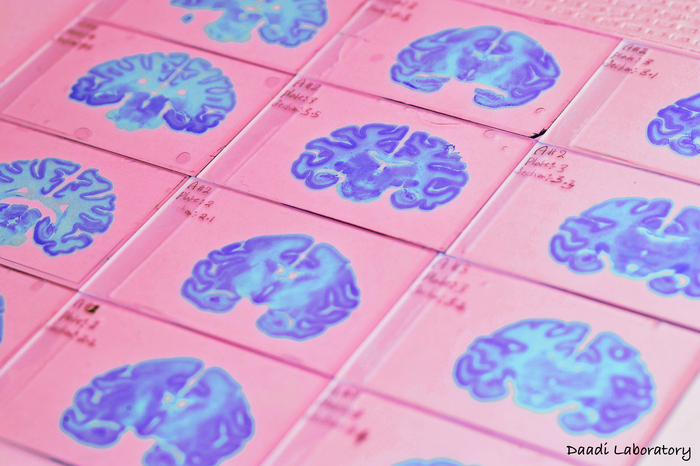
Credit: Texas Biomed/Daadi Laboratory
Texas Biomed will help map the developing brain with unprecedented detail for the National Institutes of Health’s BRAIN Initiative Cell Atlas Network (BICAN). NIH recently awarded a total of $500 million to 11 teams that will work together to build a 3D brain atlas at single cell resolution over the next five years.
Texas Biomed and its Southwest National Primate Research Center are part of a team led by the University of California, San Francisco (UCSF), and also includes Yale University, University of Pennsylvania, University of Wisconsin—Madison, and University of California, Los Angeles.
“This is an example of what you could call ‘Big science’ with a capital B,” says UCSF Professor Arnold Kriegstein, MD, PhD, who is overseeing the team’s $36.4 million portion of the initiative. “It’s much larger than any individual lab, or even a single institute, could hope to accomplish. It can only be done with a large collaborative group of investigators working together.”
The team’s contribution to the overall effort is mapping the developing brain – identifying cell types, activities and locations as they differentiate during development and change throughout childhood and into adolescence. They will also be the only team to draw direct comparisons between humans and nonhuman primate relatives.
“We are truly excited to be a part of this collaboration and see this 3D single cell brain map come to life,” says Texas Biomed Associate Professor Marcel Daadi, PhD, one of the co-principal investigators of the NIH grant. “This project will help us better understand what makes our brains different and uniquely vulnerable to certain neurodegenerative diseases compared to our closest relatives.”
By mapping female and male developing brains at key phases before birth, after birth, during childhood and teen years, the group aims to learn more about normal, healthy brain development. This will also provide a baseline to better understand how diseases like autism, schizophrenia and Parkinson’s emerge.
“Usually, by the time we see symptoms of Parkinson’s, about 80% of dopamine nerve terminals are already gone,” Dr. Daadi says. “Changes in the brain that happen early in life might contribute to faulty brain connections and neurodegeneration in later years. This project could help us learn what those critical changes are and find new treatment targets.”
This builds on the BRAIN Initiative’s first phase, called the Cell Census Network, which catalogued brain cell types, with an emphasis on mice. Now, in this phase, the teams will complete a comprehensive list of human brain cell types, and clarify how all those cells work together, showing what cell types are present in different structures of the brain.
“There are 80 billion cells in the brain and we don’t really understand the composition, how those cells are distributed, or how that changes during development,” Dr. Kriegstein says. “But we have technology now that allows us to look at these questions at extremely high resolution.”
To create the atlas, researchers will not just identify individual cells, but also where they are located in the brain, which can shift, especially during development. They will use a combination of advanced single cell sequencing techniques as well as advanced imaging techniques to ultimately merge the data into an interactive map. A key feature of the BRAIN Initiative is making sure all teams are using standardized methods and technologies so all the data can be compiled together into a final product.
“When complete, the single-cell brain atlas will provide a resource that will inform future research into a wide range of health conditions for decades to come,” says Joanne Turner, PhD, Texas Biomed’s Executive Vice President of Research. “We are proud to contribute our expertise in animal models and can’t wait to see what new mechanisms are revealed.”
The collaboration will also greatly benefit up-and-coming researchers, and is poised to inspire the next generation of scientists and leaders, much like the Human Genome Project did in the 1990s and early 2000s.
“I really think we’ve put together some of the best experts in the field, anywhere in the world, for this initiative,” Dr. Kriegstein says. “I’m really excited for our early-career scientists to work alongside them and with each other on such a significant collaboration.”
###
About Texas Biomed
Texas Biomed is one of the world’s leading independent biomedical research institutions dedicated to eradicating infection and advancing health worldwide through innovative biomedical research. Texas Biomed partners with researchers and institutions around the world to develop vaccines and therapeutics against viral pathogens causing AIDS, hepatitis, hemorrhagic fever, tuberculosis and parasitic diseases responsible for malaria and schistosomiasis disease. The Institute has programs in host-pathogen interaction, disease intervention and prevention and population health to understand the links between infectious diseases and other diseases such as aging, cardiovascular disease, diabetes and obesity. For more information on Texas Biomed, go to www.TxBiomed.org.