• HOME
  • NEWS
  • EXPLORE
    • CAREER
      • Companies
      • Jobs
    • EVENTS
    • iGEM
      • News
      • Team
    • PHOTOS
    • VIDEO
    • WIKI
  • BLOG
  • COMMUNITY
    • FACEBOOK
    • INSTAGRAM
    • TWITTER
Saturday, June 27, 2026
BIOENGINEER.ORG
No Result
View All Result
  • Login
  • HOME
  • NEWS
  • EXPLORE
    • CAREER
      • Companies
      • Jobs
        • Lecturer
        • PhD Studentship
        • Postdoc
        • Research Assistant
    • EVENTS
    • iGEM
      • News
      • Team
    • PHOTOS
    • VIDEO
    • WIKI
  • BLOG
  • COMMUNITY
    • FACEBOOK
    • INSTAGRAM
    • TWITTER
  • HOME
  • NEWS
  • EXPLORE
    • CAREER
      • Companies
      • Jobs
        • Lecturer
        • PhD Studentship
        • Postdoc
        • Research Assistant
    • EVENTS
    • iGEM
      • News
      • Team
    • PHOTOS
    • VIDEO
    • WIKI
  • BLOG
  • COMMUNITY
    • FACEBOOK
    • INSTAGRAM
    • TWITTER
No Result
View All Result
Bioengineer.org
No Result
View All Result
Home NEWS Science News Biology

Broken promises: Almost 80% of threatened species lack sufficient protection

Bioengineer by Bioengineer
October 7, 2020
in Biology
Reading Time: 2 mins read
0
IMAGE
Share on FacebookShare on TwitterShare on LinkedinShare on RedditShare on Telegram

IMAGE

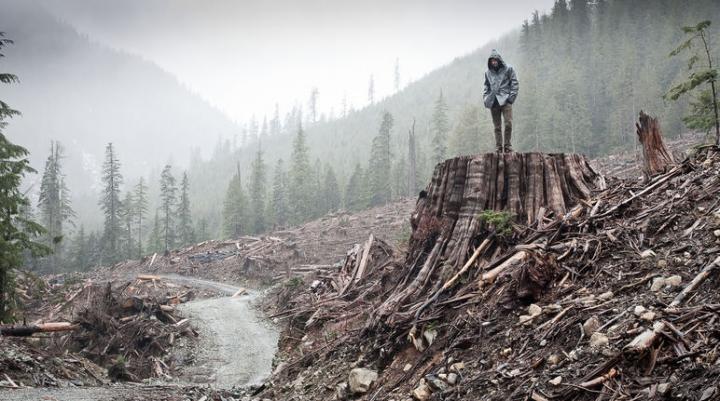
Credit: TJ Watt

A failure by governments to deliver on commitments under a global nature conservation treaty, the Convention on Biological Diversity, could have devastating effects.

The warning comes after a consortium of scientists, led by Dr Sean Maxwell and Professor James Watson from The University of Queensland, reviewed national area-based conservation efforts, including protected areas.

In 2010, almost all nations agreed that area-based conservation efforts must cover at least 17 per cent of land and 10 per cent of ocean by 2020, in areas that are important for biodiversity and ecosystem services.

“We reviewed progress toward this target by overlaying maps of protected areas on natural ecosystems, threatened species, carbon services on land and sea and fisheries productivity in the world’s oceans,” Dr Maxwell said.

“We found some welcome progress – particularly in the marine realm – since global environmental targets were agreed.

“But terrestrial protected area expansion needed to be double what it was in the past decade in order to achieve 17 per cent coverage for land and freshwater environments.

“There is also alarming shortfalls in ecological representation and management effectiveness, and measurable biodiversity outcomes persist in area-based conservation efforts.

“We found that 78 per cent of known threatened species and more than half of all ecosystems on land and sea remain without adequate protection.

“And seven of the world’s most productive at-sea fisheries have no formal protected area coverage.”

The researchers also reviewed how effective and equitable protected area management has been, given these criteria featured in the 2010 targets.

“We know that adequately funding protected areas are one of our best tools for reducing threats to biodiversity,” Dr Maxwell said.

“Yet the current financial shortfall for area-based conservation likely exceeds the multi-billion dollar mark, and as much as 90 per cent have inadequate or below optimum on-site staff capacity.

Professor Watson, of UQ and the Wildlife Conservation Society, said the next round of conservation targets, which were meant to be set this year, is fundamental to the future of global biodiversity.

“It is obvious that governments have dramatically underinvested in protected areas and been weak in legally protecting them,” Professor Watson said.

“For biodiversity to have any chance to survive climate change, nations must invest more resources in consolidating area-based conservation efforts and ensuring biodiversity conservation is a far stronger part of managed land and seas.

“There are significant opportunities to better recognise and support conservation by indigenous peoples, local communities and private actors, and we now need to embrace new models for land stewardship that rewards good behaviour by farmers, developers and miners.”

###

The research has been published in Nature (DOI: 10.1038/s41586-020-2773-z).

Media Contact
Dr Sean Maxwell
[email protected]

Related Journal Article

http://dx.doi.org/10.1038/s41586-020-2773-z

Tags: BiodiversityBiologyEcology/EnvironmentMarine/Freshwater BiologyPollution/RemediationPopulation Biology
Share12Tweet8Share2ShareShareShare2

Related Posts

Natural Hallucinogens: Evolution’s Ecological Tools, Not Mere Chemical Byproducts

June 25, 2026

This Famous Butterfly Revealed: Three Distinct Species Hidden in One

June 25, 2026

Scientists Attack Soybean Cyst Nematode by Starving Its Food Source

June 25, 2026

Decoding the Secret Code of a Crucial Immune Sensor

June 24, 2026
Please login to join discussion

POPULAR NEWS

  • Saying Goodbye to PGY-6: Pediatric Fellowship Realities

    103 shares
    Share 41 Tweet 26
  • Multi-Hospital Study Reveals Long Covid Burden Is Twice as High as Current Estimates

    92 shares
    Share 36 Tweet 23
  • Detection of EDCs in Breast Milk and Infant Urine Up to Six Months Highlights Early Exposure Risks

    77 shares
    Share 31 Tweet 19
  • New Drug Candidate Developed at McMaster Shows Potential for Treating Brain Cancer

    58 shares
    Share 23 Tweet 15

About

We bring you the latest biotechnology news from best research centers and universities around the world. Check our website.

Follow us

Recent News

Tracking Lanthanide-Labeled Microplastics in Plants

POSTECH Researchers Slash Cost of Reconstituted Cell-Free Systems by 95%

AI and Physics Collaborate to Design Advanced Hydrogen Storage Materials

Subscribe to Blog via Email

Success! An email was just sent to confirm your subscription. Please find the email now and click 'Confirm' to start subscribing.

Join 82 other subscribers
  • Contact Us

Bioengineer.org © Copyright 2023 All Rights Reserved.

Welcome Back!

Login to your account below

Forgotten Password?

Retrieve your password

Please enter your username or email address to reset your password.

Log In
No Result
View All Result
  • Homepages
    • Home Page 1
    • Home Page 2
  • News
  • National
  • Business
  • Health
  • Lifestyle
  • Science

Bioengineer.org © Copyright 2023 All Rights Reserved.