

• HOME
  • NEWS
  • EXPLORE
    • CAREER
      • Companies
      • Jobs
    • EVENTS
    • iGEM
      • News
      • Team
    • PHOTOS
    • VIDEO
    • WIKI
  • BLOG
  • COMMUNITY
    • FACEBOOK
    • INSTAGRAM
    • TWITTER
Friday, July 31, 2026
BIOENGINEER.ORG
No Result
View All Result
  • Login
  • HOME
  • NEWS
  • EXPLORE
    • CAREER
      • Companies
      • Jobs
        • Lecturer
        • PhD Studentship
        • Postdoc
        • Research Assistant
    • EVENTS
    • iGEM
      • News
      • Team
    • PHOTOS
    • VIDEO
    • WIKI
  • BLOG
  • COMMUNITY
    • FACEBOOK
    • INSTAGRAM
    • TWITTER
  • HOME
  • NEWS
  • EXPLORE
    • CAREER
      • Companies
      • Jobs
        • Lecturer
        • PhD Studentship
        • Postdoc
        • Research Assistant
    • EVENTS
    • iGEM
      • News
      • Team
    • PHOTOS
    • VIDEO
    • WIKI
  • BLOG
  • COMMUNITY
    • FACEBOOK
    • INSTAGRAM
    • TWITTER
No Result
View All Result
Bioengineer.org
No Result
View All Result
Home NEWS Science News Chemistry

Brigham researchers develop sprayable hydrogel for gastrointestinal wound healing

Bioengineer by Bioengineer
March 19, 2024
in Chemistry
Reading Time: 2 mins read
0
Sprayable hydrogel
Share on FacebookShare on TwitterShare on LinkedinShare on RedditShare on Telegram

Gastrointestinal (GI) surgery, interventional screening procedures such as colonoscopies, and naturally occurring complications such as ulcers, can lead to adverse events, including internal bleeding, intestinal wall perforation, and leakage. To address the limitations presented by currently available GI wound management materials, researchers at Brigham and Women’s Hospital, a founding member of the Mass General Brigham healthcare system, developed a sprayable adhesive hydrogel product.
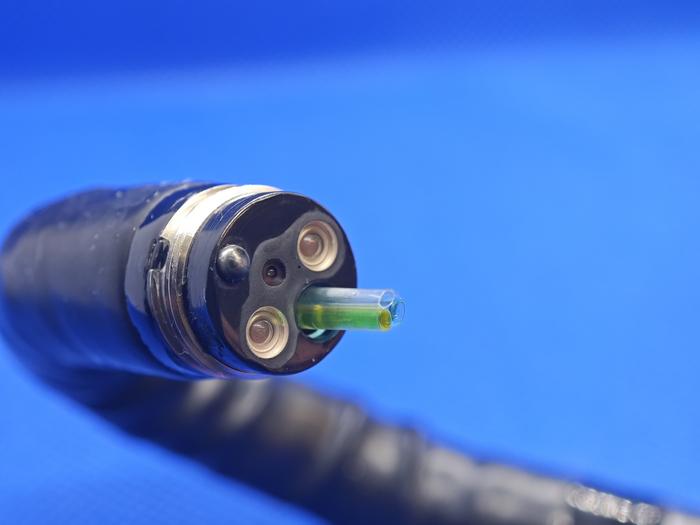
Sprayable hydrogel

Credit: Gonzalo Munoz, BioDevek

Gastrointestinal (GI) surgery, interventional screening procedures such as colonoscopies, and naturally occurring complications such as ulcers, can lead to adverse events, including internal bleeding, intestinal wall perforation, and leakage. To address the limitations presented by currently available GI wound management materials, researchers at Brigham and Women’s Hospital, a founding member of the Mass General Brigham healthcare system, developed a sprayable adhesive hydrogel product.

The research team developed a unique biomaterial to promote wound healing under various harsh conditions in the GI tract that make healing these wounds particularly challenging such as acidic PH, enzymes, bacteria, and muscle contraction. Additionally, they designed the material to be easy to apply and usable with current technology; it is delivered using a miniscule catheter, small enough to be inserted into any commercial endoscope. Upon contact with tissue, the material immediately forms an adhesive shield.

In preclinical studies using large animal models, the research team found that the hydrogel, which the researchers named commercially as “Gastroshield”, promoted rapid wound healing, provided prolonged tissue protection, and minimized the risk of delayed complications.  When compared to six commercially available materials on the market for GI wound healing, it demonstrated superior durability, lasting for 3-7 days compared to 1-2 days, and exhibited the adhesive properties of the strongest materials in the market, without cytotoxic properties.

“Our tissue-responsive adhesive technology is engineered to interact with the tissue to provide prolonged lesion protection over days,” said Natalie Artzi, PhD, a biomedical engineer at Brigham and Women’s and cofounder of BioDevek, which holds patents on the materials and is spearheading efforts to navigate next steps to bring Gastroshield from the lab to the clinic.
“This approach allows us to prevent complications following polyp removal, and to manage other wounds at risk of bleeding in traditionally challenging-to-seal tissues across the gastrointestinal tract, setting the stage for future development of biomaterials for minimally invasive surgical procedures.”

Read more in Advanced Materials.


Journal

Advanced Materials

DOI

10.1002/adma.202311798

Method of Research

Experimental study

Subject of Research

Animals

Article Title

Sprayable Hydrogel Sealant for Gastrointestinal Wound Shielding

Article Publication Date

29-Feb-2024

COI Statement

N.A. and E.R.E. are co-founders of BioDevek Inc. which holds patents on the described materials. G.M.T and D.D are employees of Biodevek.


Share12Tweet8Share2ShareShareShare2

Related Posts

Crystallization engineering enhances high-frequency performance of thick carbon electrodes

Crystallization engineering enhances high-frequency performance of thick carbon electrodes

July 30, 2026
Paper-based smart packaging offers sustainable path to cut food waste and plastic pollution

Paper-based smart packaging offers sustainable path to cut food waste and plastic pollution

July 30, 2026

Shaping light like never before – with photonic time crystals

July 30, 2026

Sensing-storage monolithically integrated system for wearable physiological sensing

July 30, 2026

POPULAR NEWS

  • Cemiplimab and fianlimab with neoadjuvant chemotherapy in early-stage high-risk -negative breast cancer

    29 shares
    Share 12 Tweet 7
  • Combined phage therapy and faecal microbiota transplantation to treat recurrent urinary tract infection: a case series

    29 shares
    Share 12 Tweet 7
  • Representations of the intrinsic value of information in mouse orbitofrontal cortex

    29 shares
    Share 12 Tweet 7
  • Pilot study to validate endothelium collection from pulmonary artery balloon catheter in children

    29 shares
    Share 12 Tweet 7

About

We bring you the latest biotechnology news from best research centers and universities around the world. Check our website.

Follow us

Recent News

Cemiplimab and fianlimab with neoadjuvant chemotherapy in early-stage high-risk -negative breast cancer

Combined phage therapy and faecal microbiota transplantation to treat recurrent urinary tract infection: a case series

Representations of the intrinsic value of information in mouse orbitofrontal cortex

Subscribe to Blog via Email

Enter your email address to subscribe to this blog and receive notifications of new posts by email.

Join 85 other subscribers
  • Contact Us

Bioengineer.org © Copyright 2023 All Rights Reserved.

Welcome Back!

Login to your account below

Forgotten Password?

Retrieve your password

Please enter your username or email address to reset your password.

Log In
No Result
View All Result
  • Homepages
    • Home Page 1
    • Home Page 2
  • News
  • National
  • Business
  • Health
  • Lifestyle
  • Science

Bioengineer.org © Copyright 2023 All Rights Reserved.
