• HOME
  • NEWS
  • EXPLORE
    • CAREER
      • Companies
      • Jobs
    • EVENTS
    • iGEM
      • News
      • Team
    • PHOTOS
    • VIDEO
    • WIKI
  • BLOG
  • COMMUNITY
    • FACEBOOK
    • INSTAGRAM
    • TWITTER
Saturday, February 7, 2026
BIOENGINEER.ORG
No Result
View All Result
  • Login
  • HOME
  • NEWS
  • EXPLORE
    • CAREER
      • Companies
      • Jobs
        • Lecturer
        • PhD Studentship
        • Postdoc
        • Research Assistant
    • EVENTS
    • iGEM
      • News
      • Team
    • PHOTOS
    • VIDEO
    • WIKI
  • BLOG
  • COMMUNITY
    • FACEBOOK
    • INSTAGRAM
    • TWITTER
  • HOME
  • NEWS
  • EXPLORE
    • CAREER
      • Companies
      • Jobs
        • Lecturer
        • PhD Studentship
        • Postdoc
        • Research Assistant
    • EVENTS
    • iGEM
      • News
      • Team
    • PHOTOS
    • VIDEO
    • WIKI
  • BLOG
  • COMMUNITY
    • FACEBOOK
    • INSTAGRAM
    • TWITTER
No Result
View All Result
Bioengineer.org
No Result
View All Result
Home NEWS Science News Chemistry

Brief bursts, big insights

Bioengineer by Bioengineer
February 14, 2020
in Chemistry
Reading Time: 2 mins read
0
IMAGE
Share on FacebookShare on TwitterShare on LinkedinShare on RedditShare on Telegram

IMAGE

Credit: Image: AG Diester


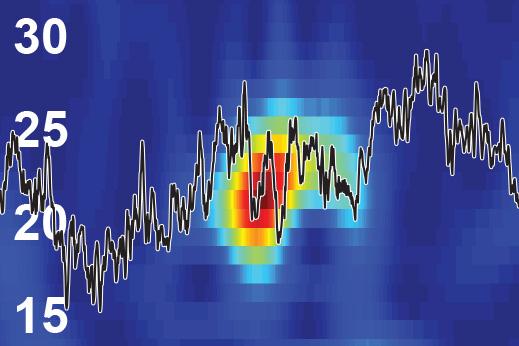
Neural oscillations – also known as brainwaves – are important carriers of information in the brain. Researchers are increasingly coming to view them less as sustained oscillations and more as transient bursts. Until now, there has been no method for measuring such short-lived bursts in real time or for examining how they influence the behavior of living things. In cooperation with her working group, Prof. Dr. Ilka Diester of the University of Freiburg’s Institute of Biology III and excellence cluster BrainLinks-BrainTools has developed a new method for analyzing data in the brain. They are using their method to detect short beta wave bursts in real time within neural frequency bands of around 20 Hertz and to show how rats can increase the occurrence of these bursts. The researchers have published their results in the scientific journal “Nature Communication Biology.”

In humans, monkeys, and rodents, it is possible to detect short bursts of up to 150 milliseconds of beta waves – a specific section of the brainwave spectrum – within a frequency range of 15 hertz to 30 hertz. Researchers up to now connected these events with memory, motion, and perception. During what is known as neuro-feedback training, rats always receive a reward when their brain produces a burst in the beta frequency range. This increases not only the recurrence of beta frequency bursts, but the total amplitude of this frequency range as well.

Through their work, Diester and her team have been able to predict beta range bursts in rats based on the rats movements – particularly in the front half of the rats’ bodies. This new method paves the way for investigating the role of beta bursts in specific behaviors. Because beta frequencies play a significant role in motion control, the method also opens new approaches in neuroprosthetics – the development and application of electronic implants for the restoration of damaged nerve function.

###

At the Institute of Biology III and BrainLinks-BrainTools, Diester leads a working group that is using optophysiology – or new types of optical tools – to investigate the functioning of neural circuitry. The researchers are probing the neural underpinnings of motor and cognitive control as well as interactions between the prefrontal and motor cortex, which are both parts of the cerebral cortex.

Original publication

Karvat, G., Schneider, A., Alyahyay, M., Steenbergen, F., Tangermann, M., & Diester, I. (2020): Real-time detection of neural oscillation bursts allows behaviourally relevant neurofeedback. In: “Nature Communications Biology“. DOI: 10.1038/s42003-020-0801-z

Article about Ilka Diester’s research in the University of Freiburg’s online magazine
http://www.pr.uni-freiburg.de/pm/online-magazin/forschen-und-entdecken/licht-in-die-blackbox

Contact:

Institute of Biology III

University of Freiburg

Media Contact
Dr. Ilka Diester
[email protected]
49-761-203-8440

Related Journal Article

http://dx.doi.org/10.1038/s42003-020-0801-z

Tags: BiologyBiomedical/Environmental/Chemical EngineeringBiotechnologyneurobiologyNeurochemistry
Share12Tweet8Share2ShareShareShare2

Related Posts

blank

Breakthrough in Environmental Cleanup: Scientists Develop Solar-Activated Biochar for Faster Remediation

February 7, 2026
blank

Cutting Costs: Making Hydrogen Fuel Cells More Affordable

February 6, 2026

Scientists Develop Hand-Held “Levitating” Time Crystals

February 6, 2026

Observing a Key Green-Energy Catalyst Dissolve Atom by Atom

February 6, 2026
Please login to join discussion

POPULAR NEWS

  • Robotic Ureteral Reconstruction: A Novel Approach

    Robotic Ureteral Reconstruction: A Novel Approach

    82 shares
    Share 33 Tweet 21
  • Digital Privacy: Health Data Control in Incarceration

    63 shares
    Share 25 Tweet 16
  • Study Reveals Lipid Accumulation in ME/CFS Cells

    57 shares
    Share 23 Tweet 14
  • Breakthrough in RNA Research Accelerates Medical Innovations Timeline

    53 shares
    Share 21 Tweet 13

About

We bring you the latest biotechnology news from best research centers and universities around the world. Check our website.

Follow us

Recent News

Improving Dementia Care with Enhanced Activity Kits

Decoding Prostate Cancer Origins via snFLARE-seq, mxFRIZNGRND

Digital Health Perspectives from Baltic Sea Experts

Subscribe to Blog via Email

Enter your email address to subscribe to this blog and receive notifications of new posts by email.

Join 73 other subscribers
  • Contact Us

Bioengineer.org © Copyright 2023 All Rights Reserved.

Welcome Back!

Login to your account below

Forgotten Password?

Retrieve your password

Please enter your username or email address to reset your password.

Log In
No Result
View All Result
  • Homepages
    • Home Page 1
    • Home Page 2
  • News
  • National
  • Business
  • Health
  • Lifestyle
  • Science

Bioengineer.org © Copyright 2023 All Rights Reserved.