


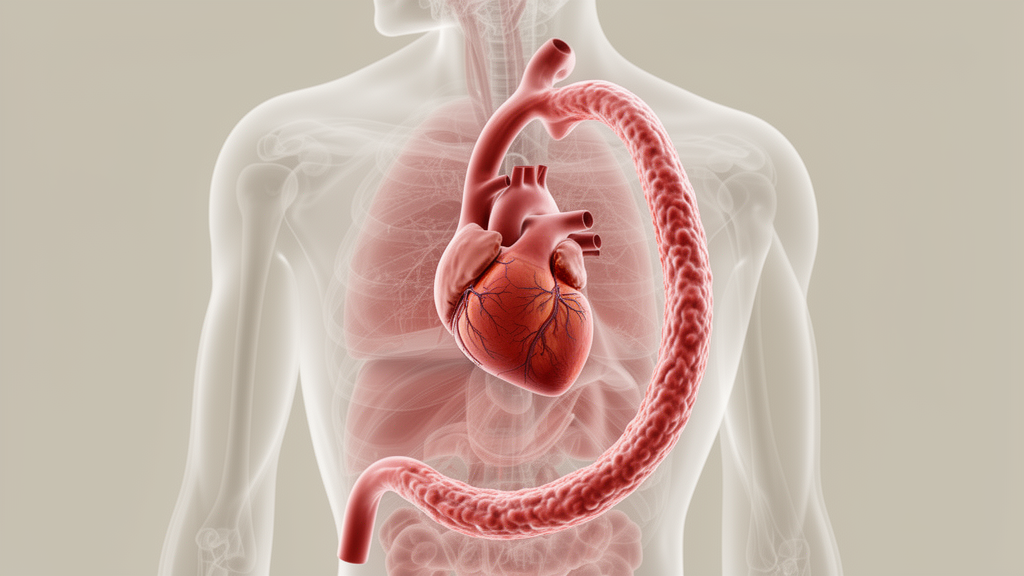
Women with breast cancer who begin potentially cardiotoxic chemotherapy may lose elasticity in the wall of the thoracic aorta within just three months, and the loss is concentrated in those who started treatment without hypertension, according to a study published in the journal Cardio-Oncology. Using cardiovascular magnetic resonance imaging, researchers measured ascending aortic distensibility before treatment and again three months after chemotherapy began, and found that the aortic stiffness that usually accompanies long-standing high blood pressure emerged rapidly in women who had entered therapy with normal blood pressure.
The work was a pre-specified secondary analysis of two studies, UPBEAT (R01CA199167, WF-97415) and DETECT IV (R01CA167821, WF-99112), which together enrolled 97 women with breast cancer who were receiving potentially cardiotoxic cancer therapy. The participants were 56 ± 10 years old, and the group included 77 white women, 11 Black women, one woman of other race, and eight whose race was not disclosed. The researchers divided the cohort by hypertension status, with or without, and tracked how aortic distensibility changed over the first three months of treatment.
Aortic distensibility describes how much the ascending aorta expands with each pulse of blood ejected by the heart. A distensible aorta cushions the pulsatile flow, while a stiff aorta transmits higher pressure oscillations to the circulation. Reduced distensibility, or aortic stiffness, has been linked in earlier work to adverse cardiovascular events including myocardial infarction and stroke, which is why the study team treated this vascular property as an early marker worth monitoring during cancer therapy.
To capture the measurement, the team used cardiovascular magnetic resonance imaging, a technique that can quantify the change in aortic cross-sectional area across the cardiac cycle without ionizing radiation. Aortic distensibility was measured prior to and three months after initiating potentially cardiotoxic chemotherapy by individuals blinded to participants’ identifiers, a design step intended to prevent expectations about a patient’s treatment or blood pressure history from influencing the readings.
The statistical approach accounted for the fact that each woman contributed two linked measurements. The investigators fitted a linear mixed model for increasing distensibility over time, with random intercepts per participant, and adjusted the analysis for age, body mass index, diabetes, and tobacco use. Within that model, the key result was a significant interaction between time and hypertension status (p = 0.011), meaning that the three-month change in aortic distensibility depended on whether a patient had pre-treatment hypertension.
The direction of the interaction was the study’s central finding. Patients without pre-treatment hypertension experienced a mean decrease in aortic distensibility of 0.5 mmHg-1 × 10⁻³ (95% CI: [0.0001, 0.001], p = 0.012), a statistically significant decline. In contrast, patients with pre-treatment hypertension did not show a significant change, with a mean change of 0.17 mmHg-1 × 10⁻³ (95% CI: [-0.0002, 0.0005], p = 0.35). In other words, the aortas of women who had already lived with hypertension showed no measurable additional stiffening over the three-month window, while the aortas of women who began treatment without hypertension stiffened appreciably.
The authors summarized the clinical meaning of this pattern in their conclusions: in women with breast cancer without pre-existing hypertension, aortic distensibility diminishes rapidly in the first three months after initiating potentially cardiotoxic chemotherapy, to a level that is similar in magnitude to that of women with breast cancer and pre-existing hypertension. The convergence is notable because it suggests that chemotherapy exposure can push a previously compliant aorta toward the stiffness profile associated with chronic high blood pressure, at least over the short observation period of this study.
Several features of the analysis frame how the results should be read. The cohort was modest in size, at 97 women, and the study was a secondary analysis of two existing investigations rather than a trial designed around aortic outcomes. The three-month follow-up captures an early treatment window, so the findings describe short-term vascular change rather than long-term cardiovascular events. The adjustment for age, body mass index, diabetes, and tobacco use addressed major confounders of vascular health, but the interaction analysis rests on the subgroup split by hypertension status within this single cohort.
The measurement itself also has technical significance for cardio-oncology. Aortic distensibility derived from cardiovascular magnetic resonance provides a noninvasive window into large-vessel mechanics during cancer treatment, and the finding that the change appears within three months indicates that vascular effects of potentially cardiotoxic chemotherapy are detectable early. Because the measurements were taken by readers blinded to participants’ identifiers, the observed interaction between time and hypertension is unlikely to reflect measurement bias.
For women beginning breast cancer therapy, the study adds a vascular dimension to the known cardiac monitoring landscape. The results indicate that baseline hypertension status modifies how the aorta responds during the first months of potentially cardiotoxic chemotherapy, with those free of hypertension showing the sharpest early decline in distensibility. Both underlying studies are registered on clinicaltrials.gov, with UPBEAT as NCT02791581 and DETECT IV as NCT01719562, and the article was published as open access on 25 September 2026.
Subject of Research: Changes in thoracic aortic distensibility during breast cancer chemotherapy in women with and without hypertension
Article Title: Breast cancer therapy associated changes in thoracic aortic distensibility in those with or without hypertension (UPBEAT WF-97415)
Article References: Fletcher, A. M., Jordan, J. H., Olson, K. C., O’Connell, N., Ladd, A. C., Miller, D., Ky, B., Wagner, L. I., Lesser, G. J., & Hundley, W. G. (2026). Breast cancer therapy associated changes in thoracic aortic distensibility in those with or without hypertension (UPBEAT WF-97415). Cardio-Oncology. https://doi.org/10.1186/s40959-026-00575-y
Image Credits: AI Generated
DOI: 10.1186/s40959-026-00575-y
Keywords: breast cancer, aortic distensibility, hypertension, cardio-oncology, cardiotoxic chemotherapy, cardiovascular magnetic resonance, aortic stiffness, UPBEAT trial, DETECT IV, cardiovascular risk, Breast, cancer
News Source: Nathaniel Bowman. (October 30, 2026). Breast Cancer Chemotherapy Stiffens the Aorta Fastest in Women Without Hypertension. Scienmag.



