

• HOME
  • NEWS
  • EXPLORE
    • CAREER
      • Companies
      • Jobs
    • EVENTS
    • iGEM
      • News
      • Team
    • PHOTOS
    • VIDEO
    • WIKI
  • BLOG
  • COMMUNITY
    • FACEBOOK
    • INSTAGRAM
    • TWITTER
Wednesday, April 22, 2026
BIOENGINEER.ORG
No Result
View All Result
  • Login
  • HOME
  • NEWS
  • EXPLORE
    • CAREER
      • Companies
      • Jobs
        • Lecturer
        • PhD Studentship
        • Postdoc
        • Research Assistant
    • EVENTS
    • iGEM
      • News
      • Team
    • PHOTOS
    • VIDEO
    • WIKI
  • BLOG
  • COMMUNITY
    • FACEBOOK
    • INSTAGRAM
    • TWITTER
  • HOME
  • NEWS
  • EXPLORE
    • CAREER
      • Companies
      • Jobs
        • Lecturer
        • PhD Studentship
        • Postdoc
        • Research Assistant
    • EVENTS
    • iGEM
      • News
      • Team
    • PHOTOS
    • VIDEO
    • WIKI
  • BLOG
  • COMMUNITY
    • FACEBOOK
    • INSTAGRAM
    • TWITTER
No Result
View All Result
Bioengineer.org
No Result
View All Result
Home NEWS Science News Biology

Breakthrough in understanding how deadly pneumococcus avoids immune defences

Bioengineer by Bioengineer
November 12, 2018
in Biology
Reading Time: 2 mins read
0
Share on FacebookShare on TwitterShare on LinkedinShare on RedditShare on Telegram
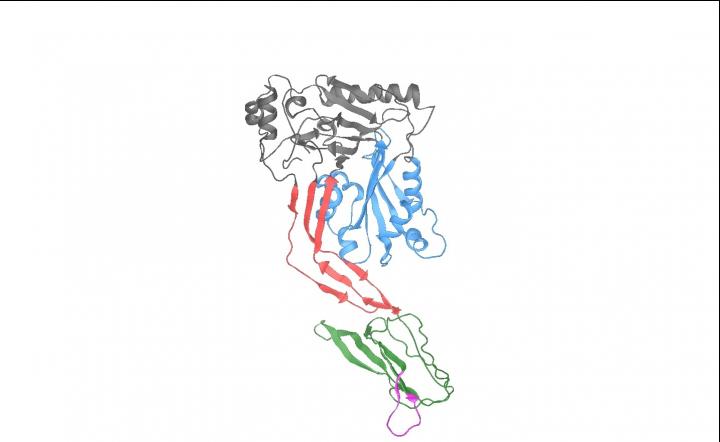
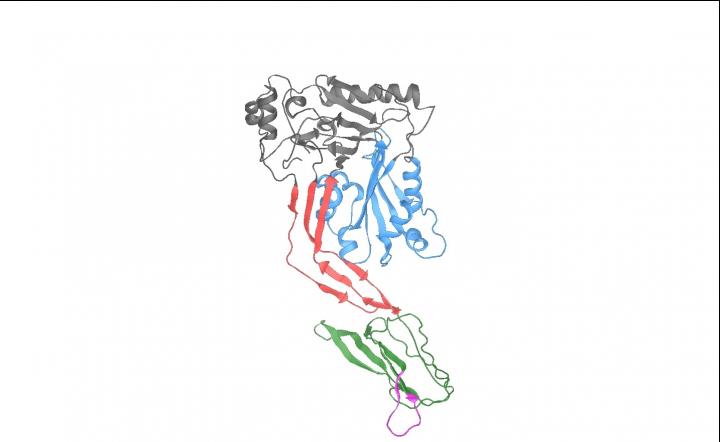
IMAGE

Credit: UoL

Scientists at the University of Liverpool have discovered a new and important function of a toxin produced by disease-causing bacteria that could have significant implications for future vaccine design.

Streptococcus pneumoniae (the pneumococcus) is a major cause of life-threatening invasive diseases such as pneumonia, septicaemia and meningitis, and is responsible for more than one million deaths every year. Key to its disease-causing success is the action of a potent toxin called pneumolysin, which works by creating 'holes' in the membranes of human cells, and either killing them directly or causing significant tissue damage.

Until now, scientists believed that the effects of pneumolysin resulted purely from the binding of the toxin to cholesterol in host cell membranes. A new study published in Nature Microbiology, however, shows that pneumolysin can also bind directly to a host cell receptor on specialised immune cells to suppress the immune response.

The study was a collaboration between the Bacterial Pathogenesis and Immunity Group at the University's Institute of Infection and Global Health and the Department of Microbiology, Tumour and Cell Biology at the Karolinska Institute in Stockholm.

Using specialised in vitro experiments in human cells and in vivo studies in mice, the team has shown that pneumolysin can bind directly to a host cell receptor called Mannose Receptor C type-1 (MRC-1) on immune cells, including macrophages and dendritic cells, causing them to reduce their production of molecules that promote inflammation and protective immunity. The bacteria can then survive more easily in the airways, as inflammation and immune cell activity is suppressed.

Professor Aras Kadioglu, who led the study in Liverpool said: "This is really a key moment in our understanding of how the pneumococcus causes disease. First of all, because it breaks a long-standing dogma that pneumolysin can only bind to cholesterol, indeed the identification of a host receptor for pneumolysin has been the holy grail in the field for many decades, and secondly, because it changes our understanding of how the pneumococcus uses its toxin to manipulate and alter our immune response to its advantage. I am very excited by the potential of these new findings."

Dr Daniel Neill who is a joint first author, added: "Understanding how bacteria are able to promote infection via toxin production will help scientists to develop new ways of combatting serious infectious diseases. Several vaccines in development contain detoxified pneumolysin and it is important that we further explore how the newly-described receptor-binding activity might influence the immune responses induced by such vaccination."

###

Media Contact

Nicola Frost
[email protected]
@livuninews

http://www.liv.ac.uk

Original Source

https://news.liverpool.ac.uk/2018/11/12/breakthrough-in-understanding-how-deadly-pneumococcus-avoids-immune-defences/ http://dx.doi.org/10.1038/s41564-018-0280-x

Share12Tweet8Share2ShareShareShare2

Related Posts

blank

Building a Stronger Bond: How Playing with Your Dog Enhances Your Relationship

April 22, 2026
Cane Toads Accelerate Evolution: Rapid Adaptation Uncovered

Cane Toads Accelerate Evolution: Rapid Adaptation Uncovered

April 22, 2026

Decoding the Hidden Clues of Breast Cancer Risk

April 21, 2026

Investigation Reveals Antibiotic-Resistant Bacteria Among Gut Microbes in Black Bears

April 21, 2026
Please login to join discussion

POPULAR NEWS

  • Research Indicates Potential Connection Between Prenatal Medication Exposure and Elevated Autism Risk

    792 shares
    Share 317 Tweet 198
  • Scientists Investigate Possible Connection Between COVID-19 and Increased Lung Cancer Risk

    65 shares
    Share 26 Tweet 16
  • Salmonella Haem Blocks Macrophages, Boosts Infection

    58 shares
    Share 23 Tweet 15
  • NSF funds machine-learning research at UNO and UNL to study energy requirements of walking in older adults

    101 shares
    Share 40 Tweet 25

About

We bring you the latest biotechnology news from best research centers and universities around the world. Check our website.

Follow us

Recent News

Research on Ukrainian War Amputees Reveals Majority Experience Recovery from Pain and Trauma

Oxford Analysis Identifies Industrial Electrification as a Critical Security Priority

Building a Stronger Bond: How Playing with Your Dog Enhances Your Relationship

Subscribe to Blog via Email

Enter your email address to subscribe to this blog and receive notifications of new posts by email.

Join 79 other subscribers
  • Contact Us

Bioengineer.org © Copyright 2023 All Rights Reserved.

Welcome Back!

Login to your account below

Forgotten Password?

Retrieve your password

Please enter your username or email address to reset your password.

Log In
No Result
View All Result
  • Homepages
    • Home Page 1
    • Home Page 2
  • News
  • National
  • Business
  • Health
  • Lifestyle
  • Science

Bioengineer.org © Copyright 2023 All Rights Reserved.