Dr. Rafael Garcia-Mata, an associate professor of biological sciences at The University of Toledo, recently identified a protein complex that regulates how epithelial cells bond together in such tight connections
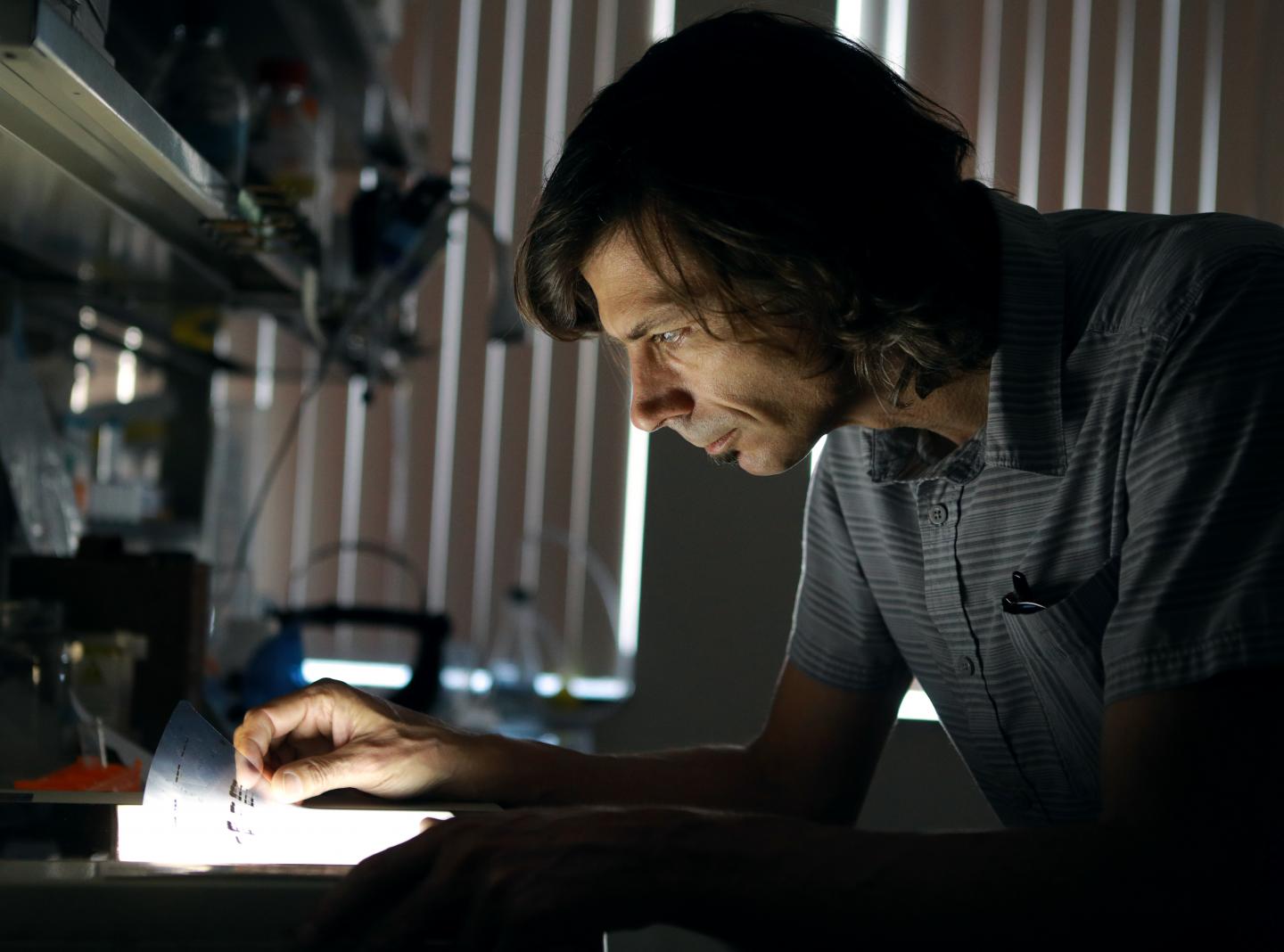
Credit: Daniel Miller, The University of Toledo
For cancer to be successful — from its point of view, anyway — the disease has to find a way to break out beyond its initial foothold and spread throughout the body. Newly published research from The University of Toledo could bring fresh insight into one of the first ways cancers proliferate.
Dr. Rafael Garcia-Mata, an associate professor of biological sciences, recently identified a protein complex that regulates how epithelial cells bond together in such tight connections.
There are more than 150 different types of epithelial cells that carry out essential functions in a wide variety of tissues. Those jobs include making our skin resilient, producing the mucus that lines and guards our airways, and helping with the absorption of nutrients in our digestive system.
The discovery, which builds on Garcia-Mata’s research focus of how cancer cells spread throughout the body, is intriguing because it explains the behavior of cells that are by far the most common starting place for cancer.
“Eighty percent of cancers originate from epithelial cells and most cancers will have to disassemble the adhesion system to grow and spread,” Garcia-Mata said. “If we understand how these adhesive structures are built, we can also try to understand what happens when cancer cells disassemble them.”
His research was published June 27 in the Journal of Cell Biology.
Epithelial tissues line the outer surfaces of organs and blood vessels throughout the body, as well as the inner surfaces of cavities in many internal organs. Their ability to form nearly impermeable junctions enables them to establish boundaries that separate the inside of organs and other tissues from the outside environment.
The way epithelial cells link together is unique in biology and involves a large number of components that work in synchrony to control their assembly. However, the science behind how they manage to form such perfect bonds has up to now been elusive.
“The way these cells organize is very important. What we’ve identified is a new molecular mechanism that controls a lot of the properties that make the ‘right’ epithelial tissues,” Garcia-Mata said. “Understanding how they normally function allows you to understand what happens when things go wrong.”
The implications of these findings go well beyond cancer. Garcia-Mata’s research also helps explain how cells coordinate to generate organ cavities, which may broaden our knowledge of early development and organ formation. It could add significant new pathways for explaining conditions such as asthma and inflammatory bowel disease.
“A lot of diseases are essentially leaky epithelia. Understanding how these structures are modulated may help us learn why we get some of these diseases,” he said.
Garcia-Mata’s research into epithelial cells grew out of prior National Institutes of Health grant-funded work investigating how cancer cells spread away from the primary tumor.
“My lab studies basic, hardcore cell biology. This is where we make discoveries that lead to our ability to understand and target particular diseases, and the initial event in most cancers is the disassembly of these epithelial structures,” he said.
###
Media Contact
Christine Billau
[email protected]
Related Journal Article
http://dx.