• HOME
  • NEWS
  • EXPLORE
    • CAREER
      • Companies
      • Jobs
    • EVENTS
    • iGEM
      • News
      • Team
    • PHOTOS
    • VIDEO
    • WIKI
  • BLOG
  • COMMUNITY
    • FACEBOOK
    • INSTAGRAM
    • TWITTER
Monday, October 5, 2026
BIOENGINEER.ORG
No Result
View All Result
  • Login
  • HOME
  • NEWS
  • EXPLORE
    • CAREER
      • Companies
      • Jobs
        • Lecturer
        • PhD Studentship
        • Postdoc
        • Research Assistant
    • EVENTS
    • iGEM
      • News
      • Team
    • PHOTOS
    • VIDEO
    • WIKI
  • BLOG
  • COMMUNITY
    • FACEBOOK
    • INSTAGRAM
    • TWITTER
  • HOME
  • NEWS
  • EXPLORE
    • CAREER
      • Companies
      • Jobs
        • Lecturer
        • PhD Studentship
        • Postdoc
        • Research Assistant
    • EVENTS
    • iGEM
      • News
      • Team
    • PHOTOS
    • VIDEO
    • WIKI
  • BLOG
  • COMMUNITY
    • FACEBOOK
    • INSTAGRAM
    • TWITTER
No Result
View All Result
Bioengineer.org
No Result
View All Result
Home NEWS Science News Health

Breakthrough in chronic wasting disease research reveals distinct deer, elk prion strains

Bioengineer by Bioengineer
June 11, 2019
in Health
Reading Time: 3 mins read
0
IMAGE
Share on FacebookShare on TwitterShare on LinkedinShare on RedditShare on Telegram

IMAGE

Credit: Bill Cotton/CSU Photography

Infectious proteins called prions cause a group of related, fatal and incurable neurodegenerative disorders, including bovine spongiform encephalopathy or Mad Cow disease and Creutzfeldt-Jakob disease, both of which affect humans.

Chronic wasting disease or CWD, also caused by prions, has reached the point of a global epidemic among deer, elk and members of the deer family. The latest estimates show 26 states and three Canadian provinces have reported the disease in animals on farms and those who are free-ranging. CWD was inadvertently introduced in South Korea in the 1990s and has also recently been identified in Norway, Finland and Sweden.

Scientists’ efforts to more fully conduct research have been hindered due to the constraints of studying this disease in deer and elk; this type of research is challenging, costly and requires large laboratory spaces.

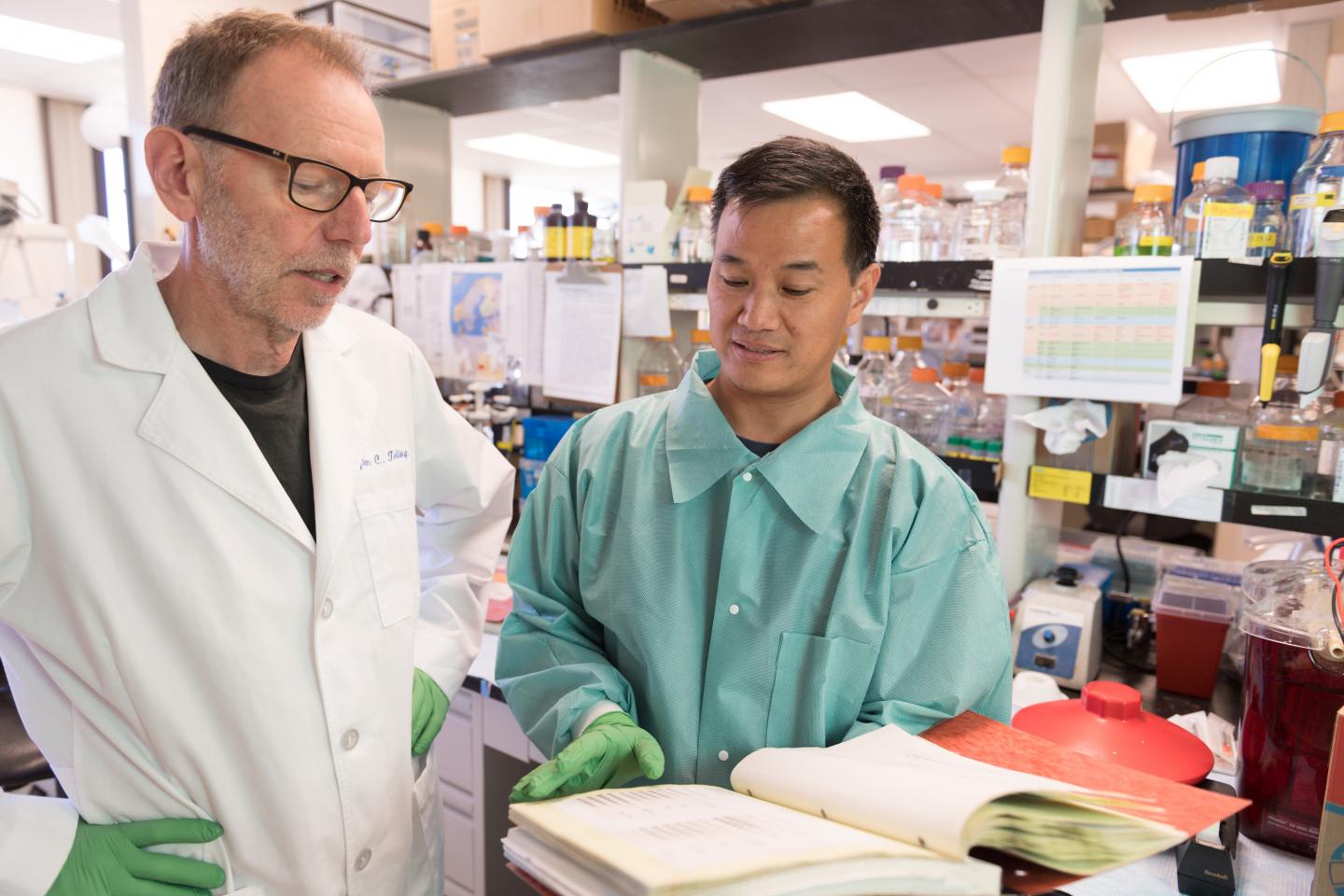
But that may now change. Researchers at Colorado State University, led by Professor Glenn Telling, have developed a new gene-targeted approach to study chronic wasting disease in mice, allowing opportunities for research that has not previously existed.

“It’s a real breakthrough in the field,” said Telling, director of the Prion Research Center at CSU. The study was published May 29 in the Proceedings of the National Academy of Sciences.

The research team also detected a difference in prion strain properties in deer and elk, which is significant because these properties control the ability of whether prions can transmit a disease between species.

Telling said that development of the new mouse model has been in the works for years. The scientists replaced the gene that encodes the prion protein in the mouse and replaced it with an exact replica of the code from either deer or elk.

Through this work, the research team learned that the gene-targeted mice displayed different strains of chronic wasting disease. This is akin to the different strains of viruses that exist for conditions like influenza and herpes, Telling said.

Researchers had not previously been able to detect these different strains in mouse models, even though deer and elk spread different strains of CWD.

Using this new research model, Telling said that scientists can more readily study the routes used by prions to access the central nervous system and spread disease, known as peripheral pathogenesis.

Understanding the number of strains of CWD that exist in the world is incredibly important for animal and human health.

“Ultimately, we want to understand whether or not human beings exposed to CWD prions will contract a new form of human prion disease,” Telling said. “We still don’t understand the potential for prions to transmit disease from one species to another.”

The research team is already working on a gene-targeted model to study the potential for CWD transmission to human beings.

###

A video is available on YouTube for your use at https://youtu.be/yYzYADWgU3Y.

Media Contact
Mary Guiden
[email protected]

Original Source

https://cvmbs.source.colostate.edu/researchers-achieve-breakthrough-in-gene-targeted-approach-to-study-chronic-wasting-disease/

Related Journal Article

http://dx.doi.org/10.1073/pnas.1903947116

Tags: BiologyInfectious/Emerging DiseasesMicrobiology
Share12Tweet8Share2ShareShareShare2

Related Posts

Young Women in Ghana Co-Design New Paths to HIV Testing and Prevention

Young Women in Ghana Co-Design New Paths to HIV Testing and Prevention

October 5, 2026
Endothelial Angptl2 Emerges as Central Driver of Influenza-Linked Lung Fibrosis

Endothelial Angptl2 Emerges as Central Driver of Influenza-Linked Lung Fibrosis

October 5, 2026

AI Scoring of Stomach Lining Visibility Boosts Early Cancer Detection in Landmark Trial

October 5, 2026

Global Survey Reveals How Plasma Donors Transform Lives of Patients Worldwide

October 5, 2026
Please login to join discussion

POPULAR NEWS

  • Alloys That Shrink Their Own Grains: New PIX Mechanism Refines Metals With Heat Alone

    Alloys That Shrink Their Own Grains: New PIX Mechanism Refines Metals With Heat Alone

    29 shares
    Share 12 Tweet 7
  • Endurance Exercise Reshapes the Liver in Males and Females Through Distinct Molecular Routes

    29 shares
    Share 12 Tweet 7
  • Single Transcription Factor PU.1 Rapidly Converts Fibroblasts into Macrophage-Lineage Cells

    29 shares
    Share 12 Tweet 7
  • New Scale Measures How Ready Nurse Educators Really Are for the AI Era

    29 shares
    Share 12 Tweet 7

About

We bring you the latest biotechnology news from best research centers and universities around the world. Check our website.

Follow us

Recent News

Alloys That Shrink Their Own Grains: New PIX Mechanism Refines Metals With Heat Alone

Endurance Exercise Reshapes the Liver in Males and Females Through Distinct Molecular Routes

Single Transcription Factor PU.1 Rapidly Converts Fibroblasts into Macrophage-Lineage Cells

Subscribe to Blog via Email

Success! An email was just sent to confirm your subscription. Please find the email now and click 'Confirm' to start subscribing.

Join 85 other subscribers
  • Contact Us

Bioengineer.org © Copyright 2023 All Rights Reserved.

Welcome Back!

Login to your account below

Forgotten Password?

Retrieve your password

Please enter your username or email address to reset your password.

Log In
No Result
View All Result
  • Homepages
    • Home Page 1
    • Home Page 2
  • News
  • National
  • Business
  • Health
  • Lifestyle
  • Science

Bioengineer.org © Copyright 2023 All Rights Reserved.