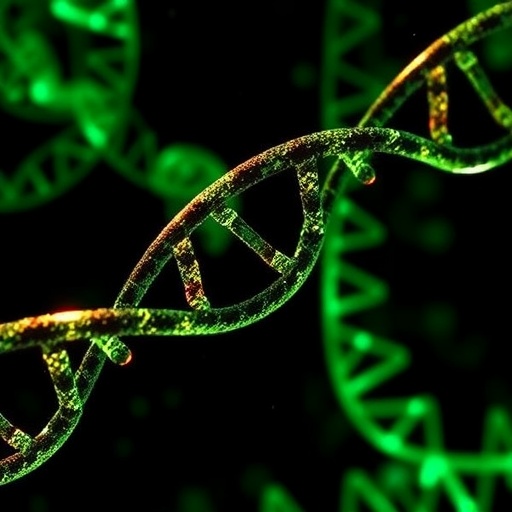
In a groundbreaking advancement in the field of molecular biology, researchers have unveiled the most detailed structural images to date depicting a specific DNA repair mechanism employed by a class of proteins that could prove pivotal in combating cancers tied to BRCA1 and BRCA2 mutations. This revelation opens unprecedented avenues for therapeutic strategies aiming to disable cancer cells that exploit alternative DNA repair pathways when the canonical tumor-suppressing functions of BRCA genes are compromised.
Central to this study is the protein RAD52, which has long been identified as a key player in the repair of DNA in cancer cells deficient in BRCA1 or BRCA2. These mutations render typical repair mechanisms inactive, yet RAD52 enables cellular survival by facilitating DNA single-strand annealing (SSA), a process by which broken DNA strands are rejoined. Understanding and ultimately blocking RAD52’s repair functions holds promise in selectively targeting cancer cells that have become resistant to conventional therapies.
Historically, capturing the intricate steps of RAD52’s repair activities has eluded the scientific community due to the fleeting nature of these molecular processes and the complexity of human proteins. To circumvent this challenge, the research team turned to Mgm101, an ancient homolog of RAD52 found in yeast mitochondria. This model system allowed for a more accessible observation of DNA binding and repair activities intrinsic to this protein family, revealing insights that are directly translatable to human biology.
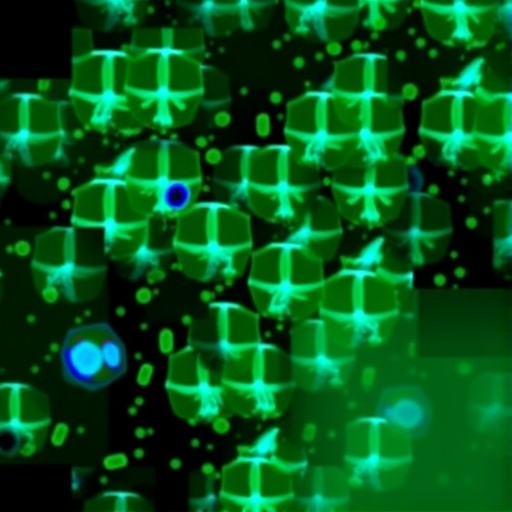
Utilizing a combination of native mass spectrometry, mass photometry, and cutting-edge cryogenic electron microscopy (cryo-EM), the team resolved the architecture and dynamic states of Mgm101 throughout the DNA repair process. Mass photometry illuminated the assembly of Mgm101 monomers into a highly specific 19-mer ring complex, which acts as a molecular scaffold facilitating the coordinated annealing of complementary DNA strands. This precise ring formation is integral to the protein’s function in unwinding and aligning DNA segments for efficient rejoining.
Cryo-EM imaging, executed under conditions preserving the native structural fidelity of protein-DNA complexes, captured multiple distinct phases of the annealing process. These included the initial substrate state—where a single DNA strand is bound to the protein complex—the duplex intermediate where the second DNA strand engages and begins annealing, and the final product, a classic double-stranded DNA helix released from the protein scaffold. Notably, the duplex intermediate conformation represents a previously undocumented state, where the DNA bases are exposed and extended, optimizing their accessibility for sequence scanning and alignment.
This structural elucidation addresses a longstanding question in the DNA repair field: whether single-strand annealing involves one or multiple protein rings. The data compellingly demonstrate that a single 19-mer protein ring is sufficient to mediate the entire annealing reaction, implying a conserved cis mechanism wherein the repair occurs within the confines of one molecular complex. This discovery refines our understanding of SSA mechanics and confers new perspectives on the regulation of DNA repair.
Furthermore, the research bridges an important conceptual gap in the functional parallels between RAD52 and its yeast counterpart Mgm101. While prior structural studies have focused on RAD52 bound to single-stranded DNA, the current investigation reveals critical intermediate states that have proven elusive—particularly the duplex intermediate—thus enriching the framework for drug development aimed at obstructing RAD52-mediated repair in BRCA-mutated cancers.
The collaboration featured a multidisciplinary approach, integrating expertise from Ohio State University’s prominent cryo-EM facilities and Georgia Institute of Technology’s innovative mass spectrometry and photometry platforms. The synergy between these technological approaches enabled a comprehensive, high-resolution depiction of the protein-DNA interactions essential to single-strand DNA annealing.
Looking ahead, the researchers plan to extend their studies directly to human RAD52, with a focus on replicating these captured states, especially the duplex intermediate. Integrating mass spectrometry techniques will further unravel how DNA strands bind to the protein complex during each repair phase, providing refined molecular targets for future anti-cancer drug design.
This pioneering work not only elevates our molecular understanding of DNA repair but also invigorates the prospect of pharmacological interventions. By honing in on RAD52’s unique structural phases, scientists can potentially develop inhibitors that selectively eradicate cancer cells reliant on this alternate repair pathway, thereby addressing treatment resistance in BRCA mutation-associated malignancies.
The study was graciously funded by the U.S. National Science Foundation and the National Institutes of Health, underscoring the national commitment to pioneering cancer research. Technical support included data collection at Ohio State’s Center for Electron Microscopy and Analysis and computational processing at the Ohio Supercomputer Center, reflecting a high-caliber convergence of institutional resources.
Collectively, these findings represent a critical step toward decoding the complex choreography of DNA repair in cancer cells, and they may well catalyze the design of novel therapeutics capable of exploiting the vulnerabilities introduced by mutated BRCA genes.
Subject of Research:
The molecular mechanism of single-strand DNA annealing facilitated by the RAD52 protein family, using structural and biophysical analysis of its yeast homolog Mgm101.
Article Title:
Mechanism of single-strand annealing from native mass spectrometry and cryo-EM structures of RAD52 homolog Mgm101
News Publication Date:
April 27, 2026
Web References:
http://dx.doi.org/10.1093/nar/gkag320
Keywords:
RAD52, Mgm101, DNA repair, single-strand annealing, cryo-electron microscopy, mass spectrometry, BRCA mutations, cancer biology, DNA strand repair mechanism, protein-DNA interactions.
Tags: alternative DNA repair pathways in cancerBRCA1 and BRCA2 mutation effectsDNA repair mechanisms in BRCA-mutated cancersmolecular imaging of DNA repair proteinsovercoming cancer resistance via DNA repair targetingRAD52 inhibition for cancer treatmentRAD52 protein structure and functionsingle-strand annealing DNA repairstructural biology of DNA repair proteinstargeting RAD52 in cancer therapytherapeutic strategies for BRCA-related cancersyeast Mgm101 as a model for human DNA repair