In a groundbreaking advancement in synthetic biology, researchers from the University of Tokyo and the RIKEN Center for Biosystems Dynamics Research have unveiled a revolutionary method to simultaneously synthesize the entire set of transfer RNAs (tRNAs) necessary for protein synthesis in vitro. This significant breakthrough propels the field closer to the creation of artificial molecular systems capable of self-reproduction, marking an unprecedented step toward fully controllable synthetic biological machines.
Central to all biological life is the precise translation of genetic information into functional proteins, a process heavily reliant on tRNAs. These small RNA molecules act as adaptors, interpreting the genetic code by matching specific codons in mRNA with their corresponding amino acids during protein assembly. A complete suite of at least 21 tRNA species is indispensable to decode all the amino acid instructions needed for building proteins. The challenge of producing all these tRNAs in a cell-free system has historically presented a formidable technical barrier, thereby limiting progress in artificial cell replication and synthetic protein manufacturing.
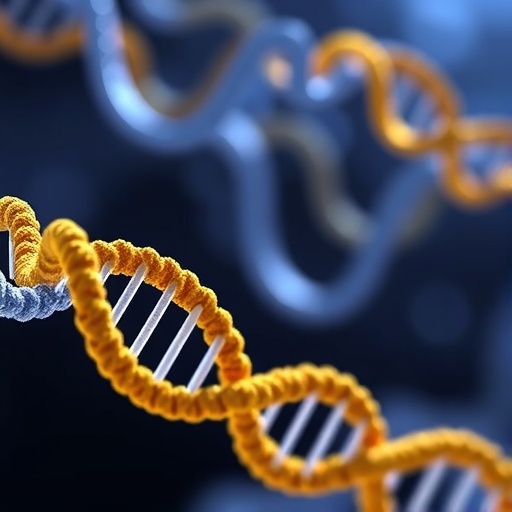
The newly developed technique, termed the “tRNA array method,” ingeniously packages the genetic blueprints for all 21 tRNAs onto a single DNA plasmid. By leveraging this innovation, the research team achieved the simultaneous transcription of all tRNA species in a streamlined and efficient manner within a specialized translation system purposely lacking tRNAs. The transcripted tRNAs are then meticulously separated using a combination of the hepatitis delta virus (HDV) ribozyme and RNase P enzymatic activity. This ensures the production of mature, functional tRNAs ready to engage effectively in protein synthesis without additional purification steps.
Previous attempts to establish a fully reconstituted translation system encountered obstacles primarily due to the complexity and diversity of tRNA processing. Generating each tRNA individually is labor-intensive and technically challenging, especially when maintaining physiological activity is critical. By unifying tRNA genes into a single plasmid, the tRNA array method eliminates these bottlenecks and allows researchers to bypass cumbersome individual handling, setting a new standard for in vitro protein synthesis technology.
This breakthrough holds profound implications for the design of artificial molecular systems with self-organizing and regenerative capabilities. The ability to synthesize all essential components of the protein synthesis machinery—including the 20 aminoacyl-tRNA synthetases previously accomplished by this team and now the complete 21 tRNA set—means that a truly autonomous protein production system could soon become a reality. Such systems would dramatically differ from biological cells by offering a level of modularity, design precision, and environmental robustness unprecedented in nature.
The implications extend far beyond theoretical constructs; this technology paves the way for more reliable and controllable platforms for producing pharmaceuticals, industrial enzymes, and custom-designed biomolecules. Unlike living organisms that may be susceptible to environmental fluctuations and have inherent biochemical limitations, synthetic systems can be engineered for stability, scalability, and tailored functionality. This direct control over molecular components could vastly accelerate biofactory development, enabling mass production of complex molecules with high fidelity.
The tRNA array method also promises to catalyze innovation in the field of genetic code expansion. By facilitating facile synthesis of the entire tRNA repertoire, this approach greatly simplifies the incorporation of non-standard amino acids into proteins. This capability could revolutionize protein engineering, allowing scientists to create novel peptides and proteins with new chemical properties and functions that natural biology cannot afford. Consequently, this advancement may open doors to new drug modalities, biomaterials, and therapeutic strategies.
Moreover, the study demonstrates the power of integrating RNA enzymology tools such as the HDV ribozyme and RNase P in the processing of synthetic RNA transcripts. The precise cleavage afforded by these ribonucleases ensures faithful tRNA maturation, a necessity for their function in translation. This methodological insight provides a generalizable framework that could be adapted for other synthetic RNA-based systems where complex RNA processing is required.
Underpinning this progress is the vision of building life-like molecular machines that can reproduce their own constituents, a grand ambition of synthetic biology. Achieving sustained, in vitro self-reproduction would not only transform bioengineering but could also clarify fundamental principles of life’s origin and evolution. The collaborative team’s milestone achievement brings this aspiration within tangible reach and sets the stage for subsequent developments in biofabrication.
As the researchers continue to enrich this system with additional genetic elements, the platform is expected to evolve into a versatile synthetic cell-like environment with highly tunable functions. The modular construction and controlled environment provide a unique experimental sandbox for studying molecular biology outside living cells, facilitating discoveries impossible in native biological settings.
In summary, the University of Tokyo and RIKEN’s innovative tRNA array method is a paradigm-shifting breakthrough that effectively overcomes a critical hurdle in synthetic biology. By enabling simultaneous synthesis of the minimal set of 21 tRNAs required for protein translation within a reconstituted system, the study lays down the molecular infrastructure essential for creating artificial, self-sustaining molecular systems. The technology portends wide-ranging applications in medicine, industrial biotechnology, synthetic life research, and protein engineering, heralding a new era where biology’s fundamental processes are intricately programmable and amenable to human design.
Subject of Research: Synthetic biology and in vitro protein synthesis through simultaneous tRNA expression.
Article Title: “Simultaneous in vitro expression of minimal 21 transfer RNAs by tRNA array method”.
News Publication Date: 26-Aug-2025.
Web References:
https://www.c.u-tokyo.ac.jp/eng_site/
http://dx.doi.org/10.1038/s41467-025-62588-y
References:
Ryota Miyachi, Keiko Masuda, Yoshihiro Shimizu, Norikazu Ichihashi, Nature Communications, DOI: 10.1038/s41467-025-62588-y
Image Credits: Graduate School of Arts and Sciences, College of Arts and Sciences, The University of Tokyo
Keywords: Synthetic biology, tRNA synthesis, in vitro translation, protein synthesis, artificial molecular systems, genetic code expansion, HDV ribozyme, RNase P, reconstituted translation system, biotechnology, self-reproducing systems, protein engineering
Tags: artificial molecular systemsbreakthroughs in synthetic protein engineeringcell-free protein manufacturinggenetic information translationin vitro tRNA synthesisprotein synthesis processesRIKEN Center contributionsself-reproducing synthetic biologysynthetic biology advancementstransfer RNA typestRNA array method innovationUniversity of Tokyo research