Brazil’s rare earth element reserves rank second in the world, surpassed only by China’s staggering deposits. Despite this immense natural wealth, Brazil’s rare earth sector remains embryonic, hampered by technological and environmental challenges that inhibit the development of a fully integrated local production chain. These 17 metallic chemical elements, vital for manufacturing next-generation technologies such as electric vehicles, wind turbines, and smartphones, are currently fueling intense global competition. Brazil’s path to becoming a rare earth powerhouse depends on overcoming critical hurdles related to mineral separation, refining, and magnet manufacturing—stages that demand advanced technological capabilities and stringent environmental management.
Fernando Landgraf, a professor at the University of São Paulo’s Engineering School (POLI-USP) and a preeminent expert in the field, provided a detailed assessment of Brazil’s rare earth prospects during a lecture at FAPESP Week London. He highlighted that Brazil’s abundant reserves symbolize latent potential rather than immediate production capacity. Central to the sector’s viability is the ability to produce rare earth carbonate, a powdered intermediary essential for subsequent separation and magnet fabrication. These high-performance permanent magnets, prized for their ability to retain magnetic properties over decades, remain focal points in global trade tensions, particularly between the U.S. and China.
Landgraf explained that the production yield discrepancy necessitates approximately two tons of rare earth carbonate to fabricate one ton of magnets. This multiplier effect implies that worldwide, if the demand for rare earth magnets reaches 150,000 tons annually, mining enterprises must produce about 300,000 tons of carbonate. Brazil’s current contribution represents less than 6% of this target, with major domestic mining firms yielding around 20,000 tons per year. Nevertheless, promising expansions are underway as Brazil’s rare earth projects scale up, potentially processing upwards of 20 million tons of ore to meet growing demand.
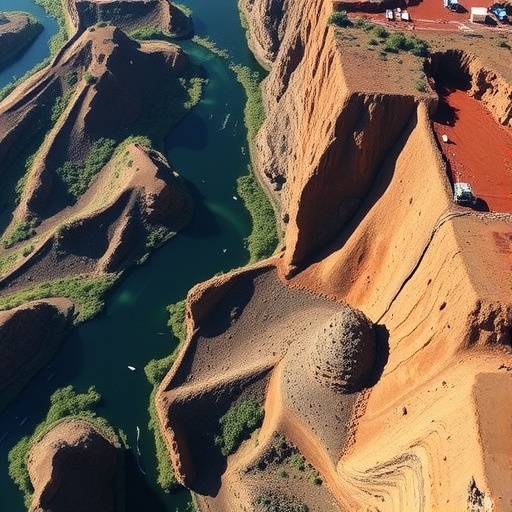
Currently, Brazil hosts approximately ten rare earth mining initiatives at various development stages, with production underway at operations like Serra Verde in Minaçu, Goiás, and ADL in Buena, São Francisco de Itabapoana, Rio de Janeiro. Yet, environmental concerns define the major obstacles ahead. The nation lacks clearly defined parameters for what environmental metrics must be monitored and controlled to mitigate chemical contamination near mining sites. Calls for greater transparency and standardized regulatory frameworks persist as stakeholders grapple with balancing extraction activities and ecological preservation.
From a technological standpoint, refining rare earth elements stands as the most significant bottleneck. The ionic clay deposits holding rare earths discovered in Brazil over the past decade exhibit complex, variable compositions of the 17 elements, each with disparate chemical behaviors and market values. The challenge lies in developing solvent extraction processes optimized to isolate valuable constituents—neodymium, praseodymium, dysprosium, and terbium—at competitive costs. Mastery over this technology requires not only defining industrial process parameters but also addressing ore contaminants such as aluminum oxides and iron. Moreover, establishing a local supply chain for chemical extractants could reduce dependence on imports and improve cost-efficiency.
China remains the undisputed leader in rare earth processing technologies, having accumulated decades of proprietary expertise that it closely guards. The country’s reluctance to share detailed methodologies complicates knowledge transfer efforts. Conversely, collaboration with Western institutions involves navigating geopolitical complexities that extend beyond pure scientific exchange. In this context, Brazil is exploring partnerships with British research groups specializing in magnet manufacturing and environmental monitoring of mining operations, as the UK boasts a rich legacy in these fields.
Brazilian research infrastructure is gradually solidifying around rare earth technologies. The National Institute of Science and Technology for the Processing and Application of Rare Earth Magnets (INCT Pátria), founded in 2014 and coordinated by Landgraf, integrates scientific teams nationwide aiming to master the entire lifecycle of supermagnets. Expanding upon these efforts, the recently established INCT Matéria combines 15 institutions focused on developing rare earth applications for the energy transition, emphasizing diverse areas from separation chemistry to materials engineering.
Institutions such as the Mineral Technology Center (CETEM) in Rio de Janeiro, the Nuclear Technology Development Center in Belo Horizonte, and the Department of Chemical Engineering at POLI-USP are enhancing techniques for rare earth separation. Complementing upstream processing, the Institute for Technological Research (IPT) in São Paulo has achieved progress in producing metallic neodymium via high-temperature electrolysis and fabricating the iron-neodymium-boron alloys vital to magnet cores. These foundational materials are paramount to generating magnets with superior magnetic performance required in advanced technologies.
The subsequent stage—densifying the crystalline powder into highly oriented magnets using powder metallurgy—has been chiefly investigated at the Institute of Energy and Nuclear Research (IPEN) in São Paulo and jointly at the Federal University of Santa Catarina (UFSC). A particularly innovative endeavor led by Professor Paulo Wendhausen involves the challenge of additive manufacturing through 3D printing of magnets, potentially revolutionizing production paradigms by enabling complex geometries and customization previously unattainable.
Parallel to academic research, Brazil is establishing industrial capabilities to produce high-quality rare earth magnets domestically. The Innovation and Technology Center of SENAI, with support from UFSC, is constructing a cutting-edge magnet factory-laboratory in Minas Gerais. Completion of this facility marks a significant milestone, but Landgraf underscores the imperative of an iterative learning curve to achieve market-grade magnet quality, estimating a two-year period for mastering manufacturing processes—an endeavor with no shortcuts in either technology or skill development.
Despite the challenges, Brazil’s rare earth ambitions are intertwined with global imperatives for a sustainable energy transition and strategic technological independence. Rare earth minerals underpin vital green technologies, and fostering local expertise and production capacity aligns with broader innovation and industrial policies. By leveraging institutional collaborations, advancing scientific know-how, and addressing environmental sustainability head-on, Brazil positions itself to become a significant player in the rare earth supply chain, diversifying the market traditionally dominated by China and reshaping the global landscape of critical minerals.
The FAPESP Week London event provided an essential platform for Brazilian and British researchers to exchange knowledge and forge partnerships, underscoring international cooperation’s key role in overcoming the multifaceted challenges rare earth mining presents. Through sustained investment in science and technology, Brazil is charting a promising, albeit complex, course toward technological sovereignty in this crucial sector.
Subject of Research: Rare earth mining and processing technologies in Brazil, focusing on overcoming environmental and technological challenges to establish a local production chain.
Article Title: Brazil’s Quest to Master Rare Earth Production Amid Environmental and Technological Challenges
News Publication Date: June 2026
Web References:
https://bv.fapesp.br/en/pesquisador/1834/fernando-jose-gomes-landgraf
https://inct-terras-raras.prp.usp.br/
https://fapesp.br/week/2026/london
www.fapesp.br/en
www.agencia.fapesp.br/en
Image Credits: Elton Alisson/Agência FAPESP
Keywords
Rare earth elements, mineral processing, metallurgy, environmental monitoring, solvent extraction, permanent magnets, neodymium, praseodymium, dysprosium, terbium, additive manufacturing, sustainable technologies
Tags: Brazil rare earth element reservesBrazil rare earth production chainenvironmental challenges in rare earth miningglobal rare earth market competitionmagnet manufacturing technologynext-generation technology materialsrare earth carbonate productionrare earth elements for electric vehiclesrare earth mineral separation techniquesrefining rare earth elements in Brazilsustainable rare earth mining practicestechnological barriers to rare earth production