• HOME
  • NEWS
  • EXPLORE
    • CAREER
      • Companies
      • Jobs
    • EVENTS
    • iGEM
      • News
      • Team
    • PHOTOS
    • VIDEO
    • WIKI
  • BLOG
  • COMMUNITY
    • FACEBOOK
    • INSTAGRAM
    • TWITTER
Sunday, May 10, 2026
BIOENGINEER.ORG
No Result
View All Result
  • Login
  • HOME
  • NEWS
  • EXPLORE
    • CAREER
      • Companies
      • Jobs
        • Lecturer
        • PhD Studentship
        • Postdoc
        • Research Assistant
    • EVENTS
    • iGEM
      • News
      • Team
    • PHOTOS
    • VIDEO
    • WIKI
  • BLOG
  • COMMUNITY
    • FACEBOOK
    • INSTAGRAM
    • TWITTER
  • HOME
  • NEWS
  • EXPLORE
    • CAREER
      • Companies
      • Jobs
        • Lecturer
        • PhD Studentship
        • Postdoc
        • Research Assistant
    • EVENTS
    • iGEM
      • News
      • Team
    • PHOTOS
    • VIDEO
    • WIKI
  • BLOG
  • COMMUNITY
    • FACEBOOK
    • INSTAGRAM
    • TWITTER
No Result
View All Result
Bioengineer.org
No Result
View All Result
Home NEWS Science News Chemistry

Brain research sheds light on the molecular mechanisms of depression

Bioengineer by Bioengineer
June 16, 2020
in Chemistry
Reading Time: 2 mins read
0
IMAGE
Share on FacebookShare on TwitterShare on LinkedinShare on RedditShare on Telegram

IMAGE

Credit: Lauri Nummenmaa

A new study conducted in Turku, Finland, reveals how symptoms indicating depression and anxiety are linked to brain function changes already in healthy individuals.

Researchers of the national Turku PET Centre have shown that the opioid system in the brain is connected to mood changes associated with depression and anxiety.

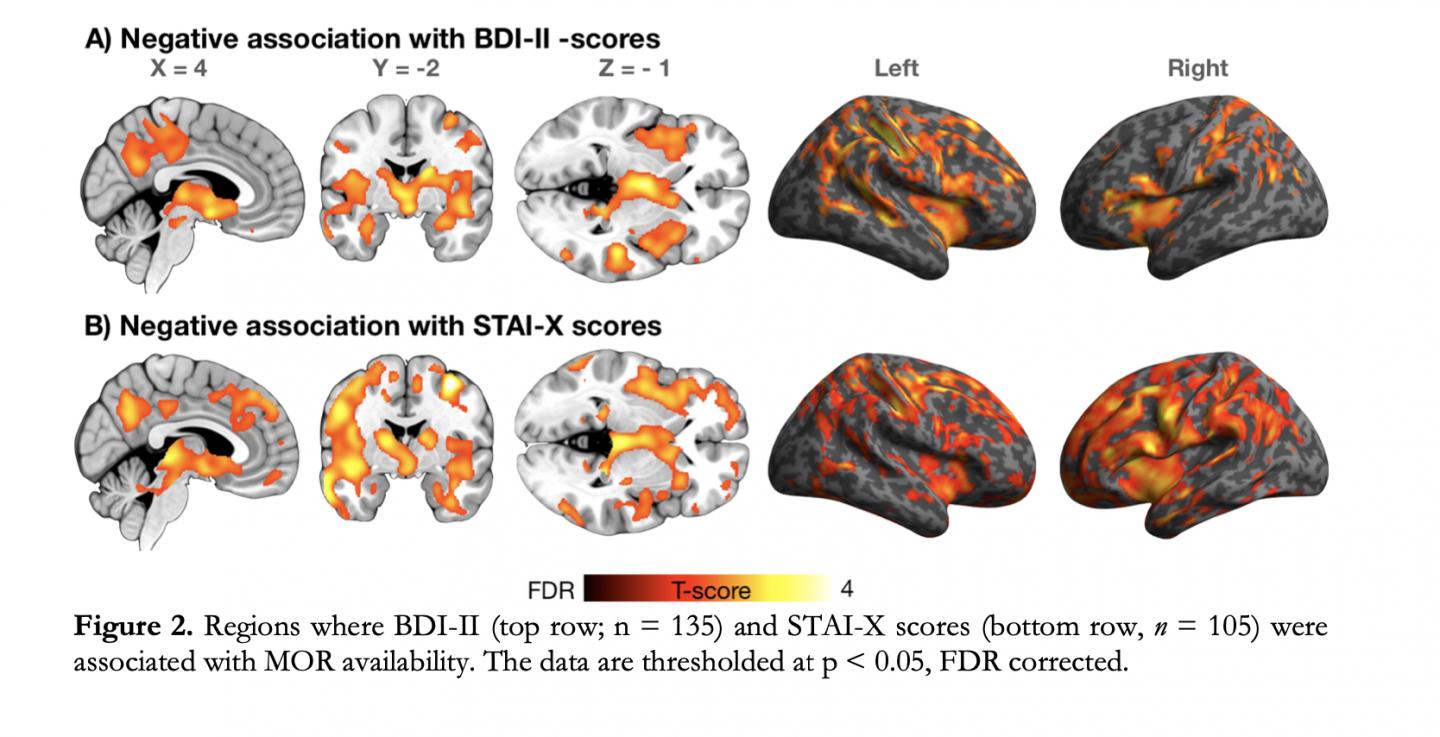
Depression and anxiety are typically associated with lowered mood and decreased experience of pleasure. Opioids regulate the feelings of pain and pleasure in the brain. The new study conducted in Turku shows that the symptoms associated with depression and anxiety are connected to changes in the brain’s opioid system already in healthy individuals.

– We found that the more depressive and anxious symptoms the subjects had, the less opioid receptors there were in their brain. These receptors function like small “docks” that are influenced by both the brains own opioids as well as opiates. These type of opioid-mediated mood changes can be an important mechanism in the central nervous system, says Professor Lauri Nummenmaa from the University of Turku.

– These results show that the mood changes indicating depression can be detected in the brain already early on. Both the brain’s own opioids and synthetic opiate-based drugs regulate mood. Based on the results, drugs that have an effect on the opioid system can help in the treatment of depression, adds Nummenmaa.

The study was conducted with Positron Emission Tomography (PET) and altogether 135 volunteers participated as subjects. A small dose of radioactive tracer binding to the brain’s opioid receptors was injected in their circulation. The decay of the tracers was measured with a PET camera, whereas the depressive and anxious symptoms of the subjects were measured with questionnaires.

The study is based on the AIVO database hosted by Turku University Hospital and Turku PET Centre. The database contains different in vivo molecular brain scans for extensive analyses: https://aivo.utu.fi/

###

The results have been published in the Neuropsychopharmacology journal.

The study was funded by the Academy of Finland and Sigrid Jusélius Foundation.

Media Contact
Lauri Nummenmaa
[email protected]

Original Source

https://www.utu.fi/en/news/press-release/brain-research-sheds-light-on-the-molecular-mechanisms-of-depression

Related Journal Article

http://dx.doi.org/10.1038/s41386-020-0725-9

Tags: Depression/AngerDiagnosticsMedicine/HealthMental HealthNeurochemistryPharmaceutical SciencesStress/Anxiety
Share12Tweet8Share2ShareShareShare2

Related Posts

Miniature Sensor Uses Light to Detect Touch — Chemistry

Miniature Sensor Uses Light to Detect Touch

May 8, 2026
Iron Minerals Determine Whether Dissolved Organic Matter Fuels Microbes or Becomes Long-Term Carbon Storage — Chemistry

Iron Minerals Determine Whether Dissolved Organic Matter Fuels Microbes or Becomes Long-Term Carbon Storage

May 8, 2026

Kate Evans Appointed Associate Lab Director for Biological and Environmental Systems Science at ORNL

May 8, 2026

Advancing Multiscale Modeling and Overcoming Operational Challenges in Autothermal COâ‚‚-to-Methanol Reactors

May 8, 2026
Please login to join discussion

POPULAR NEWS

  • Research Indicates Potential Connection Between Prenatal Medication Exposure and Elevated Autism Risk

    840 shares
    Share 336 Tweet 210
  • New Study Reveals Plants Can Detect the Sound of Rain

    727 shares
    Share 290 Tweet 181
  • Scientists Investigate Possible Connection Between COVID-19 and Increased Lung Cancer Risk

    68 shares
    Share 27 Tweet 17
  • Salmonella Haem Blocks Macrophages, Boosts Infection

    61 shares
    Share 24 Tweet 15

About

We bring you the latest biotechnology news from best research centers and universities around the world. Check our website.

Follow us

Recent News

Evaluating Digoxin Use in Patients with Symptomatic Rheumatic Heart Disease

Evaluating the Effectiveness and Safety of Digitalis Glycosides in Treating Heart Failure

Urdu Fall Risk Questionnaire Adapted for Elderly

Subscribe to Blog via Email

Enter your email address to subscribe to this blog and receive notifications of new posts by email.

Join 82 other subscribers
  • Contact Us

Bioengineer.org © Copyright 2023 All Rights Reserved.

Welcome Back!

Login to your account below

Forgotten Password?

Retrieve your password

Please enter your username or email address to reset your password.

Log In
No Result
View All Result
  • Homepages
    • Home Page 1
    • Home Page 2
  • News
  • National
  • Business
  • Health
  • Lifestyle
  • Science

Bioengineer.org © Copyright 2023 All Rights Reserved.