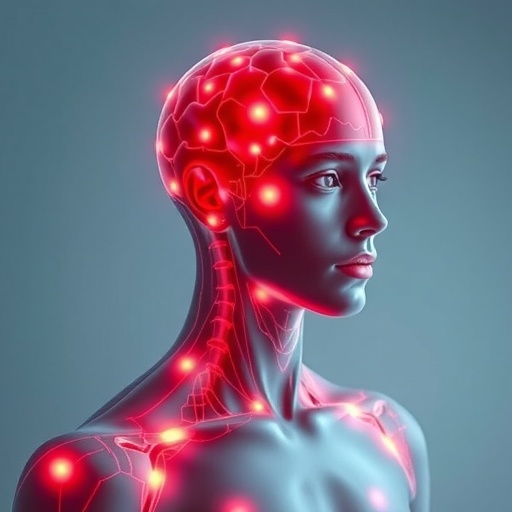
The pursuit of merging intelligent computing directly with the human body has long fascinated researchers, promising breakthroughs in continuous health monitoring and advanced prosthetic control. Yet, this lofty ambition has been constrained by a fundamental physical challenge—traditional artificial intelligence processors, primarily silicon-based, are intrinsically rigid. When attached to soft biological tissues such as beating hearts or flexing muscles, these inflexible chips induce trauma, detach from the delicate tissue, and ultimately fail to deliver continuous functionality. Addressing this challenge requires a radical rethinking of how neuromorphic devices—systems that emulate neurological functions—are designed and fabricated.
Emerging research, recently detailed in the International Journal of Extreme Manufacturing, reveals a paradigm shift from rigid architectures toward soft, brain-inspired electronics capable of sensing, storing, and processing information while mechanically conforming to dynamic biological environments. This new generation of devices leverages intrinsically soft materials, such as malleable polymers and ionogels, to retain complex computing capabilities even under significant mechanical strain. By integrating these flexible substrates, neuromorphic electronics achieve functionality that was previously impossible with silicon-based platforms, opening avenues for seamless human-machine integration.
Central to these advancements is the innovative mechanism of organic mixed ionic-electronic conduction. Unlike traditional processors that transmit electrons through stiff metal pathways, these soft devices emulate the human brain’s chemical signaling by dynamically managing the dual flow of ions and electrons. Structurally analogous to microscopic sponges, their active components absorb and release ions from their environment, continuously rewiring neural-like circuits. This process underpins the devices’ ability to replicate synaptic plasticity—the dynamic strengthening and weakening of biological synapses—thereby enabling learning and memory functions at the hardware level.
Material breakthroughs have propelled these devices to extraordinary mechanical resilience, boasting stretchability up to 140% of their original length, an elasticity surpassing that of human skin. Such pliability enables stable operation around highly mobile joints like elbows and knees without compromising device integrity. The implications for wearable technology are profound, as electronics can now intimately conform to the body’s complex contours and movements without causing discomfort or failure.
Beyond mechanical adaptability, these neuromorphic devices operate at ultra-low voltages, typically below half a volt. This extreme energy efficiency not only reduces power consumption but also minimizes thermal emissions, ensuring that the devices remain safe for continuous contact with organs and skin. Remarkably, their power requirements are significantly lower than a standard AA battery, facilitating long-term use without the risk of overheating or electrical hazards—a crucial criterion for implantable and wearable health technologies.
The shift from rigid to soft neuromorphic systems dramatically transforms manufacturing paradigms. Traditional fabrication involves assembling rigid sensors onto flexible substrates, a complex and often fragile process. In contrast, the monolithic printing of soft computing networks fuses sensing, memory, and processing into a unified elastomeric fabric. This manufacturing evolution simplifies production, enhances durability, and leads to versatile applications such as highly responsive electronic skins and soft robotic limbs that detect and interpret tactile and motion inputs locally, eliminating the need for bulky external processors.
Despite such promising strides, key engineering challenges remain. One major limitation is the rapid fading of information stored in current soft memory components after stimulation ceases, rendering them unsuitable for long-term data retention. This volatility restricts their immediate clinical utility, especially where persistent memory is critical, such as continuous monitoring or therapeutic interventions.
To circumvent this obstacle, research is gravitating toward island-bridge architectures. Here, permanent memory modules reside on rigid microscopic “islands” shielded from mechanical strain, connected by stretchable, coiled wiring that accommodates body movement. This hybrid topology marries the stability of rigid memory with the flexibility of soft interconnects, balancing durability and functionality in human-integrated devices.
Material considerations further guide this development trajectory, emphasizing chemically stable, biocompatible, and non-toxic components to ensure wearer safety and device longevity. Such careful material selection aids in transitioning these stretchable neuromorphic chips from controlled laboratory experiments to reliable, everyday human applications.
Looking forward, the convergence of materials science, neuromorphic engineering, and manufacturing innovations promises to fundamentally reshape how intelligent devices interface with the human body. These stretchable neuromorphic systems herald a future where computing is not only high-performance but intrinsically adaptable, biofriendly, and seamlessly embedded into the fabric of daily life.
As this research continues to mature, it will likely accelerate advances in personalized health diagnostics, rehabilitation technologies, and even augmented human capabilities. By overcoming the physical limitations that once constrained wearable AI, these devices pave the way for unprecedented integration of machine intelligence with the organic rhythms of human biology, potentially transforming medicine, robotics, and beyond.
Subject of Research: Stretchable neuromorphic electronics integrating soft, brain-inspired materials for human-compatible intelligent systems.
Article Title: Stretchable neuromorphic electronics for future human-integrated intelligence
News Publication Date: 23-Mar-2026
Web References:
International Journal of Extreme Manufacturing
DOI: 10.1088/2631-7990/ae5004
Image Credits: By Tianda Fu§,*, Ruizhe Yang§, Max Weires, Junyi Yin, Yifan Liao and Yifan Guo
Keywords
Neuromorphic electronics, stretchable computing, organic mixed ionic-electronic conduction, soft materials, wearable AI, bioelectronic skins, synaptic plasticity, flexible substrates, low-voltage operation, island-bridge architecture, biocompatible devices, human-integrated intelligence
Tags: advanced prosthetic control systemsbrain-inspired stretchable electronicscontinuous health monitoring technologydynamic biological environment sensingextreme manufacturing in bioelectronicsflexible neuromorphic deviceshuman-machine seamless integrationionogel-based computingmalleable polymer electronicsnext-generation wearable AIorganic mixed ionic-electronic conductionsoft bioelectronic interfaces