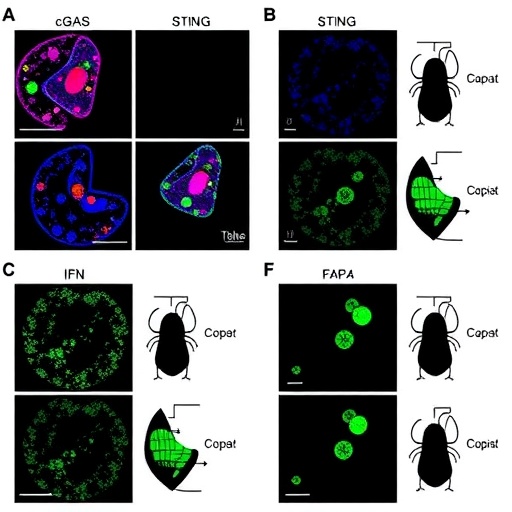
A molecular alarm system best known for detecting misplaced DNA may be helping drive obesity from inside the intestine, according to a study published in Nature Metabolism. Researchers report that intestinal cyclic GMP–AMP synthase, or cGAS, links immune surveillance in the gut to energy use throughout the body. In male mice fed an obesity-inducing diet, increased activity in the intestinal cGAS–STING–interferon pathway was associated with weight gain, altered microbial metabolism and reduced heat production in fat tissue. When the researchers removed cGAS specifically from intestinal epithelial cells, the animals became more resistant to diet-induced obesity and displayed broader improvements in metabolic health. The findings point to an unexpected gut-to-fat communication system in which an immune sensor can influence whether the body stores energy or burns it.
The cGAS pathway is normally activated when DNA appears in the wrong cellular compartment. In healthy cells, most DNA is confined to the nucleus and mitochondria. DNA fragments released during infection, cellular stress or tissue damage can instead accumulate in the cytoplasm, where cGAS binds them and produces the signalling molecule cyclic GMP–AMP. This molecule activates the adaptor protein STING, which then triggers a cascade of kinases and transcription factors, including IRF3 and NF-κB. The result is production of type I interferons and other inflammatory mediators. That response is valuable against certain pathogens, but excessive or chronically activated signalling can disrupt tissue function. The new work suggests that in the intestine, this defensive circuitry has consequences far beyond local immunity, influencing the metabolic conversation between the gut microbiota and adipose tissue.
The researchers found evidence that intestinal cGAS signalling is heightened in obesity. Their analysis indicated activation of the pathway in intestinal samples from humans with obesity and in male mice exposed to a high-calorie diet. Increased signalling was accompanied by greater expression of type I interferons and signs of heightened immune activity among intestinal cells. Type I interferons are powerful antiviral cytokines that change gene expression across many cell types, preparing tissues to respond to infection. However, persistent interferon activity can also reshape epithelial biology, alter interactions with resident microbes and affect the production or handling of small molecules generated in the gut. The observations do not suggest that cGAS is the sole cause of obesity, but they identify it as a potentially important biological response to the intestinal stress associated with excess nutrition.
To test whether the pathway was merely correlated with obesity or actively contributed to it, the investigators deleted the cGAS gene in intestinal epithelial cells. These cells form the gut lining and represent a critical interface between food, microbes and the immune system. They absorb nutrients, maintain the intestinal barrier and release signals that influence organs elsewhere in the body. Mice lacking cGAS in this compartment were protected from diet-induced weight gain despite consuming an obesity-promoting diet. The animals also showed increased energy expenditure, meaning they used more energy over time rather than simply absorbing fewer calories. Their metabolic profiles improved as well, indicating benefits that extended beyond body weight. Because cGAS was removed selectively from the intestinal epithelium, the results highlight the gut lining as a signalling hub rather than implying that global inhibition of cGAS would produce the same effects.
The mechanism depended on the gut microbiota, the dense community of microorganisms that transforms dietary compounds and releases metabolites into the intestinal environment and circulation. When the researchers disrupted or altered the microbiota, the protective metabolic effects of intestinal cGAS deletion were diminished. This finding places bacteria between the intestinal immune sensor and the body’s energy-burning machinery. The study identified Lactobacillus murinus as a particularly important member of this microbial network. In the absence of intestinal epithelial cGAS, the abundance or activity of this bacterium was associated with increased production of indole-3-acetic acid, commonly known as IAA. IAA is an indole-derived metabolite generated from tryptophan by microbial metabolism. Although it is chemically related to plant auxins, in mammals it can act as a signalling molecule capable of influencing immune and metabolic pathways.
According to the study, IAA was a key messenger in the gut-to-adipose effect. The metabolite promoted thermogenesis, the process by which specialized fat cells convert stored chemical energy into heat. This function is most strongly associated with brown and beige adipose tissue, where mitochondria contain uncoupling protein 1, or UCP1. UCP1 dissipates the proton gradient normally used to generate ATP, releasing energy as heat instead. Increased thermogenesis raises total energy expenditure and can counter the accumulation of fat during excess caloric intake. The findings suggest that intestinal cGAS–STING–interferon activity suppresses this beneficial microbial output, while removing cGAS allows an L. murinus–IAA axis to become more active and stimulate heat-producing fat. In this model, an immune signal in the intestine changes microbial chemistry, and that chemistry alters the behaviour of adipose tissue.
The study’s implications extend beyond a simple relationship between inflammation and weight gain. The intestine must continuously distinguish harmless dietary and microbial signals from genuine danger, and cGAS is part of the molecular machinery that makes those judgements. Nutrient overload, epithelial stress and changes in microbial communities may increase the amount of DNA or DNA-like material sensed by the pathway, producing interferon responses that are appropriate in some circumstances but metabolically costly when sustained. By reducing the availability of IAA, chronic intestinal cGAS activity could weaken thermogenic capacity and favour energy storage. This proposed circuit offers a possible explanation for how local immune activation contributes to systemic metabolic disease without requiring inflammation to begin in adipose tissue itself.
The researchers caution, however, that the findings currently provide a stronger mechanistic case in male mice than in humans. The human observations show that intestinal cGAS signalling is activated in people with obesity, but they do not establish that blocking the pathway would cause weight loss or improve metabolic disease in patients. Sex, age, diet, genetics and the composition of the microbiota could all affect the pathway, and the study’s central animal experiments were conducted in males. IAA is also not a universal therapeutic answer: its effects may depend on dose, tissue exposure, receptor signalling and the wider microbial community in which it is produced. Manipulating L. murinus or administering IAA would require careful testing for safety, durability and unintended effects on immunity.
Even with those limitations, the work identifies a striking therapeutic concept: treating obesity by rewiring an immune–microbial–metabolic circuit in the intestine. Future strategies could seek to inhibit cGAS or STING selectively in intestinal epithelial cells, temper excessive type I interferon signalling, support beneficial microbial producers of IAA or deliver metabolites that enhance adipose thermogenesis. Such approaches would need to preserve the essential infection-fighting functions of cGAS while avoiding systemic immune suppression. The study by Deng, Meng, Yang and colleagues therefore adds the intestinal lining to the growing list of tissues that can control whole-body energy balance. It also reinforces a broader lesson of modern metabolic biology: the route to healthier fat may begin not in fat itself, but in the molecular dialogue between gut cells and the microbes living alongside them.
Subject of Research: Intestinal cGAS–STING–type I interferon signalling, gut microbiota, indole-3-acetic acid and obesity-related energy metabolism.
Article Title: Intestinal cGAS–STING–IFN signalling promotes obesity by downregulating microbiota-derived IAA in male mice.
Article References: Deng, J., Meng, W., Yang, Y. et al. “Intestinal cGAS–STING–IFN signalling promotes obesity by downregulating microbiota-derived IAA in male mice.” Nature Metabolism 8, 1713–1729 (2026). https://doi.org/10.1038/s42255-026-01562-4
Image Credits: AI Generated
DOI: https://doi.org/10.1038/s42255-026-01562-4
Keywords: cGAS, STING, type I interferon, intestinal epithelium, obesity, gut microbiota, Lactobacillus murinus, indole-3-acetic acid, IAA, adipose thermogenesis, energy expenditure.
Tags: cGAS pathway activationdiet-induced obesity resistanceGut cGAS–STING–IFN signalinggut-to-fat communication pathwaysimmune sensors and energy metabolismimmune surveillance in the gutinflammatory signaling in obesityintestinal epithelial cell functionmetabolic regulationmicrobiota and metabolic healthmicrobiota-derived indole-3-acetic acid (IAA)obesity development