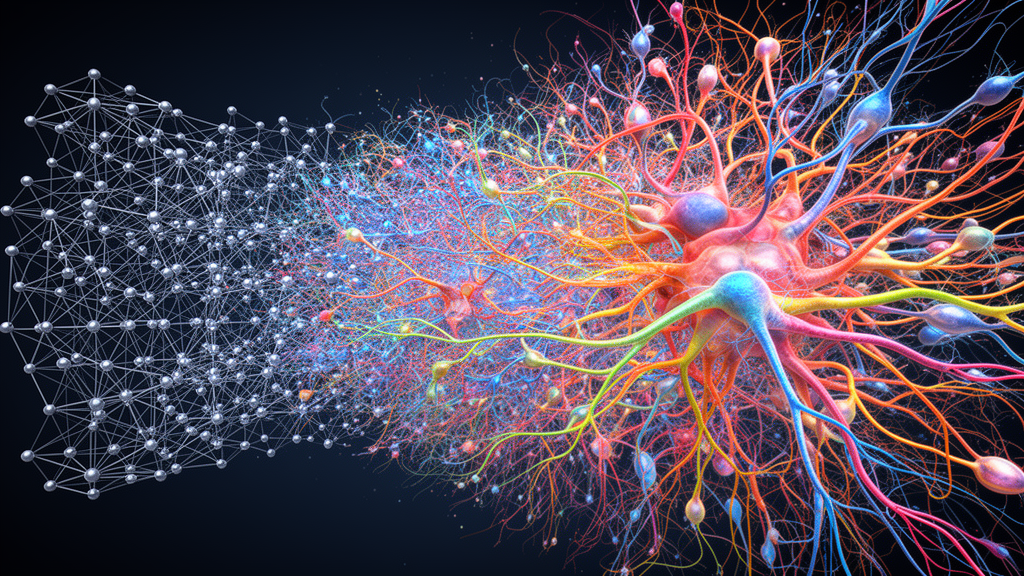
A new review traces how artificial intelligence systems built to decode brain signals have outgrown their borrowed blueprints. Writing in the journal Artificial Intelligence Review, Zepeng Li, Bin Hu and colleagues survey EEG-centered neuroelectrophysiological foundation models published between 2021 and 2025, arguing that the field has moved from simply porting architectures designed for language and vision toward designs that explicitly encode the structure of neurophysiological data.
Foundation models are large neural networks trained on vast, largely unlabeled datasets to learn transferable neural representations. Applied to brain recordings, the first generation of these models relied on what the authors call isomorphic transfer: migrating architectures from large language models and vision transformers into the neural signal domain. These approaches demonstrated the value of scale, but the literature also reveals recurring mismatches between general-purpose architectural assumptions and the spatial, temporal, and acquisition properties of neurophysiological recordings.
Those mismatches matter because the review identifies them as a recurring obstacle across the literature. A transformer or language-model architecture carries no built-in understanding of the spatial, temporal, and acquisition properties that define neurophysiological recordings, so the authors argue that such general-purpose assumptions often fail to transfer cleanly across subjects and devices.
The review’s central contribution is a taxonomy. Rather than simple parameter expansion, second-generation architectures are characterized by the explicit incorporation of neuro-inductive biases: structural assumptions drawn from neuroscience itself and built directly into the model. The authors organize these models into four core neuro-native paradigms based on their design principles.
The first paradigm is topology awareness, achieved through coordinate manifold mapping. The second is brain-like efficiency, implemented with linear state space models, a class of architectures the review associates with computational efficiency in modeling neural signals.
The third paradigm is multi-scale hierarchy, mirroring the recursive organization of the brain. The fourth is semantic fusion, which aims to bridge the neuro-semantic gap, connecting neural representations to semantic content.
Taken together, the authors conclude that neurophysiological priors can improve transfer and computational efficiency when they match the task and the acquisition setting. In other words, the benefit of neuro-native design is conditional rather than universal: an architecture that encodes neurophysiological structure helps most when those priors align with the data at hand, and the review frames this matching as a key design consideration rather than a blanket prescription.
The review is also explicit about the limits of current evidence. The broader clinical and causal value of these models, the authors write, remains to be established through controlled, cross-subject, cross-device, and intervention-aware validation. Because the field lacks a unified account of how models moved from general-purpose architectural transfer to neuro-native designs, and why that transition matters for cross-subject and cross-device generalization, the paper positions its taxonomy as a framework for organizing future work rather than a demonstration of clinical readiness.
For readers following the intersection of AI and neuroscience, the review marks a shift in emphasis: from scaling general-purpose architectures to designing models that respect the structure of the signals they consume. Whether that shift translates into reliable performance across patients, devices, and clinical tasks is, on the evidence assembled here, still an open empirical question that the next generation of validation studies will need to answer.
Subject of Research: Evolution and taxonomy of EEG-based brain foundation models
Article Title: Neuro-native paradigms of brain foundation models: evolution, taxonomy, and perspectives
Article References: Li, Z., Zhang, M., Li, T., Lu, J., Jiang, H., Zhang, X., Zhang, Z., & Hu, B. (2026). Neuro-native paradigms of brain foundation models: evolution, taxonomy, and perspectives. Artificial Intelligence Review. https://doi.org/10.1007/s10462-026-11748-7
Image Credits: AI Generated
DOI: 10.1007/s10462-026-11748-7
Keywords: brain foundation models, EEG, neuro-inductive biases, isomorphic transfer, linear state space models, topology awareness, multi-scale hierarchy, semantic fusion, neurophysiological priors, cross-subject generalization, Artificial Intelligence Review, neuro-native architectures
News Source: Cassandra Pierce. (October 23, 2026). Brain Foundation Models Shift From Borrowed AI Designs to Neuro-Native Architectures. Scienmag.