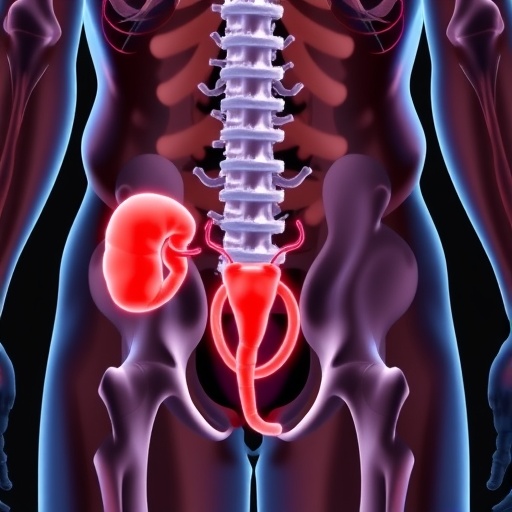
In an innovative stride toward mitigating postoperative complications in colorectal surgery, recent research has illuminated the promising role of intrasphincteric botulinum toxin injections in reducing urinary retention following stapled hemorrhoidopexy. This groundbreaking randomized, double-blind, placebo-controlled trial paves the way for enhancing patient recovery and quality of life after a commonly performed surgical procedure for hemorrhoidal disease.
Stapled hemorrhoidopexy, or the “staple technique,” has revolutionized surgical treatment by offering less postoperative pain and faster recovery than traditional hemorrhoidectomy. Nonetheless, it carries a postoperative risk of urinary retention—where patients are unable to void urine voluntarily—adding distress and prolonging hospital stays. The exact mechanisms behind this retention remain incompletely understood but are believed to involve pelvic nerve irritation, edema, or reflex dysfunction triggered during surgery.
Botulinum toxin, widely known for its neuromodulatory properties, has found therapeutic applications beyond cosmetic use—extending into urology and colorectal surgery due to its ability to induce reversible muscle relaxation. Its targeted action on the internal anal sphincter muscle, when administered locally, offers a compelling hypothesis: by reducing sphincter hypertonicity and muscle spasm, urinary retention may be alleviated.
This new study rigorously tested this hypothesis by enrolling patients undergoing stapled hemorrhoidopexy and assigning them randomly to receive either intrasphincteric botulinum toxin injections or placebo. Through a meticulous double-blind design, neither patients nor clinicians knew the allocation, thereby eliminating bias and ensuring the robustness of the findings. The trial’s methodology adhered to the highest ethical and scientific standards, meticulously documenting postoperative outcomes concerning urinary function.
The results were compelling. Patients in the botulinum toxin group demonstrated a significantly lower incidence of postoperative urinary retention, faster return to normal voiding patterns, and reduced need for catheterizations compared to the placebo group. These outcomes not only fulfilled the study’s primary endpoints but also hinted at the neuromodulator’s potential in optimizing postoperative recovery pathways.
Further mechanistic insights were gleaned from the study’s neurophysiological assessments suggesting that botulinum toxin’s inhibition of acetylcholine release at neuromuscular junctions of the internal sphincter muscle leads to a transient reduction in muscle tone. This relaxation potentially diminishes reflex arcs contributing to urinary retention, illustrating a translational leap from bench-side understanding to bedside application.
Beyond immediate postoperative benefits, the intervention’s safety profile was noteworthy. No significant adverse effects were reported attributable to botulinum toxin administration, reinforcing its viability as a minimally invasive adjunct to standard surgical care. Given the rising emphasis on patient-centered outcomes and cost-effectiveness in modern healthcare, this attribute enhances its clinical attractiveness.
The implications of these findings extend beyond hemorrhoidopexy. Urinary retention is a frequent concern in diverse pelvic surgeries, and botulinum toxin’s modulatory capabilities might inform future strategies across urological and colorectal disciplines. Such cross-specialty translational applications spotlight the importance of integrating neurochemical interventions into surgical recovery protocols.
This study’s rigorous design and statistically significant outcomes advocate for revisiting traditional postoperative management of urinary retention. It calls clinicians to reconsider prophylactic and therapeutic practices, potentially shifting paradigms to preemptive neuromodulation rather than reactive catheterization, which carries infection risks and patient discomfort.
Scientists suggest extending this research by exploring dosage optimization, timing of administration, and long-term follow-up to ascertain sustained benefits and potential late-onset sequelae. Furthermore, examining patient subgroups based on demographic and comorbid profiles could refine indications, personalizing interventions for maximum efficacy.
In the broader context of pelvic surgery, this research epitomizes the dynamic interplay between innovative pharmaceutical applications and surgical techniques. The convergence of neurobiology and surgical practice exemplifies the modern era of precision medicine, where targeted molecular agents augment procedural success and patient outcomes.
This trial’s success also spotlights the critical role of interdisciplinary collaboration, bringing together colorectal surgeons, urologists, neurologists, and pharmacologists to harness shared expertise. Such teamwork fosters holistic approaches to complex postoperative challenges, accelerating translation from theory to practice.
Patients stand to benefit profoundly from these advancements, experiencing reduced discomfort, shorter hospital stays, and quicker returns to daily activities. As healthcare systems worldwide strive toward value-based care, interventions like intrasphincteric botulinum toxin injections herald a future where surgical recovery is optimized not merely by technical skill but by integrative, science-driven adjuncts.
In conclusion, the application of intrasphincteric botulinum toxin presents an exciting frontier in enhancing recovery after stapled hemorrhoidopexy. The compelling evidence from this randomized, double-blind, placebo-controlled trial positions it as a transformative tool in mitigating postoperative urinary retention. As further studies build upon these foundations, the fusion of neuromodulatory pharmacology and surgical innovation promises a new chapter in patient-centered pelvic care.
Subject of Research:
Effectiveness of intrasphincteric botulinum toxin injections in preventing postoperative urinary retention after stapled hemorrhoidopexy surgery.
Article Title:
Effect of intrasphincteric botulinum toxin on postoperative urinary retention following stapled hemorrhoidopexy: a randomized, double-blind, placebo-controlled trial.
Article References:
Alvandipour, M., Safari, S., Vahidpoor, M., et al. Effect of intrasphincteric botulinum toxin on postoperative urinary retention following stapled hemorrhoidopexy: a randomized, double-blind, placebo-controlled trial. Sci Rep (2026). https://doi.org/10.1038/s41598-026-53489-1
Image Credits: AI Generated
Tags: botulinum toxin for urinary retentioncolorectal surgery recoveryintrasphincteric botulinum toxin injectionmuscle relaxation to prevent urinary retentionneuromodulation in colorectal procedurespelvic nerve irritation post-surgerypostoperative care in hemorrhoidal diseasepostoperative urinary retention managementrandomized controlled trial in colorectal surgeryreducing urinary retention after hemorrhoid surgerystapled hemorrhoidopexy complicationstreatment of sphincter hypertonicity