• HOME
  • NEWS
  • EXPLORE
    • CAREER
      • Companies
      • Jobs
    • EVENTS
    • iGEM
      • News
      • Team
    • PHOTOS
    • VIDEO
    • WIKI
  • BLOG
  • COMMUNITY
    • FACEBOOK
    • INSTAGRAM
    • TWITTER
Monday, June 29, 2026
BIOENGINEER.ORG
No Result
View All Result
  • Login
  • HOME
  • NEWS
  • EXPLORE
    • CAREER
      • Companies
      • Jobs
        • Lecturer
        • PhD Studentship
        • Postdoc
        • Research Assistant
    • EVENTS
    • iGEM
      • News
      • Team
    • PHOTOS
    • VIDEO
    • WIKI
  • BLOG
  • COMMUNITY
    • FACEBOOK
    • INSTAGRAM
    • TWITTER
  • HOME
  • NEWS
  • EXPLORE
    • CAREER
      • Companies
      • Jobs
        • Lecturer
        • PhD Studentship
        • Postdoc
        • Research Assistant
    • EVENTS
    • iGEM
      • News
      • Team
    • PHOTOS
    • VIDEO
    • WIKI
  • BLOG
  • COMMUNITY
    • FACEBOOK
    • INSTAGRAM
    • TWITTER
No Result
View All Result
Bioengineer.org
No Result
View All Result
Home NEWS Science News Biology

Bornean treeshrews can take the heat

Bioengineer by Bioengineer
April 16, 2020
in Biology
Reading Time: 2 mins read
0
IMAGE
Share on FacebookShare on TwitterShare on LinkedinShare on RedditShare on Telegram

IMAGE

Credit: Image credit: Anna Thonis

As human activity shapes Earth’s climate, animals must increasingly adapt to new environmental conditions. The thermoneutral zone — the ambient temperature range in which mammals can maintain their body temperature without expending extra energy — is a key factor in estimating a species’ ability to survive in a warming world.

Reptiles and other ectotherms that rely on the environment to regulate their body temperature are believed to be more vulnerable to global warming in the tropics than in temperate climates. However, less is known about small tropical mammals, especially those active during the day.

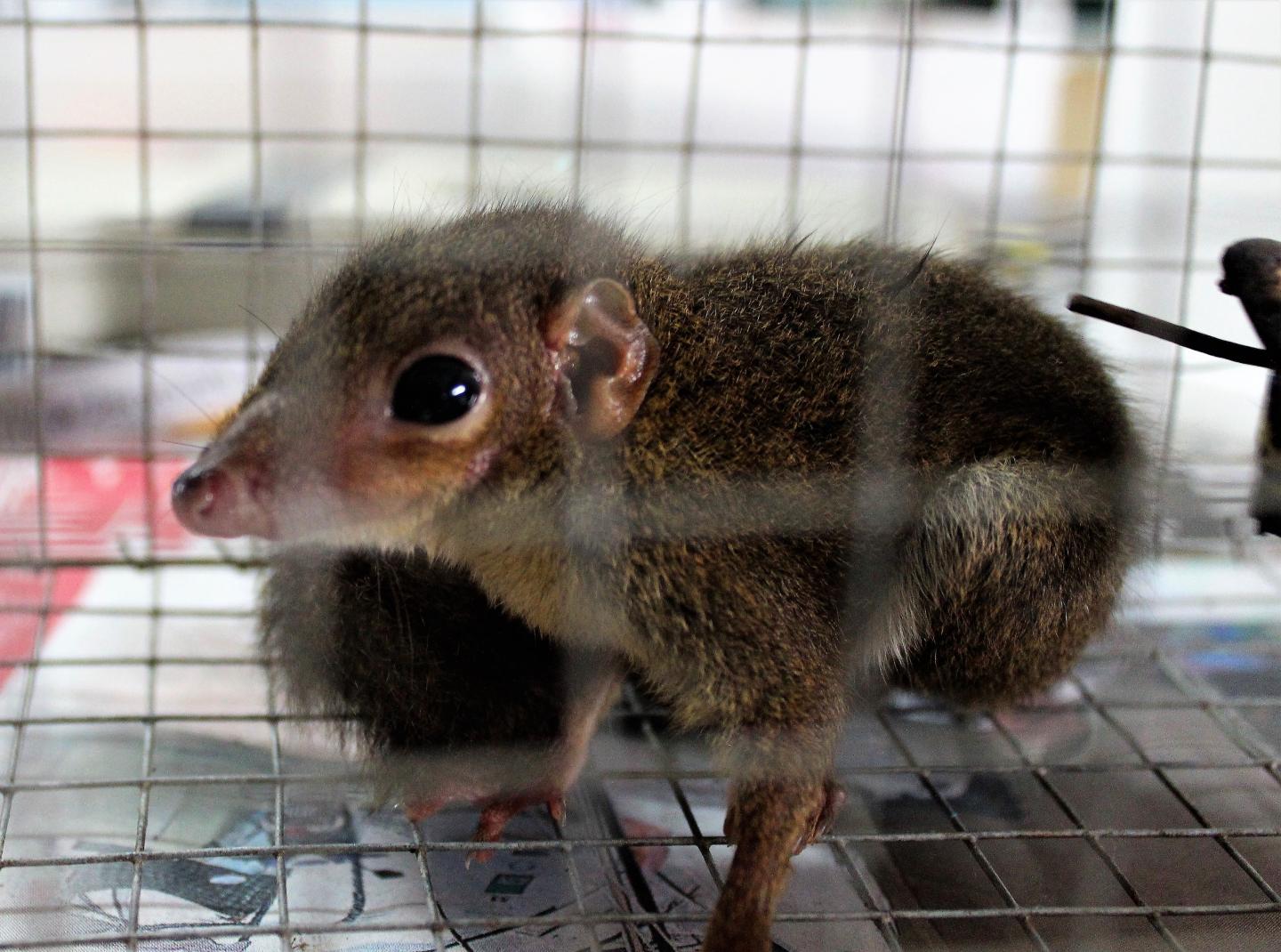
To better understand if small tropical mammals also have increased vulnerability as their environments heat up, Danielle Levesque, University of Maine assistant professor of mammology and mammal health, and collaborators from the Universiti Malaysia Sarawak studied Bornean treeshrews. They measured the oxygen consumption of the wild-caught lesser treeshrews (Tupaia minor) over a range of temperatures, calculating the animals’ resting metabolic rate and thermoneutral zone.

The team found that, like other treeshrew species, the animals exhibited more flexibility in body temperature regulation than other small mammals. This contradicts current assumptions that the upper limit of the thermoneutral zone between mammal species has little variation. The findings highlight the importance of further research on the energetics of mammals in the equatorial tropics.

###

The team’s findings were published in the paper “Small tropical mammals can take the heat- high upper limits of the thermoneutrality in a Bornean treeshrew” in May in the journal Physiological and Biochemical Zoology.

The study’s team included undergraduate students who were funded by two National Science Foundation Research Experience for Undergraduates and a Research Coordination Network grants awarded to the University of Arkansas. The research was supported by a grant from the Malaysian Ministry of Higher Education and a fellowship from the Universiti Malaysia Sarawak.

Media Contact
Mallory Gevaert
[email protected]

Original Source

https://www.journals.uchicago.edu/journals/pbz/pr/200330

Related Journal Article

http://dx.doi.org/10.1086/708467

Tags: BiologyClimate ChangeEcology/EnvironmentZoology/Veterinary Science
Share12Tweet8Share2ShareShareShare2

Related Posts

Natural Hallucinogens: Evolution’s Ecological Tools, Not Mere Chemical Byproducts

June 25, 2026

This Famous Butterfly Revealed: Three Distinct Species Hidden in One

June 25, 2026

Scientists Attack Soybean Cyst Nematode by Starving Its Food Source

June 25, 2026

Decoding the Secret Code of a Crucial Immune Sensor

June 24, 2026
Please login to join discussion

POPULAR NEWS

  • Saying Goodbye to PGY-6: Pediatric Fellowship Realities

    103 shares
    Share 41 Tweet 26
  • Multi-Hospital Study Reveals Long Covid Burden Is Twice as High as Current Estimates

    92 shares
    Share 36 Tweet 23
  • Detection of EDCs in Breast Milk and Infant Urine Up to Six Months Highlights Early Exposure Risks

    77 shares
    Share 31 Tweet 19
  • New Drug Candidate Developed at McMaster Shows Potential for Treating Brain Cancer

    58 shares
    Share 23 Tweet 15

About

We bring you the latest biotechnology news from best research centers and universities around the world. Check our website.

Follow us

Recent News

Tracking Lanthanide-Labeled Microplastics in Plants

POSTECH Researchers Slash Cost of Reconstituted Cell-Free Systems by 95%

AI and Physics Collaborate to Design Advanced Hydrogen Storage Materials

Subscribe to Blog via Email

Success! An email was just sent to confirm your subscription. Please find the email now and click 'Confirm' to start subscribing.

Join 82 other subscribers
  • Contact Us

Bioengineer.org © Copyright 2023 All Rights Reserved.

Welcome Back!

Login to your account below

Forgotten Password?

Retrieve your password

Please enter your username or email address to reset your password.

Log In
No Result
View All Result
  • Homepages
    • Home Page 1
    • Home Page 2
  • News
  • National
  • Business
  • Health
  • Lifestyle
  • Science

Bioengineer.org © Copyright 2023 All Rights Reserved.