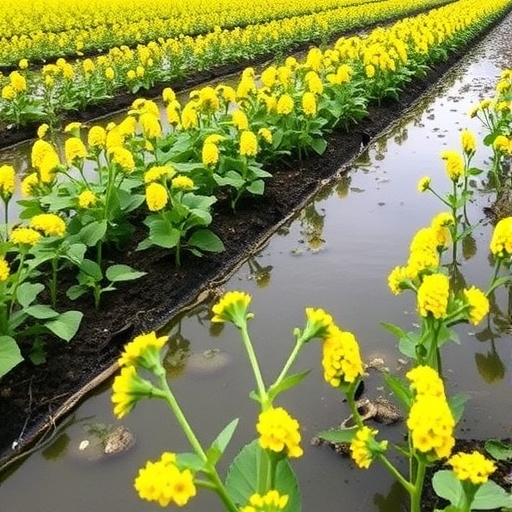
In contemporary agriculture, water scarcity poses a formidable challenge, compelling researchers and farmers alike to explore alternative irrigation sources. A groundbreaking study published by Ullah et al. in Scientific Reports, emphasizes the potential of diluted sewage effluent as a viable irrigation solution for promoting canola growth and enhancing its biochemical properties. This research not only sheds light on an innovative approach to agricultural sustainability but also addresses the pressing issue of water scarcity in arid regions.
Canola, a vital crop known for its oil-rich seeds, has been gaining popularity among farmers due to its resilience and economic value. However, traditional irrigation methods often exacerbate water shortages, necessitating a search for alternative sources. Researchers have now turned their attention to treated sewage effluent, a byproduct of urban wastewater treatment, as a resource that could contribute to irrigation strategies. The study explores how this unconventional method can foster canola growth while simultaneously resolving water scarcity issues.
The researchers conducted a series of controlled experiments to assess the effects of various dilutions of sewage effluent on canola plants. By comparing different concentrations of this effluent with traditional irrigation methods, the team aimed to discover optimal levels that would provide necessary nutrients without introducing harmful contaminants. The rationale behind this experiment was clear: if carefully managed, diluted sewage effluent could serve as a nutrient-rich reservoir for crops while minimizing the use of freshwater resources.
Findings from the study were encouraging, as canola plants irrigated with diluted sewage effluent demonstrated significant growth compared to those watered with conventional freshwater. This improvement in growth rates illuminates the potential benefits of harnessing wastewater as an agricultural resource. The biochemical attributes of the plants also showcased noteworthy enhancements, providing evidence that the treated effluent could contribute positively to crop yield and quality.
Moreover, the research found that the integration of diluted sewage effluent into irrigation practices resulted in improved nutrient uptake within the canola plants. Essential macronutrients such as nitrogen, phosphorus, and potassium, which are typically present in sewage effluent, were absorbed efficiently by the plants. This enhanced nutrient availability could lead farmers to adopt more sustainable practices, lessening their dependence on chemical fertilizers which can have detrimental environmental impacts.
Throughout the study, a significant emphasis was placed on ensuring the safety and quality of the treated sewage effluent used for irrigation. The researchers conducted rigorous analyses to determine the presence of contaminants and pathogens in the effluent. By employing standard treatment processes that adhere to health guidelines, they established methods for making this unconventional irrigation source safe for crops, thus addressing concerns about food safety and human health.
In addition to environmental benefits, utilizing diluted sewage effluent has economic implications for farmers. The subsequent reduction in freshwater consumption could result in lower operating costs while also potentially increasing crop yields. Farmers facing rising water costs may find the option of using treated sewage effluent an appealing alternative, providing a win-win situation for both their livelihoods and the environment.
The study further highlights the importance of public acceptance and regulatory frameworks surrounding the use of treated sewage effluent in agriculture. While the environmental and economic advantages are extensive, public perception plays a significant role in the widespread adoption of such practices. Public education campaigns focused on illustrating the safety and benefits of using treated wastewater could bridge potential gaps in acceptance and foster a more sustainable agricultural future.
As the global population continues to rise, the demand for agricultural produce will inevitably increase. The innovative solutions presented in this study could pave the way for a new era of sustainable farming practices, encouraging the use of non-traditional water sources while maintaining crop health and productivity. The implications of using diluted sewage effluent extend beyond canola and could be applicable to a range of crops, making this research pivotal in addressing global water and food security challenges.
Moreover, as climate change exacerbates water scarcity, strategies such as those proposed in this study become not just beneficial but essential. They provide an opportunity to conserve freshwater resources while exploring creative ways to support agriculture in an environmentally friendly manner. Other crops can also benefit from similar research paradigms, emphasizing the versatility and adaptability of this irrigation strategy.
In conclusion, the research conducted by Ullah et al. offers an exciting glimpse into the future of sustainable agriculture, highlighting how innovative irrigation methods like diluted sewage effluent can significantly impact crop growth and biochemical properties. This study not only emphasizes the necessity of alternative water sources but also encourages a collaborative approach in addressing global agricultural challenges. The potential environmental, economic, and health benefits warrant further exploration and discussion, positioning diluted sewage effluent as a revolutionary player in the landscape of modern agriculture.
As the global community continues to navigate the complexities of water scarcity and agricultural demands, the insights from this study serve as a beacon of hope, inspiring further research and innovation that could reshape the agricultural sector for years to come.
Subject of Research: Utilization of diluted sewage effluent as an irrigation source for canola.
Article Title: Optimizing canola growth and biochemical attributes using diluted sewage effluent as an alternative irrigation source.
Article References:
Ullah, H., Elahi, N.N., Imtiaz, M. et al. Optimizing canola growth and biochemical attributes using diluted sewage effluent as an alternative irrigation source. Sci Rep 15, 36920 (2025). https://doi.org/10.1038/s41598-025-20955-1
Image Credits: AI Generated
DOI:
Keywords: diluted sewage effluent, canola growth, irrigation methods, agricultural sustainability, nutrient uptake, water scarcity.
Tags: agricultural sustainability practicesalternative irrigation methods for cropsbiochemical properties of canolacanola growth strategiescontrolled experiments on plant growthdiluted sewage effluent irrigationeconomic value of canolanutrient management in irrigationresilience of canola cropssustainable agriculture solutionsurban wastewater treatment for irrigationwater scarcity in agriculture