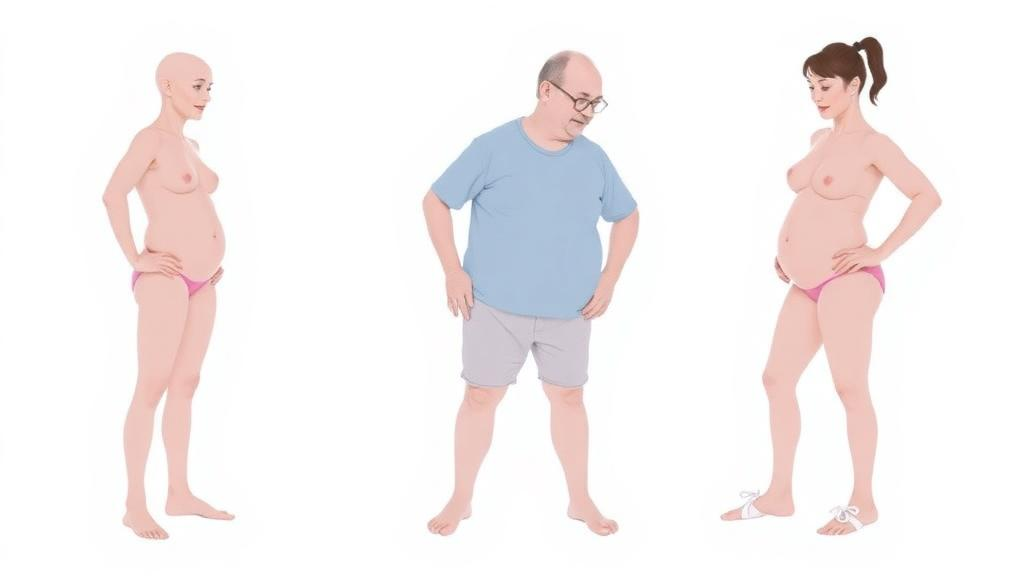
A simple measurement derived from nothing more than height and waist circumference may be one of the most powerful predictors yet identified for how people slide down the slippery slope of chronic disease. In a sweeping analysis of more than 440,000 middle-aged and older adults from the UK Biobank, researchers report that a high body roundness index, or BRI, is strongly linked not only to the first appearance of cardiovascular, kidney or metabolic disease, but also to the subsequent march toward multimorbidity and death. The study, published in GeroScience, used sophisticated multistate statistical models to track how individuals move between health states over time, offering one of the most granular pictures to date of how excess body roundness shapes the trajectory of the so-called cardio-renal-metabolic continuum.
The cardio-renal-metabolic connection has become one of the defining frameworks of modern chronic disease medicine. Type 2 diabetes, cardiovascular disease and chronic kidney disease are not isolated conditions; they share overlapping risk factors, amplify one another pathophysiologically, and frequently cluster within the same patient. Epidemiological evidence has long shown that people who accumulate multiple cardiometabolic conditions face mortality risks that far exceed the sum of their parts. What has been harder to establish is which measurable traits, captured early and cheaply in a clinical setting, can flag individuals at risk of entering and then progressing through this disease cascade before irreversible damage is done.
Enter the body roundness index. Proposed in 2013 by Diana Thomas and colleagues from a geometric model of the human body, BRI estimates how closely a person’s body shape approximates a circle or an ellipse, using waist circumference and height as inputs. Unlike body mass index, which simply divides weight by height squared and cannot distinguish muscle from fat, BRI is designed to capture central adiposity, the visceral and ectopic fat that wraps around internal organs and drives metabolic dysfunction. A growing body of literature has linked elevated BRI to metabolic syndrome, incident type 2 diabetes, chronic kidney disease, cardiovascular events and all-cause mortality in populations ranging from the United States to China and Japan. What remained unclear was whether BRI could predict not just the onset of a single disease but the full longitudinal progression through the cardio-renal-metabolic continuum.
To answer that question, a team led by researchers at Fudan University in Shanghai analyzed 442,489 UK Biobank participants aged 40 and older who were free of cardio-renal-metabolic diseases at baseline. The investigators examined BRI both as a continuous variable and in tertiles, allowing them to compare people in the highest third of body roundness against those in the lowest. The outcomes of interest formed a natural disease pathway: the first cardio-renal-metabolic disease, abbreviated FCRMD; progression to cardio-renal-metabolic multimorbidity, or CRMM, meaning the accumulation of two or more such conditions; and ultimately all-cause mortality. Hazard ratios were estimated with Cox proportional hazards models, while population attributable fractions quantified how much disease burden could theoretically be traced back to elevated BRI.
The magnitude of the associations was striking. In the highest BRI tertile, the hazard ratio for developing type 2 diabetes reached 6.94, with a 95 percent confidence interval of 6.57 to 7.33, meaning that people with the roundest body shapes were nearly seven times more likely to develop diabetes than those in the lowest tertile. The hazard ratio for progressing to cardio-renal-metabolic multimorbidity was 3.25. These are effect sizes rarely seen for a single anthropometric measurement, and they place BRI in the same conversation as far more elaborate biomarkers that require blood draws, imaging or laboratory infrastructure.
The multistate analyses, however, are what set this study apart from earlier work. Rather than treating disease onset and death as isolated endpoints, multistate models treat the disease course as a network of transitions: from healthy to first disease, from first disease to multimorbidity, and from any state to death. This approach matters because it avoids a well-known statistical pitfall in obesity research. Conditioning on the presence of disease can introduce bias, sometimes producing the misleading impression that obesity protects against mortality in sick patients, the so-called obesity paradox. By modeling transitions explicitly, the researchers could estimate the risk that elevated BRI confers at each step of the disease journey independently.
Those transition-specific results were consistent and sobering. People in the highest BRI tertile had a 2.24-fold higher hazard of transitioning from a healthy baseline to a first cardio-renal-metabolic disease, with a population attributable fraction of 26.22 percent, suggesting that roughly a quarter of first disease events in the population could be attributed to high body roundness. Among those who had already developed one condition, high BRI conferred a 1.58-fold higher hazard of progressing to multimorbidity, with an attributable fraction of 21.21 percent. Even the transition from baseline directly to death showed a modest but statistically significant elevation, with a hazard ratio of 1.05 and an attributable fraction of 2.06 percent. The pattern indicates that BRI exerts its influence primarily by launching and accelerating the disease process rather than by killing directly, a distinction with important implications for where intervention can help most.
The study also examined how body roundness interacts with genetic predisposition and lifestyle, two forces that shape cardiometabolic risk in different ways. Participants with elevated BRI who also carried high genetic risk for cardiometabolic disease, or who adhered to unhealthy lifestyles, faced a greater risk of both disease onset and progression along the continuum than could be explained by either factor alone. This finding underscores a theme that has emerged repeatedly in the polygenic risk score literature: genetic risk scores carry substantial uncertainty at the individual level, and their predictive power improves when combined with measurable physical traits and behavioral data. A tape measure and a questionnaire, in other words, can sharpen what a genome cannot resolve on its own.
Biologically, the link between central adiposity and the cardio-renal-metabolic cascade is well supported. Visceral fat is not a passive storage depot but a metabolically active endocrine organ that secretes inflammatory cytokines, promotes insulin resistance, and generates oxidative stress. Adipocyte dysfunction drives chronic low-grade inflammation, a process that intersects with the aging biology studied under the banner of geroscience, including inflammaging and cellular senescence. These mechanisms provide a plausible pathway by which a rounder body shape translates into damaged blood vessels, failing kidneys and deranged glucose metabolism, and they explain why the associations in this study were strongest for type 2 diabetes, the condition most directly governed by adipose tissue physiology.
The practical implications are considerable. BRI requires only a measuring tape and a formula, making it deployable in primary care settings, community screening programs and low-resource environments where dual-energy X-ray absorptiometry or magnetic resonance imaging of visceral fat are unavailable. The population attributable fractions reported in the study suggest that reducing elevated body roundness could prevent a meaningful share of first cardio-renal-metabolic events and of progression to multimorbidity, a burden that health systems worldwide are increasingly struggling to carry as populations age. Because the strongest effects appeared at the earliest transition, from health to first disease, the findings argue for using BRI as an early-warning indicator rather than waiting for laboratory abnormalities to appear.
Caveats remain, as they do in any observational study. The UK Biobank cohort, while enormous, is not fully representative of the broader population, and waist circumference measurements capture body shape imperfectly. Residual confounding by factors not measured at baseline cannot be excluded, and BRI is a static snapshot in an analysis that did not model changes in body shape over time. Yet the consistency of the results across continuous and categorical analyses, the use of transition-specific modeling, and the sheer scale of the cohort give the findings considerable weight. For clinicians and public health planners, the message is straightforward: how round a body is, measured cheaply and quickly, tells us a great deal about how the story of chronic disease is likely to unfold, and it tells us early enough to change the ending.
Subject of Research: Association between body roundness index and the progression of cardio-renal-metabolic diseases
Article Title: Association between body roundness index and progression of cardio-renal-metabolic diseases using multistate models
Article References: Association between body roundness index and progression of cardio-renal-metabolic diseases using multistate models. (n.d.). https://doi.org/10.1007/s11357-026-02512-4
Image Credits: AI Generated
DOI: 10.1007/s11357-026-02512-4
Keywords: body roundness index, cardio-renal-metabolic diseases, multimorbidity, UK Biobank, multistate models, obesity, type 2 diabetes, visceral fat, genetic risk, lifestyle, mortality, GeroScience
News Source: Ophelia Keating. (October 8, 2026). Body Roundness Index Predicts Progression of Heart, Kidney and Metabolic Disease. Scienmag.