Acute respiratory distress syndrome, or ARDS, remains one of the most feared conditions in intensive care medicine. It strikes when infection, trauma, or inflammation floods the lungs with fluid, leaving patients struggling to oxygenate their blood. Mortality in intensive care units worldwide remains stubbornly high, and part of the problem is timing: by the time ARDS is recognized clinically, the injury is often well established. A new study published in the Journal of Translational Medicine suggests that a set of proteins circulating in the blood could flag the syndrome earlier and more reliably than current approaches, and it points to one of those proteins as a potential drug target.
The research, led by Zhenfang Shan, Jieqiong Li, and Zhaohui Tong of Beijing Chao-Yang Hospital, Capital Medical University, took a proteomics approach—measuring large panels of proteins in plasma rather than relying on clinical scores alone. The team analyzed plasma samples from 196 patients with ARDS, 100 pulmonary patients who did not have ARDS, and 100 healthy controls. Using mass spectrometry-based profiling and statistical tools including partial least squares-discriminant analysis, the researchers searched for proteins that consistently separated ARDS patients from the comparison groups.
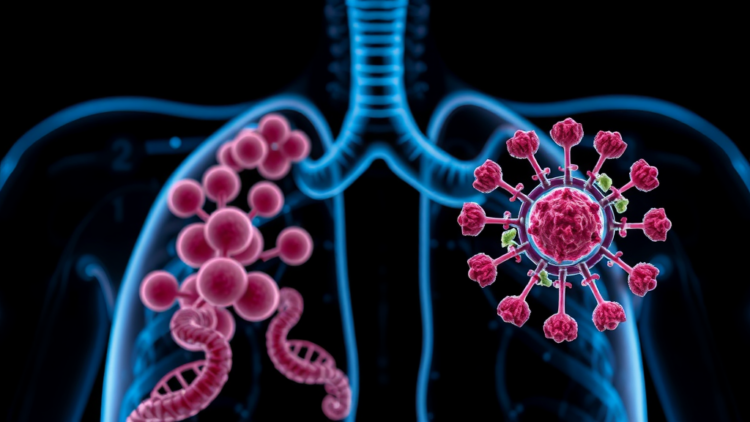
The signal that emerged was striking. Pathways related to the proteasome—the cellular machine that shreds damaged or unwanted proteins into small peptides—were significantly activated in ARDS patients. Of particular interest was the immunoproteasome, a specialized version of the proteasome found in immune cells that processes proteins for presentation to the immune system. Rather than a single protein, the researchers found that a panel of seven immunoproteasome subunits collectively carried a robust diagnostic fingerprint of the syndrome.
To turn that observation into a practical tool, the team built a diagnostic model using LASSO regression, a machine learning technique that selects the most informative predictors while guarding against overfitting. Trained on 277 samples, the seven-subunit panel achieved an area under the receiver operating characteristic curve (AUC) of 0.908, indicating strong discriminatory power. Critically, the model held up in an independent validation cohort of 119 samples, where it achieved an AUC of 0.890. That kind of consistency across separate cohorts is what separates promising biomarkers from statistical artifacts, and it suggests the panel could distinguish ARDS from other serious lung conditions at the bedside.
The researchers did not stop at diagnosis. They traced where the biomarkers came from, examining bronchoalveolar lavage fluid—the liquid sampled from deep within the lungs of patients—and confirming that the proteasome signature reflected genuine biological activity in the injured lung rather than a distant systemic echo. They then moved into an animal model, inducing ARDS-like lung injury in mice with lipopolysaccharide, a component of bacterial cell walls that triggers intense inflammation.
In the mouse model, one subunit stood out: PSMB8, also known as the low molecular mass polypeptide 7 or LMP7, a catalytic subunit unique to the immunoproteasome. PSMB8 expression was upregulated in lung tissue after injury, and single-cell and lineage analyses indicated that the protein was produced primarily by monocytes and macrophages—the scavenger immune cells that swarm into inflamed lungs and often drive much of the collateral tissue damage. The degree of PSMB8 elevation correlated with disease severity, tying the molecular marker to clinical outcomes.
The therapeutic experiments were the most consequential part of the study. When the researchers inhibited PSMB8 pharmacologically, or deleted the Psmb8 gene in mice, the results were consistent: lung injury was reduced, inflammation was blunted, and respiratory dysfunction improved. Measurements of lung mechanics, including resistance and compliance, along with wet-to-dry weight ratios that quantify fluid accumulation in the lung, all pointed toward meaningful protection when the immunoproteasome subunit was removed from the picture.
The mechanism behind that protection appears to lie in macrophage behavior. PSMB8 deficiency suppressed M1-like macrophage polarization—the pro-inflammatory state that macrophages adopt when they are pumping out cytokines and reactive molecules that, while meant to fight pathogens, can devastate surrounding tissue. Intriguingly, the researchers found that this shift was accompanied by alterations in lipid metabolic pathways, hinting that the immunoproteasome influences not just protein degradation but also the metabolic programming that determines whether macrophages soothe or scorch the lung.
The implications are twofold. Diagnostically, a blood test built on seven proteasome subunits could complement existing tools such as the Sequential Organ Failure Assessment and APACHE II scores, offering an objective, biologically grounded way to identify ARDS early—potentially before patients require invasive mechanical ventilation. Therapeutically, PSMB8 joins a growing list of immune-focused targets for a syndrome that currently lacks a specific drug; treatment today is largely supportive, centered on ventilator management and care of the underlying cause.
Caveats remain. The therapeutic results come from a preclinical mouse model, and the authors themselves emphasize that PSMB8 is a promising but still preclinically validated target that warrants further investigation. Translating proteasome inhibition into safe human therapy will require careful work, since the immunoproteasome plays normal roles in immune surveillance. Still, the convergence of a clinically validated biomarker panel with a mechanistically supported drug target—grounded in more than 300 patient samples and confirmed in animal studies—represents an unusually coherent translational package for a syndrome that has long resisted both early detection and targeted treatment.
Subject of Research: A proteasome subunit-based biomarker panel for early diagnosis of acute respiratory distress syndrome and therapeutic targeting of PSMB8
Article Title: Proteasome subunit-based biomarker panel for early diagnosis of acute respiratory distress syndrome and therapeutic targeting of PSMB8 in a mouse model
Article References: Shan, Z., Zhang, H., Ma, J., Gou, Y., Li, J., & Tong, Z. (2026). Proteasome subunit-based biomarker panel for early diagnosis of acute respiratory distress syndrome and therapeutic targeting of PSMB8 in a mouse model. Journal of Translational Medicine. https://doi.org/10.1186/s12967-026-08645-6
Image Credits: AI Generated
DOI: 10.1186/s12967-026-08645-6
Keywords: ARDS, biomarkers, proteasome, immunoproteasome, PSMB8, macrophage polarization, plasma proteomics, LASSO regression, lung injury, intensive care, diagnostic panel, lipopolysaccharide mouse model
Cite Scienmag News
APA MLA Chicago
Ophelia Keating. (September 21, 2026). Blood Protein Signature and Immune Target Show Promise for Earlier ARDS Diagnosis and Treatment. Scienmag. https://scienmag.com/blood-protein-signature-and-immune-target-show-promise-for-earlier-ards-diagnosis-and-treatment/
Ophelia Keating. “Blood Protein Signature and Immune Target Show Promise for Earlier ARDS Diagnosis and Treatment.” Scienmag, 21 September 2026, https://scienmag.com/blood-protein-signature-and-immune-target-show-promise-for-earlier-ards-diagnosis-and-treatment/. Accessed 21 September 2026.
Ophelia Keating. “Blood Protein Signature and Immune Target Show Promise for Earlier ARDS Diagnosis and Treatment.” Scienmag. September 21, 2026. https://scienmag.com/blood-protein-signature-and-immune-target-show-promise-for-earlier-ards-diagnosis-and-treatment/
Copy citation Download RIS
Tags: ARDSARDS early diagnosisBiomarkersblood protein biomarkers for ARDSclinical applications of blood-based biomarkersdiagnostic paneldifferential diagnosis of ARDS using proteomicsdrug targets for respiratory syndromesearly intervention strategies for ARDSimmune-targeted therapies for ARDSimmunoproteasomeinflammatory pathways in ARDSintensive careLASSO regressionlipopolysaccharide mouse modellung injurymacrophage polarizationmass spectrometry in disease detectionplasma protein profiling in critical careplasma proteomicspredictive markers for acute respiratory failureproteasomeproteomics in respiratory distressPSMB8