A new multi-omics analysis of cerebrospinal fluid (CSF) and serum from patients with COVID-19-associated para-infectious encephalopathy has revealed significant links between blood–CSF barrier dysfunction and specific central nervous system (CNS) coagulation and immunothrombosis pathways. By examining 28 biospecimens from 23 patients, researchers characterized how systemic inflammatory, endothelial–coagulation, and metabolic alterations correspond with molecular changes within the CNS. The study found that most patients exhibited some degree of blood–CSF barrier dysfunction, which was identified through the albumin quotient (QAlb), a measure of barrier permeability. This metric demonstrated a positive correlation with CSF levels of matrix metalloproteinase-9 (MMP9), suggesting that enzymatic processes may contribute to barrier instability in these clinical presentations.
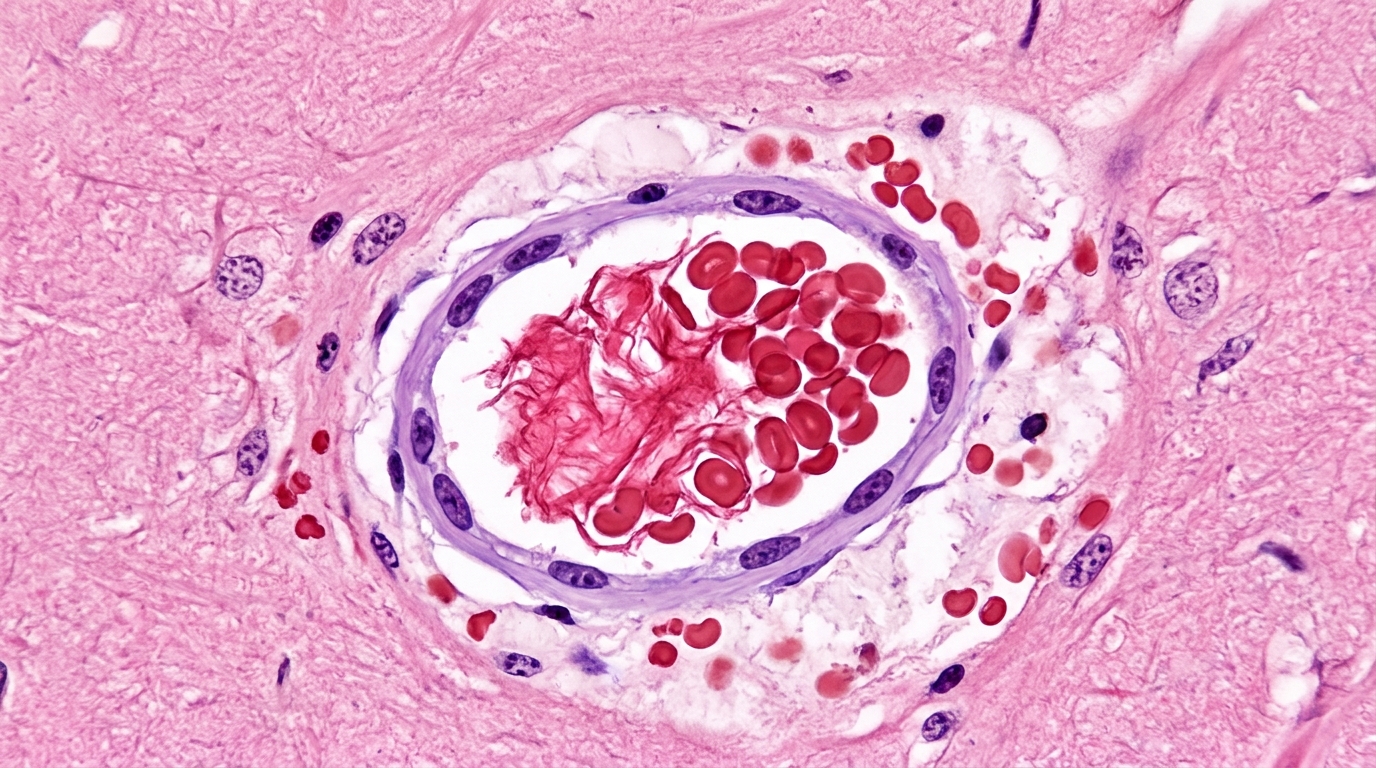
The research team employed a comprehensive multi-omics approach to assess protein and metabolite profiles in both CSF and serum. Proteomic analysis indicated distinct compartment-specific patterns: CSF-higher proteins were primarily related to immune-cell processes, whereas proteins higher in serum were broadly associated with immune-cell activation, inflammatory and cytokine responses, and coagulation and immunothrombosis. Among these modules, only the CSF coagulation and immunothrombosis module remained significantly associated with the albumin quotient after multiple-testing correction, with a Spearman correlation of ρ = 0.65 and an FDR of 0.038. Key candidate proteins identified within this module included von Willebrand factor (VWF), coagulation factor XIII A chain (F13A1), and multimerin-1 (MMRN1).
Coordinated changes between compartments were further observed, particularly with IL6R and FGG proteins. Enzyme-linked immunosorbent assay (ELISA) validation confirmed higher levels of IL6R and IL6ST in both the serum and CSF of patients compared to non-inflammatory headache controls, highlighting the presence of cytokine-storm-related immune and inflammatory responses across both compartments. These findings suggest that while there is clear molecular compartmentalization between the blood and the CSF, certain pathways show systemic coordination that spans the blood–CSF barrier in patients suffering from this encephalopathy.
Metabolomic analysis reinforced the existence of distinct profiles in the two compartments. Serum-higher metabolites were mainly related to lipid metabolism, while CSF-higher metabolites were primarily associated with glucose, energy, and amino acid metabolism. Researchers observed positive correlations between specific metabolites, such as bicyclo-PGE₂ and α-linolenic acid, between serum and CSF samples. These observations point toward complex metabolic crosstalk despite the presence of the blood–CSF barrier.
Cross-omics integration provided deeper insights into the underlying pathophysiology, uncovering concordant changes in the CSF involving central carbon metabolism, the pentose phosphate pathway, sulfur amino acid metabolism, and various redox-related processes. The study suggests that the observed association between CSF coagulation and immunothrombosis and blood–CSF barrier dysfunction provides a potential mechanism linking endothelial and coagulation abnormalities to observed clinical CNS involvement. These results underscore the importance of compartment-specific analysis in understanding neurological manifestations following SARS-CoV-2 infection.
While this research highlights critical pathways, the authors note that the study involves a small cohort and further investigation is required to fully elucidate the causal relationships between these systemic metabolic alterations and the specific CNS molecular changes observed. The current findings represent an essential step in characterizing the inflammatory and metabolic landscape of COVID-19-associated para-infectious encephalopathy, providing a foundation for future targeted clinical research into blood–CSF barrier protection and modulation of neuro-inflammatory responses in this patient population.
Subject of Research: Molecular pathophysiology of COVID-19-associated para-infectious encephalopathy
Article Title: Multi-omics analysis of proteins and metabolites in COVID-19-associated para-infectious encephalopathy
Article References: Zhang, L., Liu, S., Zhu, S., Chen, Y., Zhang, X., Yang, J., Zhang, H., & Xu, Z. (2026). Multi-omics analysis of proteins and metabolites in COVID-19-associated para-infectious encephalopathy. Fluids and Barriers of the CNS. https://doi.org/10.1186/s12987-026-00910-6
Image Credits: AI Generated
DOI: 10.1186/s12987-026-00910-6
Keywords: COVID-19, encephalopathy, cerebrospinal fluid, blood-CSF barrier, proteomics, metabolomics, immunothrombosis, coagulation, cytokine storm, neuroinflammation, multi-omics, MMP9, VWF, central nervous system, redox metabolism
News Source: Ophelia Keating. (November 17, 2026). Blood–CSF Barrier Dysfunction Linked to Coagulation Abnormalities in COVID-19 Encephalopathy. Scienmag.