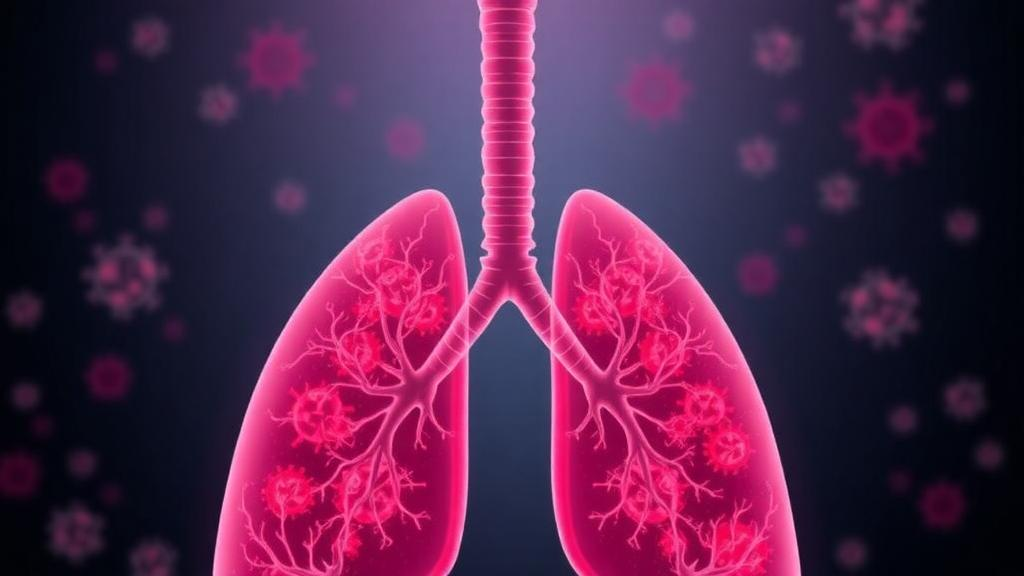
For a substantial minority of people who survive COVID-19, the infection does not truly end when the acute illness subsides. Between 10 and 30 percent of survivors are thought to develop post-COVID-19 pulmonary fibrosis, a condition in which scar tissue progressively stiffens the lungs and erodes respiratory function. Predicting who will follow this trajectory has proved difficult, because the immune processes driving fibrotic progression leave few reliable traces in standard clinical measurements. A new study published in the Journal of Translational Medicine argues that the answer may lie in a compartment of the immune system that is easy to sample but often overlooked in fibrosis research: the B cells circulating in peripheral blood.
The research, led by Wei Hang of Cardiff University together with colleagues at Fujian Provincial Hospital, the Fujian Center for Disease Control and Prevention and partner institutions in China, applied single-cell RNA sequencing to characterize the peripheral immune landscape associated with post-COVID pulmonary fibrosis. Rather than measuring average gene expression across bulk blood samples, single-cell transcriptomics profiles each individual cell, allowing researchers to detect shifts in the composition and functional state of rare immune subsets that would otherwise be invisible. The team integrated data from 115 samples drawn across multiple cohorts, combining publicly available acute-phase COVID-19 datasets with an in-house cohort recruited in Fujian province.
The design of the study reflects the central challenge of fibrosis research: the scar tissue itself is buried deep in the lung, inaccessible to routine sampling. The investigators therefore worked backwards from outcome. Public acute-phase datasets were stratified by an estimated fibrosis risk score, yielding a high-risk group of 50 patients and a low-risk group of 52. These were complemented by the Fujian cohort, in which 13 patients were sampled at the two-week post-discharge timepoint; seven of them had CT-confirmed pulmonary fibrosis while six did not. By comparing immune profiles across these strata, the researchers sought peripheral signatures that track with fibrotic risk even before structural damage becomes radiologically obvious.
The headline finding is a pronounced dysregulation of the B cell compartment in patients judged to be at higher fibrosis risk. Naive B cells, the resting, uncommitted lymphocytes that have not yet encountered antigen, were depleted in the high-risk groups. In their place, the researchers observed an expansion of activated B cells, plasmablasts and plasma cells, the antibody-secreting arm of the B lineage. This shift from a naive, quiescent pool toward a terminally differentiated, secretory population suggests that in patients prone to fibrosis, the humoral immune response remains locked in an activated state long after the acute viral challenge has passed.
Crucially, the different expanded subsets carried distinct functional imprints in their gene expression. Plasma cells from high-risk patients showed enrichment of transforming growth factor beta signaling, a pathway long implicated in driving fibroblasts to deposit scar-forming matrix, together with collagen metabolism and extracellular matrix remodeling programs. Plasmablasts, by contrast, were enriched for inflammasome-related genes, tumor necrosis factor signaling and angiogenesis pathways. In other words, the antibody-producing cells of high-risk patients were not merely numerous; they were transcriptionally wired toward the very biological processes, matrix deposition, inflammatory amplification and new blood vessel formation, that characterize the fibrotic niche in lung tissue.
The study also identified a potentially pathogenic B cell state marked by expression of FCRL5, an Fc receptor-like molecule associated with exhausted B cells. Elevated proportions of these FCRL5-positive exhausted B cells, alongside raised fractions of plasmablasts, were each statistically associated with increased mortality, as were reduced proportions of naive and memory B cells, with all of these associations reaching significance at p less than 0.05. The convergence of subset imbalance and survival outcome strengthens the argument that peripheral B cell architecture is not a passive bystander in post-COVID disease but a measurable correlate of clinical deterioration.
Clinically, the fibrosis risk stratification itself carried prognostic weight. Patients assigned to the high fibrosis risk group showed significantly worse short-term survival, with the difference reaching p less than 0.001. This means the grouping used to organize the transcriptomic analysis was not an arbitrary computational construct but a discriminator that separated patients by outcome. If the B cell features underlying that grouping can be reproduced in prospective cohorts, they could form the basis of a peripheral immune profiling strategy, a blood test capable of flagging which COVID-19 survivors warrant intensified radiological follow-up or early anti-fibrotic intervention.
The technical approach deserves attention in its own right. Integrating single-cell data across multiple cohorts is a nontrivial exercise, because datasets generated in different laboratories, on different platforms and from different patient populations carry systematic batch effects that can masquerade as biological signals. By requiring that B cell signatures replicate across independent public cohorts and an in-house post-discharge cohort with CT-confirmed outcomes, the authors mitigated the risk that their findings reflect artifacts of any single dataset. The two-week post-discharge sampling window in the Fujian cohort is particularly valuable, since it captures the immune system at a point where fibrotic processes are likely to be initiated but not yet fixed.
The findings also reframe the role of B cells in fibrotic disease more broadly. Pulmonary fibrosis research has traditionally centered on fibroblasts, macrophages and epithelial injury, with humoral immunity treated as peripheral to the scarring process. The observation that plasma cells in high-risk patients express coordinated TGF-beta, collagen and matrix remodeling programs suggests that antibody-secreting cells may participate directly in profibrotic signaling, or at minimum serve as circulating sentinels of fibrotic activity occurring in the lung. Either interpretation carries implications: the first points to B cell-directed therapies as potential antifibrotic strategies, while the second supports serial immune monitoring as a surrogate for disease activity.
The authors are careful to frame their results as identifying candidate biological processes rather than validated diagnostic markers. The associations were drawn largely from acute-phase samples stratified by estimated risk, and the post-discharge cohort, while clinically grounded, comprised only 13 patients. Prospective longitudinal studies will be needed to confirm whether B cell dysregulation precedes fibrosis development or accompanies it, and whether the signature retains predictive power in vaccinated populations and in the era of Omicron-lineage variants. Nevertheless, the study provides a concrete, mechanistically annotated set of peripheral immune features, depleted naive and memory B cells, expanded plasmablasts and plasma cells, and FCRL5-positive exhausted B cells, that can be tested directly. For the millions of COVID-19 survivors worldwide who live with uncertainty about their long-term lung health, a simple blood-based indicator of fibrosis risk would represent a meaningful step toward earlier detection and intervention.
Subject of Research: Peripheral B cell dysregulation associated with post-COVID-19 pulmonary fibrosis identified through multi-cohort single-cell RNA sequencing
Article Title: Peripheral B cell dysregulation associated with post-COVID-19 pulmonary fibrosis characterized by multi-cohort single-cell transcriptomics
Article References: Hang, W., Wu, S., Lin, H., Wu, Y., Zhong, W., Fang, J., Wu, J., He, Y., Xiao, Y., Ren, L., Xu, N., Lin, R., Zhou, Y., Li, H., & Li, H. (2026). Peripheral B cell dysregulation associated with post-COVID-19 pulmonary fibrosis characterized by multi-cohort single-cell transcriptomics. Journal of Translational Medicine. https://doi.org/10.1186/s12967-026-08885-6
Image Credits: AI Generated
DOI: 10.1186/s12967-026-08885-6
Keywords: post-COVID-19, pulmonary fibrosis, B cells, single-cell RNA sequencing, plasmablasts, plasma cells, TGF-beta signaling, extracellular matrix, immune biomarker, FCRL5, COVID-19, transcriptomics
News Source: Ophelia Keating. (October 6, 2026). Blood B Cell Scars: Single-Cell Study Links Antibody Cell Chaos to Post-COVID Lung Fibrosis. Scienmag.