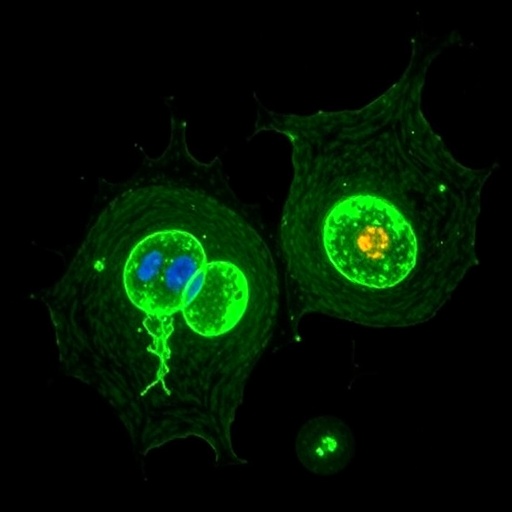
Immunotherapy has transformed the treatment of many cancers, but a stubborn majority of tumors still refuse to respond. A study published in Cell Research by a team at Xiamen University led by Geng Wang points to an unexpected culprit hiding inside tumor cells: a housekeeping enzyme that quietly destroys one of the immune system’s most powerful alarm signals. By blocking this enzyme, the researchers found, tumors can be made to light up immunologically and become far more vulnerable to attack.
The enzyme in question is RNASET2, a ribonuclease best known for its role in antimicrobial defense. It chops up RNA derived from pathogens into small fragments that are subsequently detected by Toll-like receptors 7 and 8, sensors that help ignite innate immune responses. The clinical importance of this protein is underscored by a rare human condition: children born without functional RNASET2 develop cystic leukoencephalopathy, a brain disorder accompanied by elevated inflammatory markers in the cerebrospinal fluid and peripheral blood. Mice engineered to lack RNASET2 show a similar picture, with heightened expression of interferon-stimulated genes and neuroinflammation. All of this suggested that RNASET2 acts as a brake on innate immunity.
That brake, the Xiamen team reasoned, might be exactly what cancer cells exploit. Tumors routinely dampen innate immune signaling within themselves as a way of escaping immune surveillance, and any machinery that clears away danger signals could serve that purpose. The researchers therefore set out to determine whether RNASET2 contributes to this immune evasion, and whether releasing the brake could restore the tumor’s visibility to the immune system.
The danger signal RNASET2 clears is double-stranded RNA arising from the cell’s own genome. Mitochondria, the energy-producing organelles descended from ancient bacteria, continually transcribe their compact genomes, and the resulting mitochondrial double-stranded RNA can spill into the surrounding cytoplasm. Work over the past decade has established that this mitochondrial RNA is a potent trigger of innate immune pathways, and that cells must actively manage it to avoid chronic inflammation. RNASET2, the new study shows, is one of the managers: it degrades mitochondrial double-stranded RNA before it can accumulate and provoke a response.
The most striking twist in the study is chemical. RNASET2’s RNA-destroying activity is sensitive to magnesium, the abundant biological cation that sits at the heart of many enzymatic reactions. The researchers found that magnesium modulates the enzyme’s ability to clear double-stranded RNA, and that enhancing magnesium effectively inhibits RNASET2 function in this context. When RNASET2 is inhibited, mitochondrial double-stranded RNA builds up inside tumor cells, and that accumulation is not silent. The accumulating RNA trips innate immune sensors, driving the production of interferons and other inflammatory mediators that convert an immunologically cold tumor into an inflamed one.
That inflammatory conversion has direct consequences for therapy. Checkpoint inhibitors such as antibodies targeting PD-1 and PD-L1 work by releasing T cells from inhibition, but they depend on the tumor already being recognized as foreign. Tumors with high baseline innate immune signaling, often described as inflamed or hot tumors, respond far better than cold tumors that present no danger signals for T cells to act on. By forcing the accumulation of mitochondrial double-stranded RNA, RNASET2 inhibition manufactures exactly the inflammatory context that checkpoint blockade needs, and the study demonstrates that combining the two approaches boosts antitumor immunity in preclinical models.
The findings also reframe a familiar nutrient in a new light. Magnesium has long been appreciated as essential for T cell function; earlier work published in Cell in 2022 showed that magnesium is required for the proper function of cytotoxic T cells and that low magnesium environments impair their ability to kill infected or malignant cells. The new study adds a second, complementary mechanism: magnesium also shapes the innate immune landscape of the tumor itself by regulating an RNA clearance enzyme. A single ion thus influences both the effector arm of the immune response and the alarm signals that summon it, a convergence that may help explain why magnesium status correlates with cancer outcomes in epidemiological studies.
For the researchers, the path from basic enzymology to therapeutic strategy ran through a paradox. RNASET2 is, on balance, an anti-inflammatory protein, and one might expect that removing it would simply cause indiscriminate inflammation with little therapeutic benefit. Instead, the study shows that the inflammation generated by stalled RNA clearance is precisely targeted at the tumor, because it is the tumor’s own mitochondrial RNA that accumulates. This makes the intervention conceptually similar to other strategies that deliberately unleash self-derived nucleic acid sensing, such as inhibitors of TREX1 or STING agonists, but with a distinct molecular entry point and a simple dietary or pharmacological lever in the form of magnesium.
Considerable work remains before the approach could reach patients. The study is grounded in mouse models and mechanistic cell biology, and the therapeutic window will need careful definition: RNASET2 deficiency in humans causes a serious neuroinflammatory disease, so any clinical strategy must elevate RNA accumulation within tumors without reproducing systemic pathology. It is also not yet clear which tumor types, which dosing regimens of magnesium or RNASET2 inhibitors, and which combinations with existing immunotherapies would be optimal. The authors declare no competing interests, and the work was supported by the National Natural Science Foundation of China and related national programs, reflecting a sustained public investment in innate immunity research.
Even so, the study offers a memorable conceptual advance: the immune system’s alarm bells are not only rung and heard but actively muffled, and the muffling machinery can be switched off. If RNASET2 inhibition or magnesium-based approaches can be translated safely, a routine mineral could become an unlikely partner for the most sophisticated cancer drugs on the market, turning cold tumors hot by simply refusing to let them take out the trash.
Subject of Research: RNASET2-mediated clearance of mitochondrial double-stranded RNA and its inhibition to enhance cancer immunotherapy
Article Title: Inhibition of a magnesium-sensitive double-stranded RNA clearance machinery boosts cancer immunotherapy
Article References: Zhang, Z., Zhang, L., Luo, H., Huo, Y., Sun, B., Shi, J., Wu, S., Wang, P., & Wang, G. (2026). Inhibition of a magnesium-sensitive double-stranded RNA clearance machinery boosts cancer immunotherapy. Cell Research. https://doi.org/10.1038/s41422-026-01301-0
Image Credits: AI Generated
DOI: 10.1038/s41422-026-01301-0
Keywords: RNASET2, mitochondrial double-stranded RNA, cancer immunotherapy, innate immunity, magnesium, tumor immune evasion, interferon signaling, Toll-like receptors, checkpoint inhibitors, ribonuclease, tumor microenvironment, Cell Research
Cite Scienmag News
APA
MLA
Chicago
Nathaniel Bowman. (September 30, 2026). Blocking a Magnesium-Sensing RNA Shredder Makes Cancer Immunotherapy Work Better. Scienmag. https://scienmag.com/blocking-a-magnesium-sensing-rna-shredder-makes-cancer-immunotherapy-work-better/
Nathaniel Bowman. “Blocking a Magnesium-Sensing RNA Shredder Makes Cancer Immunotherapy Work Better.” Scienmag, 30 September 2026, https://scienmag.com/blocking-a-magnesium-sensing-rna-shredder-makes-cancer-immunotherapy-work-better/. Accessed 30 September 2026.
Nathaniel Bowman. “Blocking a Magnesium-Sensing RNA Shredder Makes Cancer Immunotherapy Work Better.” Scienmag. September 30, 2026. https://scienmag.com/blocking-a-magnesium-sensing-rna-shredder-makes-cancer-immunotherapy-work-better/
Copy citation
Download RIS
Tags: cancer immunotherapyCell Researchcheckpoint inhibitorsenhancing immunotherapy efficacygenetic knockout of RNASET2 in miceimmune signaling modulation by RNASET2innate immunityinterferon signalingmagnesiumMagnesium-sensing RNA shredder in cancer immunotherapymitochondrial double-stranded RNAneuroinflammation and immune regulationribonucleaseRNA degradation and innate immunityRNA sensors Toll-like receptors 7 and 8RNA-based immune signaling pathwaysRNASET2RNASET2 enzyme role in immune responsetargeting housekeeping enzymes to boost cancer treatmentToll-like receptorsTumor Immune EvasionTumor immune evasion mechanismstumor microenvironmenttumor microenvironment immune activation