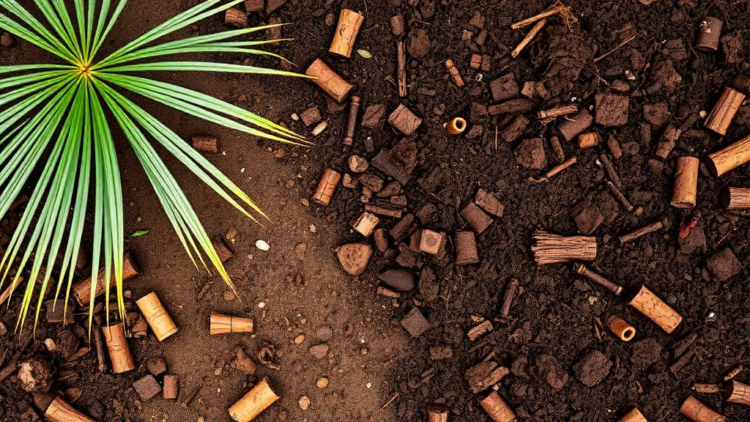
Some of the most important allies in the fight against hunger are invisible to the naked eye. In a laboratory at the University of Cape Coast in Ghana, researchers have shown that two humble soil amendments—biochar made from oil palm waste and compost blended with poultry manure—can dramatically awaken the microbial life in one of West Africa’s most degraded agricultural soils. The findings, published in Discover Soil, suggest that the combination is far more powerful than either ingredient alone, offering a low-cost recipe for restoring fertility to the weathered Acrisols that dominate Ghana’s coastal savanna.
The stakes could hardly be higher. Soils in sub-Saharan Africa have been steadily impoverished by continuous cropping without adequate replenishment, and many smallholder farmers either lack access to fertilizer or cannot afford it. Unsustainable practices such as monoculture and repeated tillage further disrupt soil structure and the microbial communities that underpin nutrient cycling. The predictable result is a downward spiral: as soils lose organic matter and biological activity, farmers lean harder on chemical fertilizers, which can acidify the soil, suppress microbial life, and pollute waterways through nutrient runoff. With the global population projected to exceed 10 billion by 2050, breaking this cycle has become an urgent scientific and humanitarian priority.
The research team, led by Kwame Agyei Frimpong and colleagues, turned to an abundant local waste stream for their solution. Oil palm plantations in Ghana generate roughly 390 tonnes of empty fruit bunches (EFB) every day, material that is typically left to decompose or is burned, releasing methane and carbon dioxide. Instead of letting this biomass go to waste, the researchers dried it and pyrolysed 500 kilograms in a rotary reactor at approximately 550 degrees Celsius for 30 minutes, yielding 150 kilograms of biochar—a 30 percent conversion rate. The resulting black, carbon-rich material contained 47.0 percent total carbon, more than four times the carbon content of the compost, and its elemental ratios revealed a highly aromatic, low-polarity structure that resists microbial breakdown.
The compost, by contrast, was built for nutrition rather than persistence. The team co-composted shredded EFB with poultry manure from the university research farm in a 2:1 ratio by weight, tuned to an initial carbon-to-nitrogen ratio of about 35:1, which is considered optimal for efficient composting. Piles of 600 to 800 kilograms were formed in shallow pits, covered to retain heat and moisture, and allowed to mature until temperatures stabilized. This compost carried far more ash, total nitrogen, and available phosphorus than the biochar—45.9, 23.5, and 25.1 percent more, respectively—making the two amendments strikingly complementary: one a long-lasting carbon skeleton, the other a nutrient-dense food source.
To test their effects, the researchers collected a Haplic Acrisol from the Coastal Savanna Agro-ecological Zone, a soil type that supports maize production across the region but suffers from low organic matter, low nitrogen availability, low cation exchange capacity, and poor moisture retention. One-kilogram portions of soil were placed in pots and treated with six amendment regimes: biochar alone at 10 or 20 tonnes per hectare, compost alone at 20 tonnes per hectare, two biochar-plus-compost combinations, and an unamended control. The pots were incubated for 30 days at 32 degrees Celsius with moisture held at 60 percent of water-holding capacity, conditions chosen to reflect typical tropical field environments while eliminating weather-related noise. Sampling at days 0, 1, 3, 7, 14, and 30 allowed the team to track the full arc of microbial response, from the initial burst of activity to the stabilization of decomposable substrates.
The results were striking. Bacterial and fungal counts rose significantly in every amended soil compared with the control, and the ranking was consistent throughout the incubation: the high-dose combination of 20 tonnes of biochar with 20 tonnes of compost came first, followed by the lower-dose combination, then compost alone, then the two biochar-only treatments, and finally the control. In the best treatment, bacterial counts reached 8.9 colony-forming units per gram on day 1, while the control hovered near 0.3. Fungal counts followed the same pattern, peaking at 9.3 in the combined treatment versus 0.9 in the control. The researchers attribute this surge to the complementary resources the two amendments supply: compost delivers labile carbon and nutrients that fuel rapid proliferation, while biochar’s porous, aromatic structure offers microbes a protected habitat and may anchor bacteria against leaching.
Enzyme activity told a similarly compelling story, with distinct temporal rhythms for each of the three enzymes measured. Protease, which breaks down proteins into plant-available nitrogen, rose sharply in the first three days in all amended soils. Urease, which hydrolyses urea, dipped on day 1 before spiking on day 7 in the compost-containing treatments, then declined as readily decomposable substrates were exhausted. Beta-glucosidase, a key marker of carbon cycling that cleaves sugars from cellulose-derived compounds, surged on day 1, dipped, and then climbed steeply from day 3 to day 14 in the compost and combined treatments. Across the board, the biochar-compost mixtures outperformed single amendments, likely because the combination improves organic matter, nutrient supply, pH, and moisture simultaneously, creating ideal conditions for microbial metabolism—though the authors note that enzyme adsorption onto biochar surfaces may have moderated some reaction rates.
Microbial biomass—the living reservoir of carbon, nitrogen, and phosphorus inside soil organisms—responded even more dramatically. Microbial biomass carbon climbed from roughly 5.0 milligrams per kilogram in the control to 40.0 under the high-dose combination, an eightfold increase, while microbial biomass nitrogen rose from about 1.2 to 36.5 and microbial biomass phosphorus from 1.2 to 16.8. The hierarchy was consistent: control, then biochar-only treatments, then compost, then the combinations, with the 20-plus-20 treatment significantly ahead of everything else. Pearson correlation analysis reinforced the mechanistic picture: soil pH correlated positively with microbial biomass carbon and strongly with urease activity, electrical conductivity tracked beta-glucosidase and microbial biomass carbon, and organic carbon correlated tightly with both microbial biomass carbon and beta-glucosidase. In short, the chemical improvements the amendments delivered were directly translated into biological vitality.
Not every nutrient change was straightforward. Available phosphorus initially spiked in amended soils—the raw biochar and compost contained 578.3 and 723.6 milligrams per kilogram, respectively—but after 30 days the best treatment showed 137.69 milligrams per kilogram. The authors attribute this decline to microbial immobilization, as microorganisms assimilated soluble phosphorus into their cells while decomposing the compost’s labile carbon, and to adsorption of phosphate onto biochar surfaces and ash components. Crucially, they argue, this is not a loss but a banking of nutrients: as microbial cells turn over and enzymes mineralize organic phosphorus, the nutrient is gradually released, while biochar may stabilize phosphorus against leaching and sustain its supply over time.
The study’s authors are careful about its limits. A 30-day laboratory incubation with a fixed soil mass cannot fully replicate field conditions, where plant roots, natural temperature swings, and moisture fluctuations shape microbial dynamics, and detailed taxonomic profiling of the microbial community was beyond the scope of the experiment. Field validation, community structure analysis, and crop trials are planned next. Even so, the evidence points to a practical, scalable strategy: convert an agricultural waste problem into a soil restoration tool, pair a recalcitrant carbon source with a nutrient-rich compost, and let the soil’s own biology do the heavy lifting. For resource-poor farmers across sub-Saharan Africa, the recipe requires no imported inputs—only palm waste, poultry manure, and the patience to let microbes rebuild what decades of extraction have eroded.
Subject of Research: Synergistic effects of empty fruit bunch biochar and compost on microbial activity in a coastal savanna Haplic Acrisol in Ghana
Article Title: Biochar and compost application synergistically enhance soil microbial activity in coastal savanna Acrisol
Article References: Frimpong, K. A., Manfo, P. O., Atiah, K., Arthur, E., Boateng, E., Lartey-Young, A., Karanja, J. K., & Yankey, R. (2026). Biochar and compost application synergistically enhance soil microbial activity in coastal savanna Acrisol. Discover Soil, 3(1), Article 168. https://doi.org/10.1007/s44378-026-00327-5
Image Credits: AI Generated
DOI: 10.1007/s44378-026-00327-5
Keywords: biochar, compost, soil microbiology, soil enzymes, microbial biomass, Haplic Acrisol, empty fruit bunch, oil palm waste, Ghana, soil fertility, sub-Saharan Africa, sustainable agriculture
Cite Scienmag News
APA MLA Chicago
Alan Morgan. (October 1, 2026). Palm Waste Biochar and Compost Team Up to Supercharge Depleted Tropical Soils. Scienmag. https://scienmag.com/palm-waste-biochar-and-compost-team-up-to-supercharge-depleted-tropical-soils/
Alan Morgan. “Palm Waste Biochar and Compost Team Up to Supercharge Depleted Tropical Soils.” Scienmag, 1 October 2026, https://scienmag.com/palm-waste-biochar-and-compost-team-up-to-supercharge-depleted-tropical-soils/. Accessed 1 October 2026.
Alan Morgan. “Palm Waste Biochar and Compost Team Up to Supercharge Depleted Tropical Soils.” Scienmag. October 1, 2026. https://scienmag.com/palm-waste-biochar-and-compost-team-up-to-supercharge-depleted-tropical-soils/
Copy citation Download RIS
Tags: Biocharbiochar from oil palm waste for soil fertilitycombating soil degradation with biochar and compostcompostcompost blended with poultry manure for degraded soilsempty fruit bunchenvironmental impact of chemical fertilizers in tropical regionsGhanaHaplic Acrisolimproving crop yields in West African agricultureintegrated soil fertility management forlow-cost soil fertility restoration methodsmicrobial activity enhancement in African soilsmicrobial biomassoil palm wasterevitalizing weathered Acrisols using organic amendmentssoil amendments for tropical soil restorationsoil enzymessoil fertilitysoil health recovery techniques for smallholder farmerssoil microbiologysub-Saharan Africasustainable agriculturesustainable soil management in sub-Saharan Africa