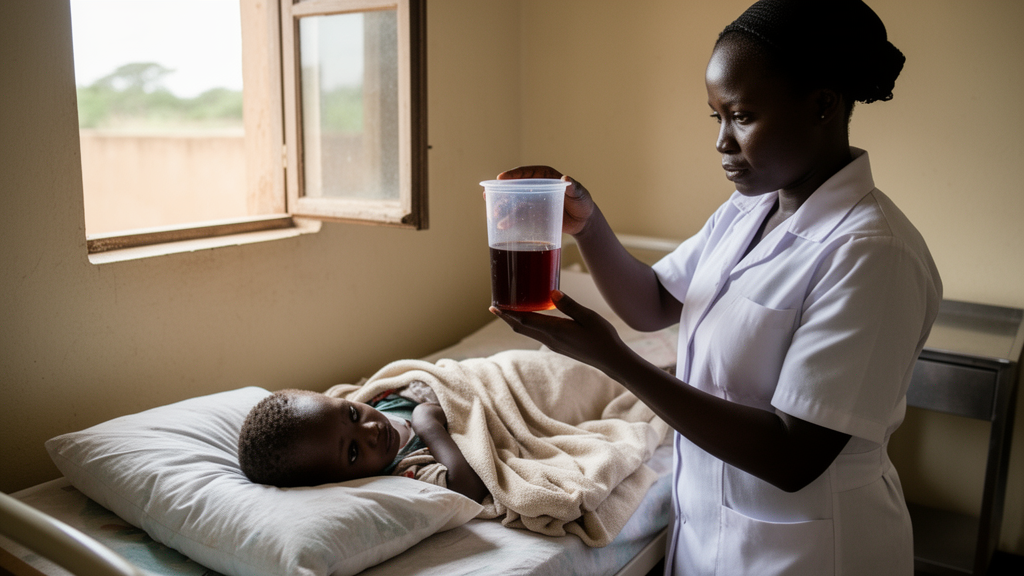
Blackwater fever, a life-threatening complication of Plasmodium falciparum malaria, appears to be re-emerging among children in sub-Saharan Africa, according to a scoping review published in BMC Infectious Diseases. The condition is marked by acute intravascular hemolysis, hemoglobinuria, and severe anemia, and requires urgent medical intervention. Despite its clinical severity, the authors note that data on its burden, risk factors, and management have remained fragmented, motivating a systematic mapping of the existing literature.
The review followed the Arksey and O’Malley framework, enhanced by Levac and colleagues, and was reported according to the PRISMA-ScR guidelines. It was registered on the Open Science Framework. The team searched six databases and grey literature from inception to December 2024, with eligibility guided by a PCC framework focused on children aged 0 to 18 years with blackwater fever in sub-Saharan Africa. Two reviewers independently screened all records using predefined inclusion and exclusion criteria, and data were extracted and synthesized narratively, categorized thematically by epidemiology, clinical features, risk factors, management, and outcomes.
Geographically, the reviewed cases clustered in East and Central Africa, with Uganda accounting for 53.8% of reports and the Democratic Republic of the Congo for 26.9%. Reported prevalence ranged widely, from 4.4% to 52.7%, and incidence was higher during rainy seasons. The authors caution that these wide ranges reflect differences in study design, case definitions, and the concentration of severe cases at tertiary hospitals, where most of the included studies were conducted.
On risk factors, the review found strong associations between blackwater fever and MBL2 AA polymorphisms, elevated IgG1, and prior quinine treatment. The role of glucose-6-phosphate dehydrogenase deficiency, by contrast, varied across studies, suggesting an inconsistent or context-dependent contribution that the authors flag as unresolved.
Clinically, dark urine was present in 100% of reported cases, jaundice in 22.7% to 100%, and severe anemia in 23.7% to 77%. Together these correspond to the classic ‘hemolytic triad’ of hemoglobinuria, jaundice, and profound anemia seen in blackwater fever. Complications compounded the burden: acute kidney injury occurred in 16.2% to 90.6% of cases, and recurrent episodes were reflected in readmission rates of 50% to 68%, both of which exacerbated morbidity.
Diagnosis relied largely on clinical criteria, with limited laboratory confirmation, a gap the review identifies as a persistent weakness. Management emphasized artemisinin-based therapies and supportive care.
Evidence from recent cohorts suggests an apparent resurgence and increasing recognition of childhood blackwater fever in high-transmission regions of sub-Saharan Africa. The authors are careful to frame this as an apparent resurgence, noting that the scoping review maps the literature rather than establishing incidence trends through standardized surveillance.
The review concludes that persistent gaps in diagnostic capacity, timely access to transfusion and renal support, and consistent use of artemisinin-based therapy highlight the need for harmonized diagnostic criteria, improved surveillance, and expanded supportive care across the region. As an early-access, peer-reviewed article, the publication is citable and carries a permanent DOI, with a final version of record to follow.
Subject of Research: The epidemiology, clinical features, risk factors, management, and outcomes of blackwater fever among children in sub-Saharan Africa
Article Title: The resurgence of blackwater fever among children in sub-Saharan Africa: a scoping review
Article References: Paasi, G., Namazzi, R., Malaika, N., Namayanja, C., Ongodia, P., Okalebo, C. B., Amorut, D., Asiimwe, G., Okello, F., Mukunya, D., Munabi, I. G., Kiguli, S., Idro, R., & Olupot-Olupot, P. (2026). The resurgence of blackwater fever among children in sub-Saharan Africa: a scoping review. BMC Infectious Diseases. https://doi.org/10.1186/s12879-026-14698-1
Image Credits: AI Generated
DOI: 10.1186/s12879-026-14698-1
Keywords: blackwater fever, malaria, Plasmodium falciparum, sub-Saharan Africa, children, hemolysis, anemia, acute kidney injury, scoping review, artemisinin, Uganda, Democratic Republic of the Congo
News Source: Ophelia Keating. (October 29, 2026). Blackwater Fever Resurges Among Children in Sub-Saharan Africa. Scienmag.