


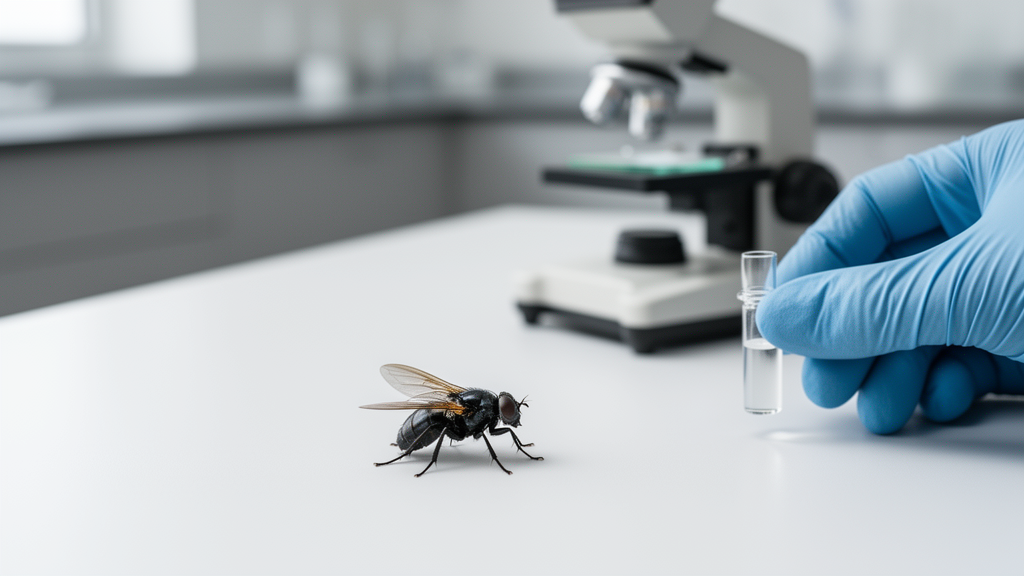
Researchers have documented the black soldier fly, Hermetia illucens, in Jeddah in western Saudi Arabia, combining classic morphological examination with DNA-based identification to establish reference data for the species in the region. The study, published in Molecular Biology Reports, describes both the physical features of the insect at different life stages and the genetic markers that confirm its identity.
Hermetia illucens, a member of the fly family Stratiomyidae, is an economically important insect widely used in organic waste bioconversion, sustainable animal feed production, and biomaterial generation. Because identifying the species by morphology alone can be difficult during its immature stages, the authors argue that accurate identification benefits from an approach that integrates physical characterization with molecular evidence.
For the study, adult flies were collected from organic waste-rich agricultural environments in Jeddah and reared under controlled laboratory conditions. Adult and larval morphology was documented using stereomicroscopy, based on established diagnostic characters. DNA was extracted from larvae, and partial mitochondrial COI and nuclear 28S rRNA regions were amplified using universal primers.
The researchers traced the complete life cycle of the species under laboratory conditions, comprising egg, larva, prepupa, pupa, and adult stages. Adults showed characteristic morphological features, including a metallic black body, translucent abdominal windows, distinctive antennae, blue halteres, and sexual dimorphism of the terminalia. Larvae had an elongated, 11-segmented cylindrical body with a sclerotized head capsule and chewing mouthparts.
On the molecular side, both the COI and 28S rRNA regions were successfully amplified and confirmed the specimens as H. illucens. The COI sequences yielded 15 haplotypes and clustered with H. illucens sequences from Latin and South America, forming two clades in the phylogenetic analyses, which were performed using MEGA X after alignment with GenBank sequences.
The authors conclude that integrating morphological examination with mitochondrial and nuclear DNA markers provides a reliable framework for identifying H. illucens, and that the work establishes baseline morphological and molecular reference data for Saudi Arabian populations of the species.
The study was authored by Mona Basabreen, Esam Al-Shaebi, Osama B. Mohammed, Rewaida Abdel-Gaber, and Reem Alajmi, and appeared in Volume 53 of Molecular Biology Reports as article number 1795, published on 23 October 2026.
Subject of Research: Morphological and DNA-based identification of the black soldier fly Hermetia illucens in Jeddah, Saudi Arabia
Article Title: Morphological and DNA-based identification of the black soldier fly (Hermetia illucens) from Jeddah, Western Saudi Arabia
Article References: Basabreen, M., Al-Shaebi, E., Mohammed, O. B., Abdel-Gaber, R., & Alajmi, R. (2026). Morphological and DNA-based identification of the black soldier fly (Hermetia illucens) from Jeddah, Western Saudi Arabia. Molecular Biology Reports, 53(1), Article 1795. https://doi.org/10.1007/s11033-026-13028-7
Image Credits: AI Generated
DOI: 10.1007/s11033-026-13028-7
Keywords: black soldier fly, Hermetia illucens, DNA barcoding, COI, 28S rRNA, Jeddah, Saudi Arabia, morphology, phylogenetics, Stratiomyidae, molecular identification, Morphological
News Source: Drew Townsend. (October 29, 2026). Black Soldier Fly Confirmed in Jeddah Through Morphology and DNA Barcoding. Scienmag.



