

• HOME
  • NEWS
  • EXPLORE
    • CAREER
      • Companies
      • Jobs
    • EVENTS
    • iGEM
      • News
      • Team
    • PHOTOS
    • VIDEO
    • WIKI
  • BLOG
  • COMMUNITY
    • FACEBOOK
    • INSTAGRAM
    • TWITTER
Saturday, May 16, 2026
BIOENGINEER.ORG
No Result
View All Result
  • Login
  • HOME
  • NEWS
  • EXPLORE
    • CAREER
      • Companies
      • Jobs
        • Lecturer
        • PhD Studentship
        • Postdoc
        • Research Assistant
    • EVENTS
    • iGEM
      • News
      • Team
    • PHOTOS
    • VIDEO
    • WIKI
  • BLOG
  • COMMUNITY
    • FACEBOOK
    • INSTAGRAM
    • TWITTER
  • HOME
  • NEWS
  • EXPLORE
    • CAREER
      • Companies
      • Jobs
        • Lecturer
        • PhD Studentship
        • Postdoc
        • Research Assistant
    • EVENTS
    • iGEM
      • News
      • Team
    • PHOTOS
    • VIDEO
    • WIKI
  • BLOG
  • COMMUNITY
    • FACEBOOK
    • INSTAGRAM
    • TWITTER
No Result
View All Result
Bioengineer.org
No Result
View All Result
Home NEWS Science News Health

Birds exposed to PCBs as nestlings show behavior changes as adults

Bioengineer by Bioengineer
March 26, 2020
in Health
Reading Time: 2 mins read
0
IMAGE
Share on FacebookShare on TwitterShare on LinkedinShare on RedditShare on Telegram

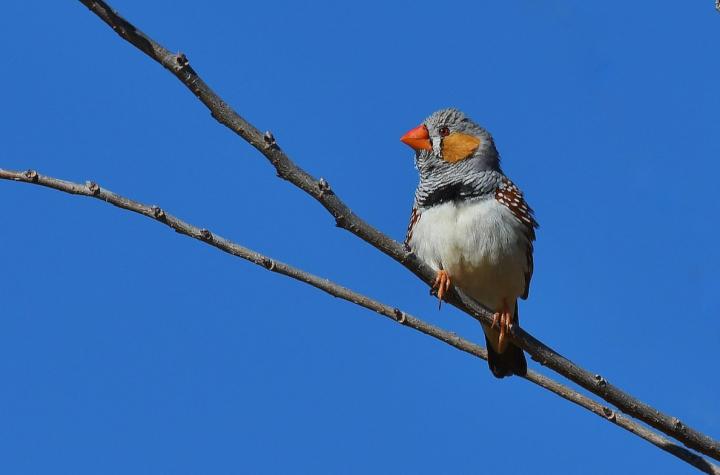
Males sing fewer syllables and are more aggressive
IMAGE

Credit: Terence Alexander/Macaulay Library


Ithaca, NY–According to a new study, Zebra Finches exposed to low levels of environmental PCBs as nestlings show changes in breeding behavior as adults. The study published in the journal PLoS ONE was conducted by scientists at the Cornell Lab of Ornithology. Though polychlorinated biphenyls, or PCBs, were banned in 1979, they still contaminate the environment because of improper disposal.

“Decades of work has shown that high levels of PCB-exposure can be toxic and carcinogenic, but less is known about low levels of PCB exposure,” explains lead author Sara DeLeon, who conducted the research as part of her doctoral studies at Cornell University. “PCBs are endocrine disruptors, meaning that even very low levels could be mimicking the effects of hormones, and potentially influencing behavior.”

The researchers investigated the effects of two kinds of PCBs used by industry. Nestling Zebra Finches were exposed to low levels of PCBs for seven days to mimic exposure to contaminated food that parent birds in the wild would deliver to their young.

“Our results show that this level of PCB exposure during nestling development does have consequences on adult reproductive behavior,” says DeLeon. “Male Zebra Finches exposed to PCBs during development sang fewer syllables as adults. Depending on the type of PCB treatment, some finches made more nesting attempts and also abandoned nests more often.”

Some young fledged significantly earlier than normal. DeLeon says these results are likely the result of increased aggression between males.

“Our findings suggest that sub-lethal PCB-exposure during development can change key reproductive characteristics of adult Zebra Finches, likely reducing fitness in the wild,” concludes DeLeon.

###

Reference:

Sara DeLeon, Michael S. Webster, Timothy J. DeVoogd, André A. Dhondt. Developmental polychlorinated biphenyl exposure influences adult zebra finch
reproductive behavior. PLoS One. March 2020.

Media Contact
Pat Leonard
[email protected]
607-254-2137

Related Journal Article

http://dx.doi.org/10.1371/journal.pone.0230283

Tags: BiologyDevelopmental/Reproductive Biology
Share12Tweet8Share2ShareShareShare2

Related Posts

New Actinomycin Derivatives Target Malaria More Selectively

May 16, 2026

Mobile App Enhances Exercise for Older Adults’ Cognition

May 16, 2026

rAAV8 HMR-001 Boosts Liver Gene Therapy in Hemophilia

May 16, 2026

Pembrolizumab and Lenvatinib Trial for Mucosal Melanoma

May 16, 2026
Please login to join discussion

POPULAR NEWS

  • Research Indicates Potential Connection Between Prenatal Medication Exposure and Elevated Autism Risk

    843 shares
    Share 337 Tweet 211
  • New Study Reveals Plants Can Detect the Sound of Rain

    730 shares
    Share 291 Tweet 182
  • Salmonella Haem Blocks Macrophages, Boosts Infection

    62 shares
    Share 25 Tweet 16
  • Breastmilk Balances E. coli and Beneficial Bacteria in Infant Gut Microbiomes

    58 shares
    Share 23 Tweet 15

About

We bring you the latest biotechnology news from best research centers and universities around the world. Check our website.

Follow us

Recent News

New Actinomycin Derivatives Target Malaria More Selectively

Mobile App Enhances Exercise for Older Adults’ Cognition

Botulinum Toxin Reduces Urinary Retention Post-Hemorrhoidopexy

Subscribe to Blog via Email

Enter your email address to subscribe to this blog and receive notifications of new posts by email.

Join 82 other subscribers
  • Contact Us

Bioengineer.org © Copyright 2023 All Rights Reserved.

Welcome Back!

Login to your account below

Forgotten Password?

Retrieve your password

Please enter your username or email address to reset your password.

Log In
No Result
View All Result
  • Homepages
    • Home Page 1
    • Home Page 2
  • News
  • National
  • Business
  • Health
  • Lifestyle
  • Science

Bioengineer.org © Copyright 2023 All Rights Reserved.

