• HOME
  • NEWS
  • EXPLORE
    • CAREER
      • Companies
      • Jobs
    • EVENTS
    • iGEM
      • News
      • Team
    • PHOTOS
    • VIDEO
    • WIKI
  • BLOG
  • COMMUNITY
    • FACEBOOK
    • INSTAGRAM
    • TWITTER
Monday, May 11, 2026
BIOENGINEER.ORG
No Result
View All Result
  • Login
  • HOME
  • NEWS
  • EXPLORE
    • CAREER
      • Companies
      • Jobs
        • Lecturer
        • PhD Studentship
        • Postdoc
        • Research Assistant
    • EVENTS
    • iGEM
      • News
      • Team
    • PHOTOS
    • VIDEO
    • WIKI
  • BLOG
  • COMMUNITY
    • FACEBOOK
    • INSTAGRAM
    • TWITTER
  • HOME
  • NEWS
  • EXPLORE
    • CAREER
      • Companies
      • Jobs
        • Lecturer
        • PhD Studentship
        • Postdoc
        • Research Assistant
    • EVENTS
    • iGEM
      • News
      • Team
    • PHOTOS
    • VIDEO
    • WIKI
  • BLOG
  • COMMUNITY
    • FACEBOOK
    • INSTAGRAM
    • TWITTER
No Result
View All Result
Bioengineer.org
No Result
View All Result
Home NEWS Science News Chemistry

Bird and reptile tears aren’t so different from human tears

Bioengineer by Bioengineer
August 13, 2020
in Chemistry
Reading Time: 3 mins read
0
IMAGE
Share on FacebookShare on TwitterShare on LinkedinShare on RedditShare on Telegram

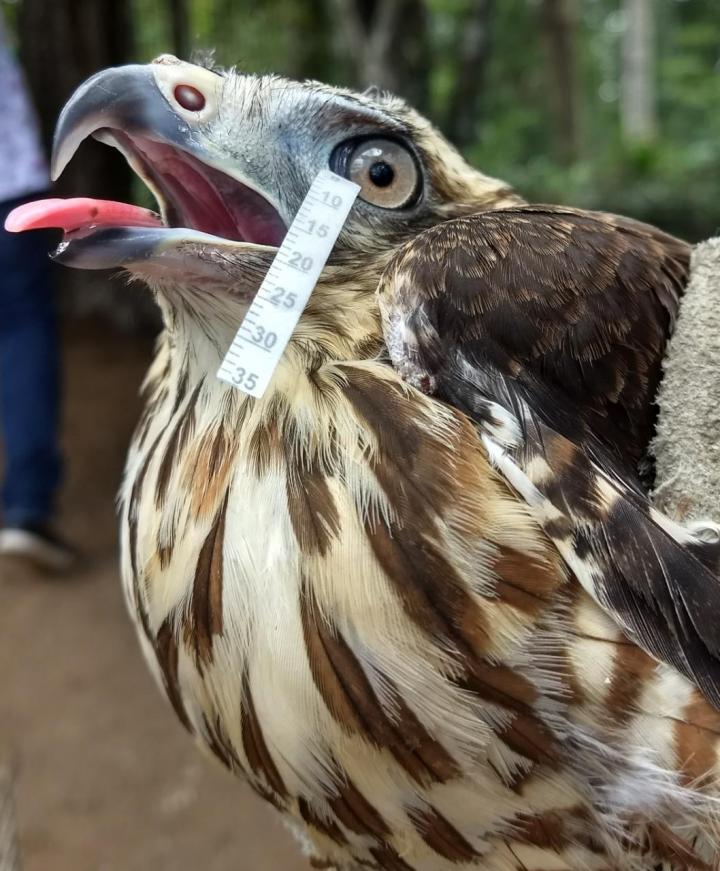
IMAGE

Credit: Arianne P. Oriá

Bird and reptile tears aren’t so unlike our own, shows a new study in Frontiers in Veterinary Science. But the differences could provide insights into better ophthalmic treatments for humans and animals, as well as a clues into the evolution of tears across different species.

“Discovering how tears are able to maintain the ocular homeostasis, even in different species and environmental conditions, is crucial for understanding the evolution and adaptation processes, and is essential for the discovery of new molecules for ophthalmic drugs,” says first author Prof. Arianne P. Oriá, of the Federal University of Bahia, in Salvador, Brazil.

Tears play a critical role in maintaining healthy eyesight across species. But up to now, researchers have only studied tears in a short list of mammals, including humans, dogs, horses, monkeys and camels. To get a more complete picture of how tears work in other species, Oriá and her collaborators have now added seven species of birds and reptiles to this list.

“Although birds and reptiles have different structures that are responsible for tear production, some components of this fluid (electrolytes) are present at similar concentrations as what is found in humans,” explains Oriá. “But the crystal structures are organized in different ways so that they guarantee the eyes´ health and an equilibrium with the various environments.”

Oriá and her collaborators worked together with veterinarians from a conservation center, a wild animal care center and a commercial breeder to collect tear samples from healthy captive animals. The study was limited to animals that were kept as pets or as part of conservation efforts, and the researchers collected tears as part of the animals’ normal physical check-ups.

The animals in the study included macaws, hawks, owls and a type of parrot, as well as tortoises, caimans and sea turtles. For comparison, the authors also collected tears from 10 healthy human volunteers.

By looking at the composition of the tears, the authors found that all of the tear types contained similar amounts of electrolytes such as sodium and chloride, although bird and reptile tears had slightly higher concentrations. Owl and sea turtle tears also showed higher levels of urea and protein. After measuring the composition of the tears, the authors also looked at the crystals that formed when the tear fluid dried out. Researchers can use this crystallization pattern to uncover certain types of eye disease, as well as other variations between tear types.

Although the different species had similar tear composition, surprisingly the crystals showed more variation. Sea turtle and caiman tear crystals were particularly unique, probably as an adaptation to their aquatic environments.

Tear research still only reflects a small number of species and this study was limited to captive animals. But future research of additional species could continue to expand our understanding of tear types, and also help guide better treatments for both animals and humans.

“This knowledge helps in the understanding of the evolution and adaption of these species, as well as in their conservation,” adds Prof. Oriá.

###

Media Contact
Mischa Dijkstra
[email protected]

Related Journal Article

http://dx.doi.org/10.3389/fvets.2020.00574

Tags: BiochemistryBiologyEvolutionOphthalmologyPhysiologyZoology/Veterinary Science
Share12Tweet8Share2ShareShareShare2

Related Posts

Miniature Sensor Uses Light to Detect Touch — Chemistry

Miniature Sensor Uses Light to Detect Touch

May 8, 2026
Iron Minerals Determine Whether Dissolved Organic Matter Fuels Microbes or Becomes Long-Term Carbon Storage — Chemistry

Iron Minerals Determine Whether Dissolved Organic Matter Fuels Microbes or Becomes Long-Term Carbon Storage

May 8, 2026

Kate Evans Appointed Associate Lab Director for Biological and Environmental Systems Science at ORNL

May 8, 2026

Advancing Multiscale Modeling and Overcoming Operational Challenges in Autothermal CO₂-to-Methanol Reactors

May 8, 2026
Please login to join discussion

POPULAR NEWS

  • Research Indicates Potential Connection Between Prenatal Medication Exposure and Elevated Autism Risk

    841 shares
    Share 336 Tweet 210
  • New Study Reveals Plants Can Detect the Sound of Rain

    728 shares
    Share 290 Tweet 182
  • Salmonella Haem Blocks Macrophages, Boosts Infection

    62 shares
    Share 25 Tweet 16
  • Breastmilk Balances E. coli and Beneficial Bacteria in Infant Gut Microbiomes

    57 shares
    Share 23 Tweet 14

About

We bring you the latest biotechnology news from best research centers and universities around the world. Check our website.

Follow us

Recent News

Global City Growth Decouples from Fossil Fuels

ACAD8 Deficiency Drives Cardiac Hypertrophy via Histone Modification

CRISPRi Screening Identifies Fungal-Specific Drug Targets

Subscribe to Blog via Email

Enter your email address to subscribe to this blog and receive notifications of new posts by email.

Join 82 other subscribers
  • Contact Us

Bioengineer.org © Copyright 2023 All Rights Reserved.

Welcome Back!

Login to your account below

Forgotten Password?

Retrieve your password

Please enter your username or email address to reset your password.

Log In
No Result
View All Result
  • Homepages
    • Home Page 1
    • Home Page 2
  • News
  • National
  • Business
  • Health
  • Lifestyle
  • Science

Bioengineer.org © Copyright 2023 All Rights Reserved.